
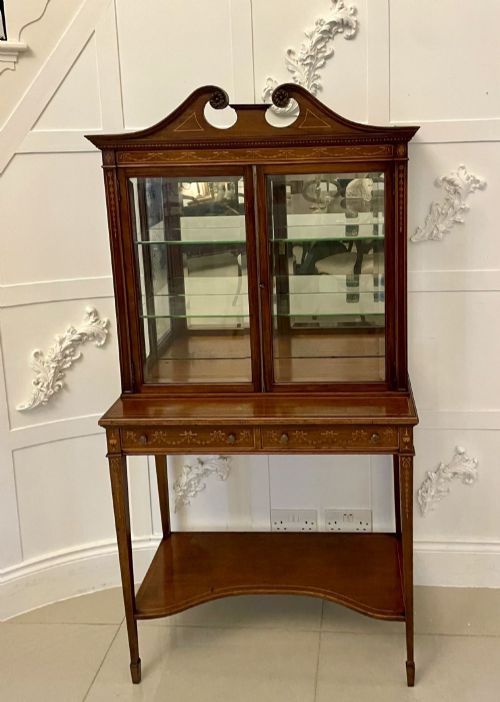
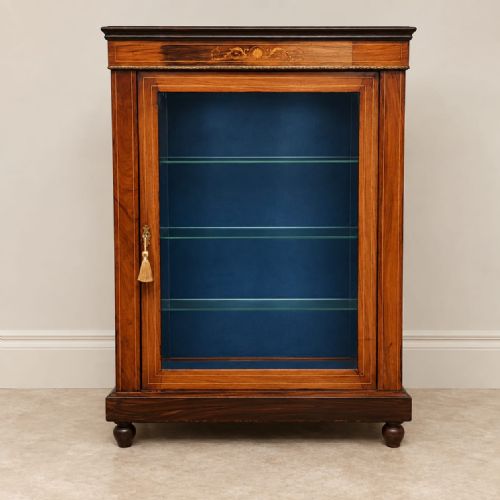
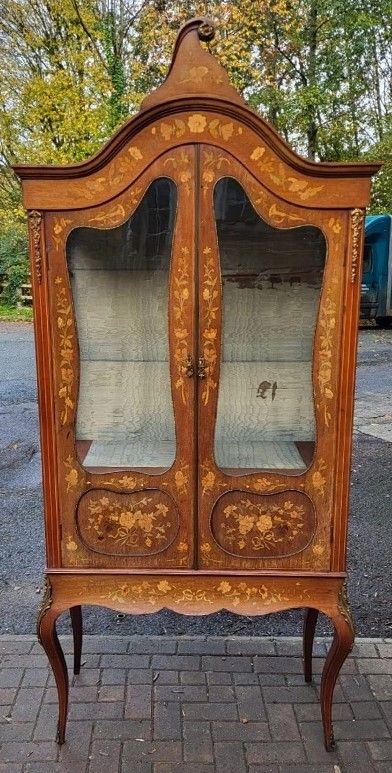
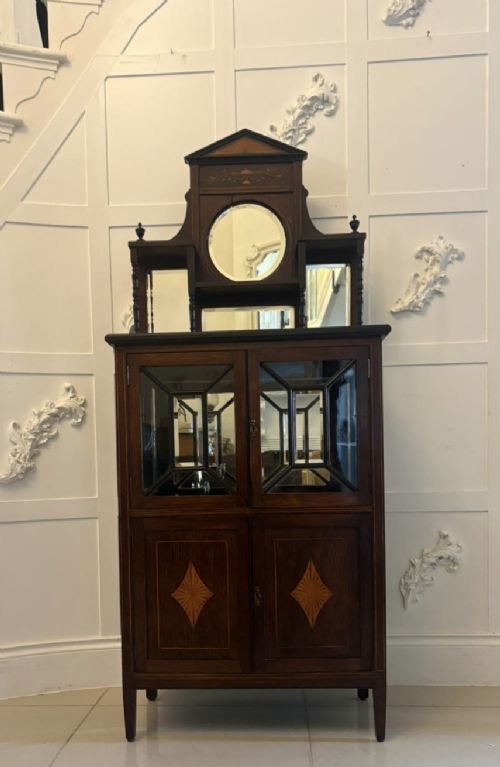


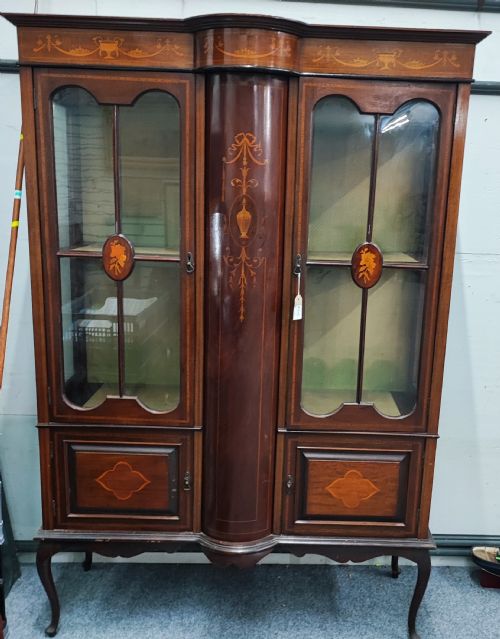


Inlaid Glass Showcase
These inlaid glass showcase examples bring together fine timber and clear glazing, offering a bright home for treasured collections.
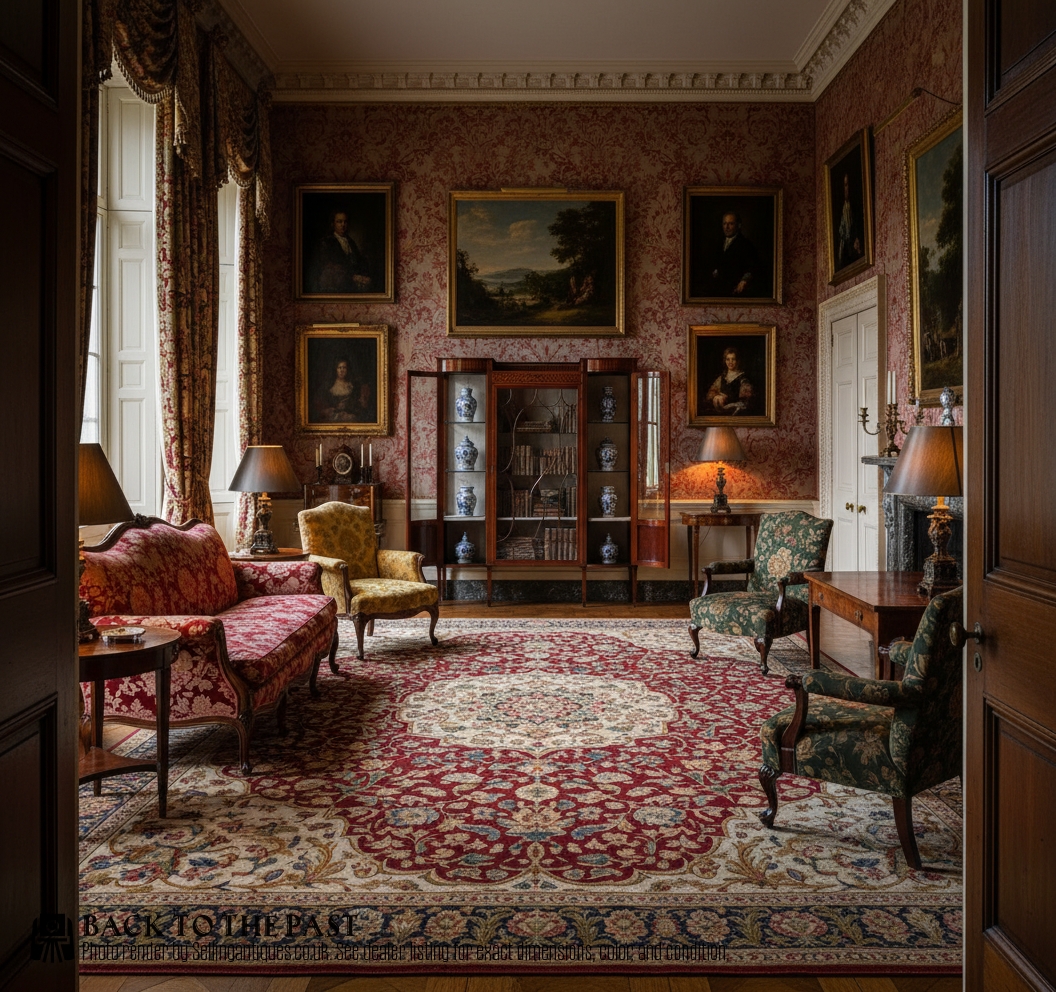
Inlaid Glass Showcase
An inlaid glass showcase provides a dedicated space for displaying smaller decorative objects and china behind protective glazing. When exploring this selection, buyers frequently encounter Edwardian and Victorian display cabinets, corner cabinets, and bijouterie tables.
The forms range from tall freestanding floor standing units to demi-lune shapes and low table cabinets. Many examples utilise traditional display cabinet and corner cabinet designs originating from the nineteenth and early twentieth centuries.
How they were made
Maker construction relies on cabinet timbers such as mahogany, walnut, and satinwood, often enhanced with contrasting boxwood stringing and floral marquetry. Glazing protects the interior while brass mounts and mirror backs add reflective depth.
Surfaces receive detailed inlay work characteristic of Sheraton Revival and Victorian periods, combining distinct woods to create geometric patterns and floral motifs across the cabinet fronts and doors.
Some tables come with glazed lids built strictly for admiring pocket watches without ever touching the winding crown.
What varies in quality
Quality depends upon the crispness of the marquetry and the choice of primary timber grain, such as burr walnut or figured mahogany. Finer examples display precise boxwood stringing and balanced proportions.
The integration of secondary elements like mirror backs, brass hardware, and original fabric linings dictates the overall refinement of the cabinet.
James Hicks
The Inlaid Glass Showcase Glossary
- Marquetry
- Decorative veneer work arranged in pictorial or geometric patterns on the surface of the wood. This technique uses different coloured timbers to create visual interest.
- Bijouterie table
- A glass-topped table designed specifically for displaying small ornaments, jewellery, or curiosities. These pieces often feature hinged lids for easy access.
- Stringing
- Thin lines of contrasting wood inlaid into the primary surface of a piece of furniture. It typically outlines drawers, doors, or panels to frame the design.
- Demi-lune
- A half-moon shape characteristic of certain console and display cabinet designs. This curved form allows the furniture to sit flush against a wall.
- Pier cabinet
- A tall, narrow cabinet designed to fit into the wall space between windows. Victorian examples often incorporate glass doors and internal shelving.
Inlaid Glass Showcase: Frequently Asked Questions
What is an inlaid glass showcase used for?
These cabinets serve to exhibit porcelain, small silver items, and curiosities while keeping them protected from dust behind glass doors or tabletops.
They function as both practical storage and decorative furniture focal points within a room.
How do I date an inlaid glass showcase?
Dating relies on identifying stylistic markers such as Victorian proportions and timber choices or Edwardian marquetry motifs. Cabinet construction methods and hardware styles also help narrow the manufacturing period.
Reference to specific revival styles like Sheraton Revival provides further chronological context for the piece.
Where should I place a corner cabinet?
Corner cabinets fit directly into interior room angles, making them practical for smaller spaces or empty wall junctions. They utilise otherwise neglected corners to display collections.
Freestanding corner units require no permanent wall fixing and can be repositioned easily.
What woods are typical for these cabinets?
Mahogany and walnut form the primary structure for the majority of these pieces, often accompanied by satinwood veneers. Boxwood is frequently used for contrasting inlay and stringing details.
Internal elements may also feature mirror glass and fabric linings.