

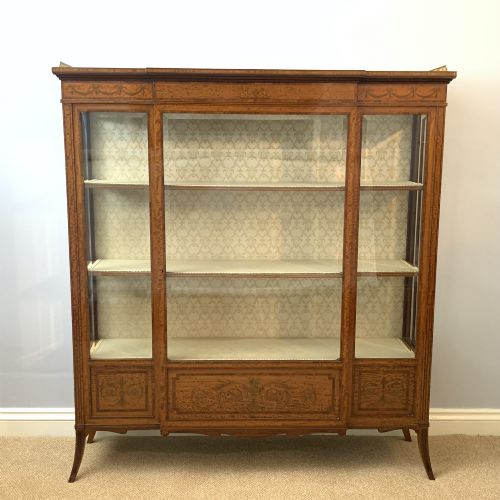
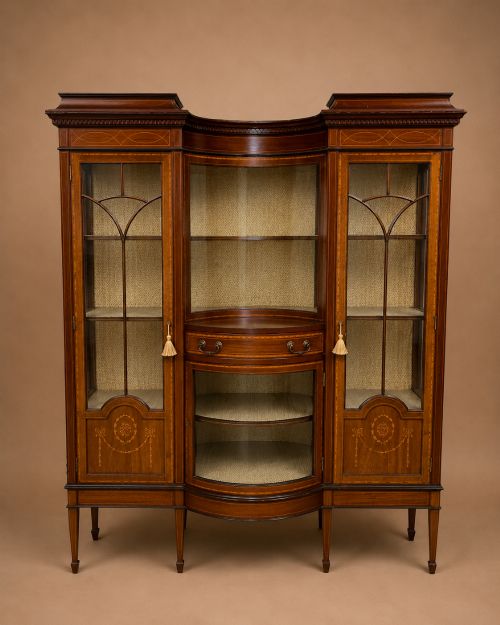
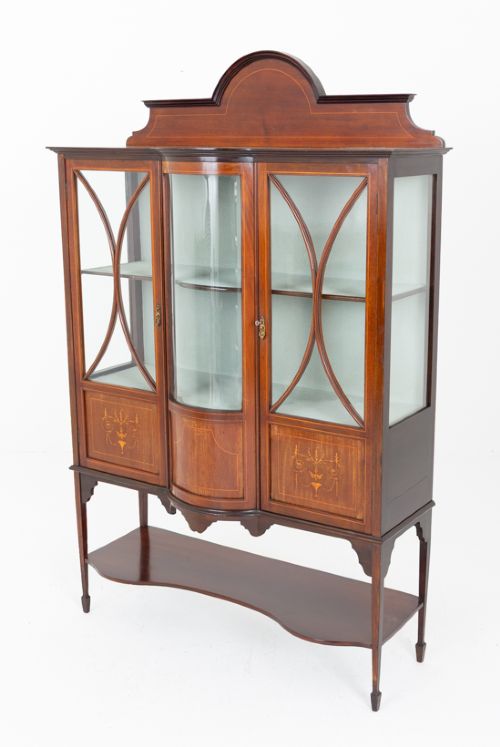
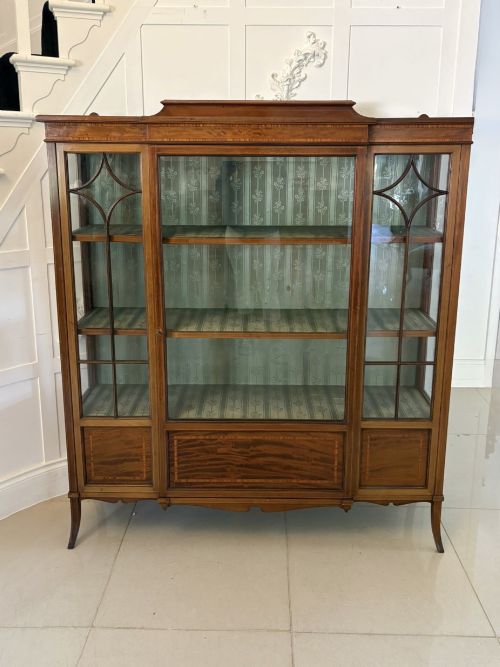
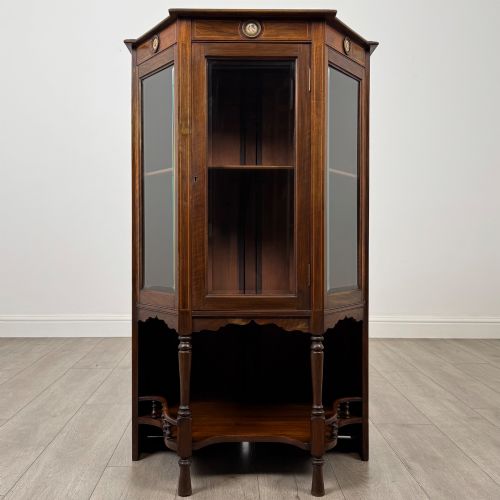
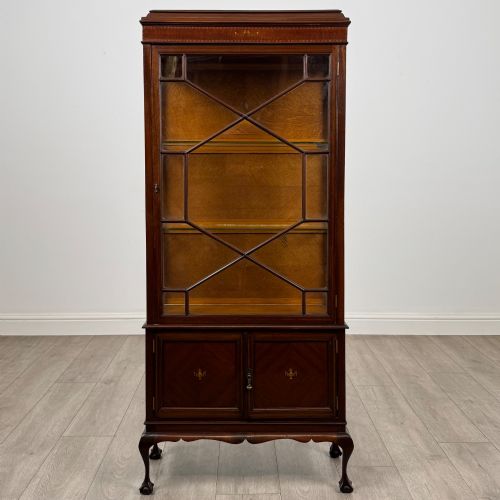
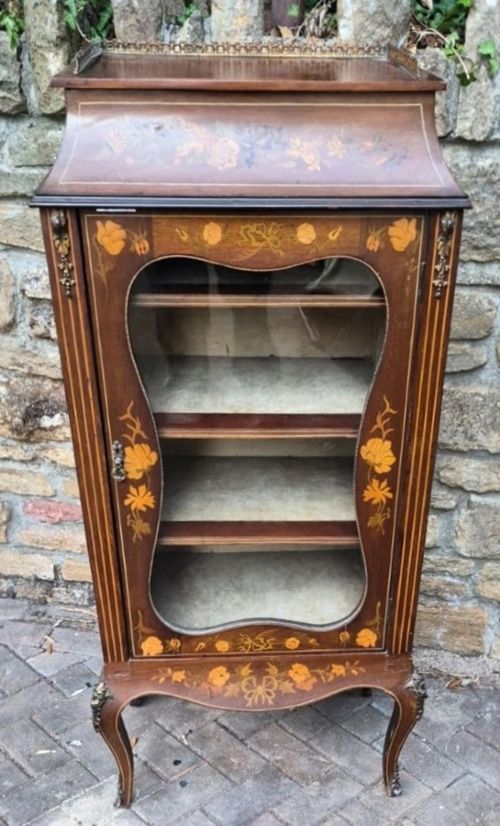
Inlaid Glass China Cupboard
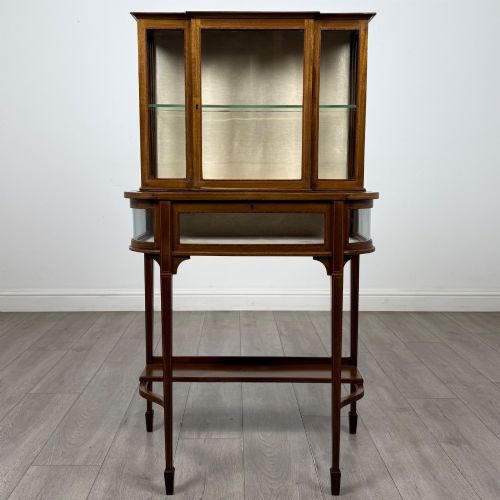
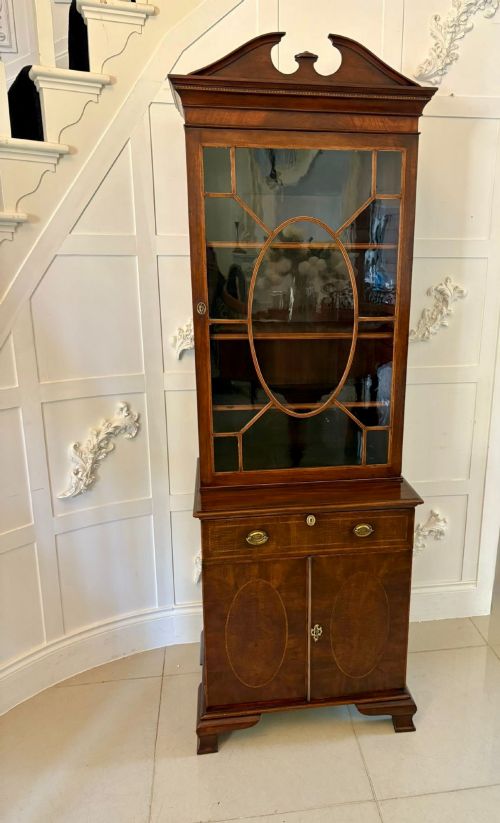
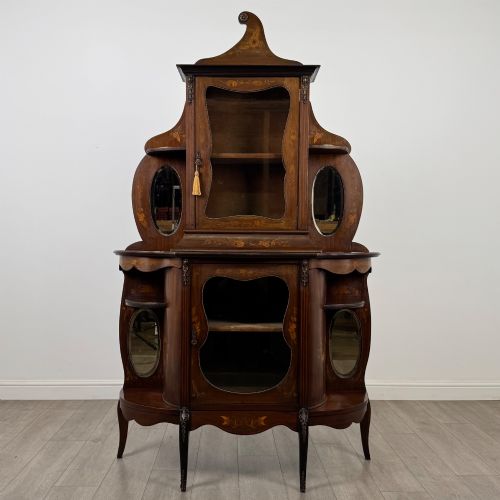
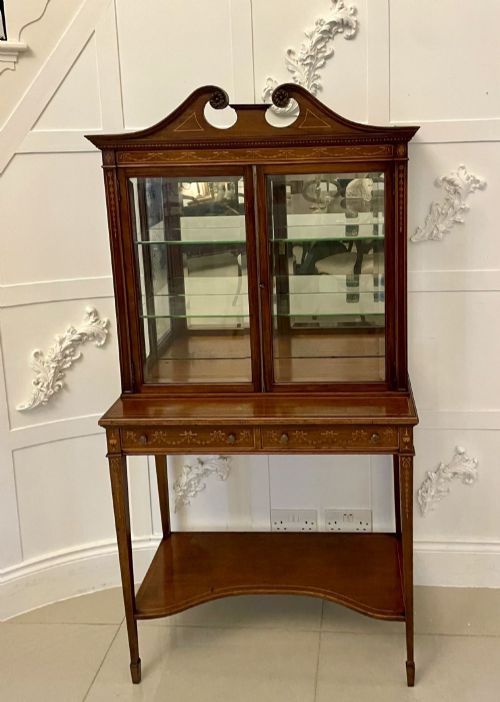
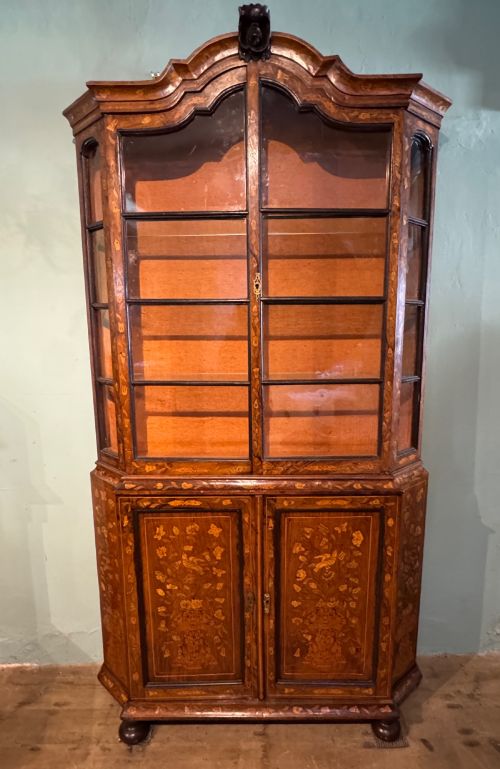
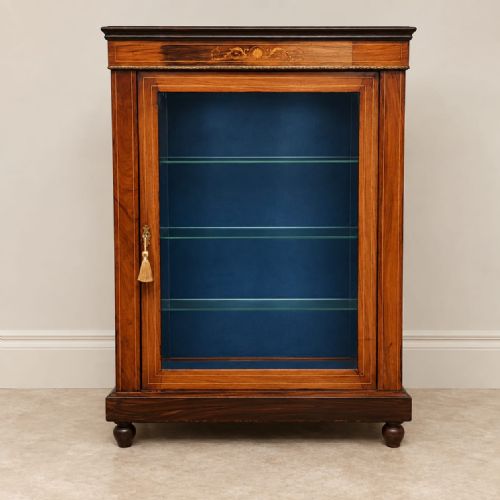
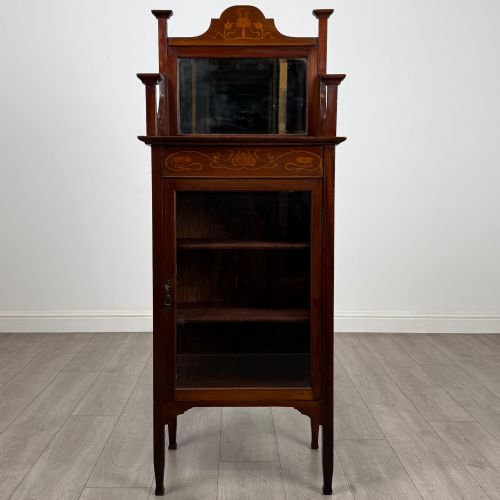
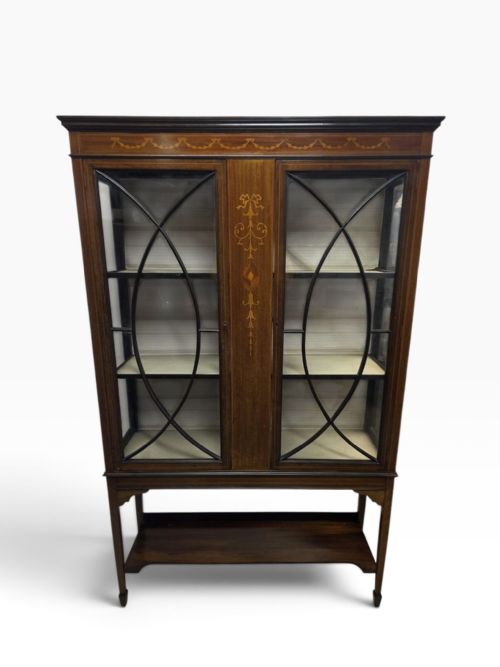
An inlaid glass china cupboard brings elegance to a room, offering glazed shelving to exhibit porcelain behind timber frames detailed with delicate marquetry.
Inlaid Glass China Cupboard
When you search for an inlaid glass china cupboard, you encounter a selection of display cabinets, bookcases, and corner cabinets dating from the Victorian and Edwardian eras, alongside earlier Georgian examples.
The Edwardian pieces dominate the selection, frequently constructed from mahogany with contrasting satinwood inlay and fitted with glazed doors to protect fragile ceramics.
Forms range from bow-ended and single-door display cabinets to substantial two-part bookcases and pier cabinets incorporating mirror backs.
Materials and Technique
Cabinetmakers utilised primary timbers such as mahogany, walnut, and satinwood, applying contrasting inlay and marquetry to create intricate floral and geometric motifs across the exterior surfaces.
Glazing bars secure the glass panes within the doors, while brass hardware provides functional closures for the cabinets and internal shelving units.
The listings span the Victorian, Edwardian, and Georgian periods, showcasing mahogany, walnut, and satinwood timber alongside glass and mirror.
Standards of Craftsmanship
The standard of an inlaid glass china cupboard depends on the precision of the cabinetmaking, visible in the crispness of the marquetry and the choice of figured timber veneers.
Superior examples display balanced proportions, refined Sheraton Revival styling, and harmonious integration of mirror backs and brass fittings without clumsy secondary timbers.
Edwards & Roberts·Maple & Co.
The Inlaid Glass China Cupboard Glossary
- Marquetry
- Decorative veneer work arranged in pictorial or geometric patterns on furniture surfaces. Craftsmen cut thin slices of various coloured woods to form intricate designs.
- Sheraton Revival
- A late nineteenth and early twentieth century design movement inspired by eighteenth century neoclassical furniture. It utilises light timbers, satinwood inlay, and slender proportions.
- Pier Cabinet
- A narrow cabinet designed to stand against the wall space between windows. These pieces often feature glass doors and mirror backs to reflect light.
- Bow-Ended
- Having a curved, convex front section that softens the geometric lines of a cabinet. This shape requires advanced woodworking skill to bend timber accurately.
Inlaid Glass China Cupboard: Frequently Asked Questions
How do I clean the glass safely?
Use a soft microfiber cloth and a mild glass cleaning solution applied directly to the cloth rather than the wood. Spraying liquid near the timber or inlay can cause permanent moisture damage over time.
Take care around the glazing bars and delicate marquetry edges. Ensure no liquid seeps into the joints where the glass meets the timber frame.
Can these cabinets hold heavy books?
Display cabinets and china cupboards are primarily designed for porcelain and lighter decorative objects. The internal shelving and glazing focus on visibility rather than heavy load-bearing capacity.
Bookcase variants offer sturdier internal construction for reading material. Check the shelf thickness and support brackets before placing heavy volumes inside.
Where should I place the cabinet?
Position the piece away from direct sunlight to protect the mahogany and satinwood veneers from fading. Stable room temperatures prevent the timber and inlay from warping.
Keep the cabinet clear of direct heat sources such as radiators. Consistent indoor humidity preserves the structural integrity of the antique glue and wood.
How do I distinguish Edwardian from Victorian pieces?
Edwardian cabinets tend to feature lighter satinwood finishes and delicate Sheraton Revival styling. Victorian examples often utilise darker mahogany with heavier proportions and substantial marquetry.
Examining the internal construction and secondary woods provides further clues. The transition around nineteen hundred marked a shift toward brighter, airier aesthetic choices.