

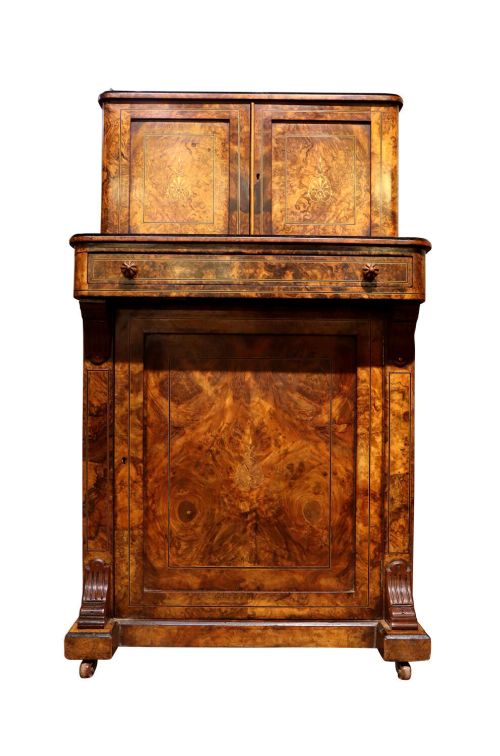
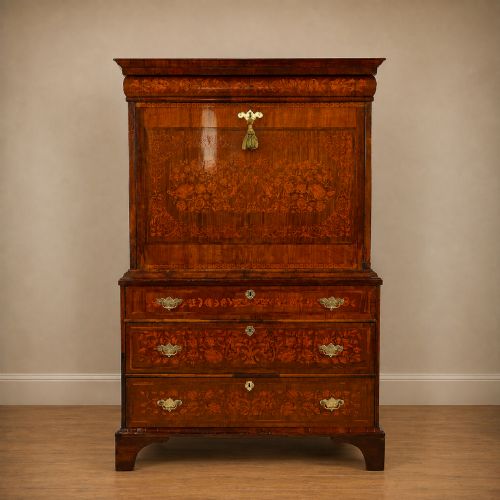

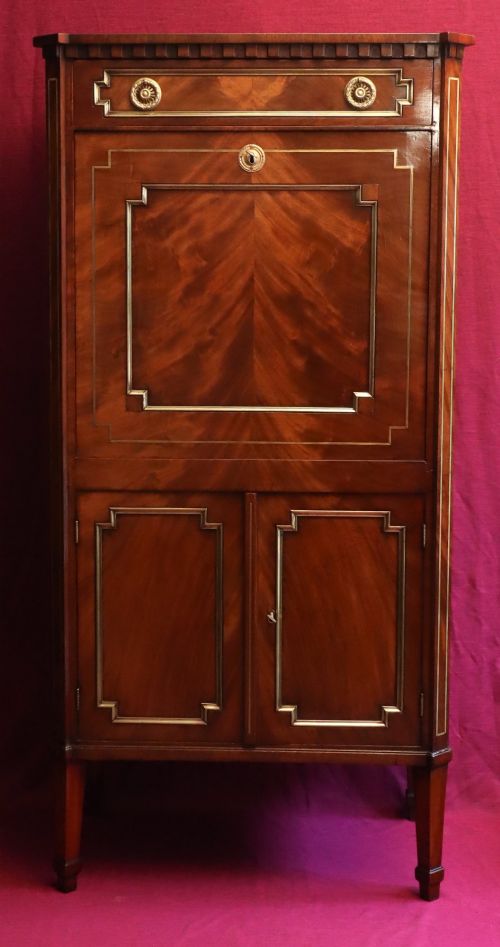
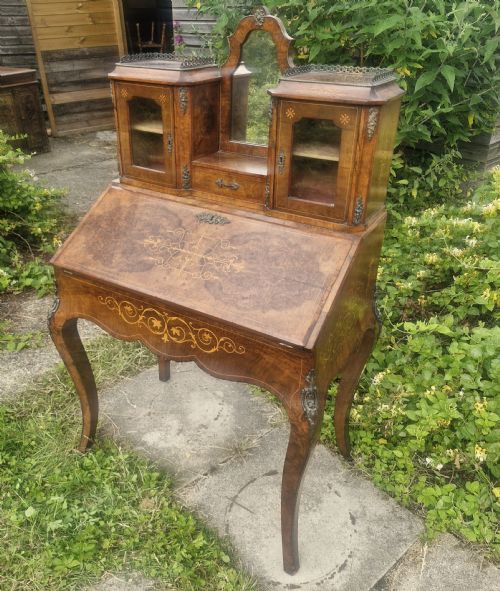
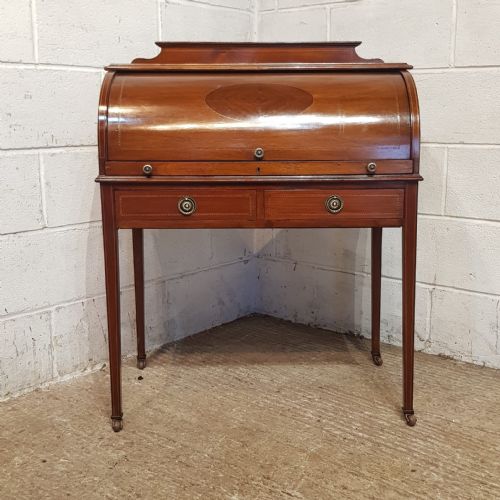


Inlaid Escritoire Desk
An inlaid escritoire desk is a fitted writing cabinet with a drop front, offering a compact surface for correspondence.
Inlaid Escritoire Desk
When you search for an inlaid escritoire desk, you encounter a refined writing cabinet designed for private correspondence and the storage of papers. These pieces combine a vertical case with a fall front or writing surface, originating across the eighteenth, nineteenth, and early twentieth centuries.
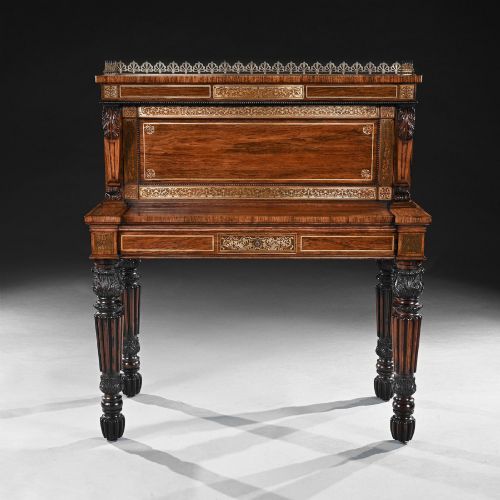
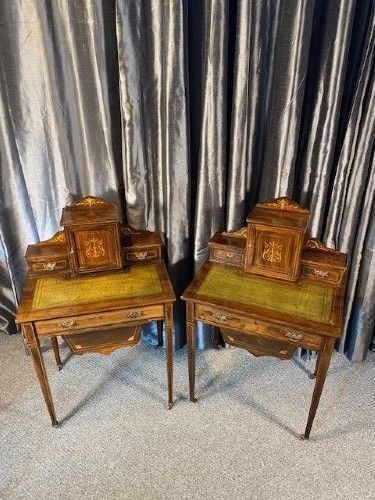
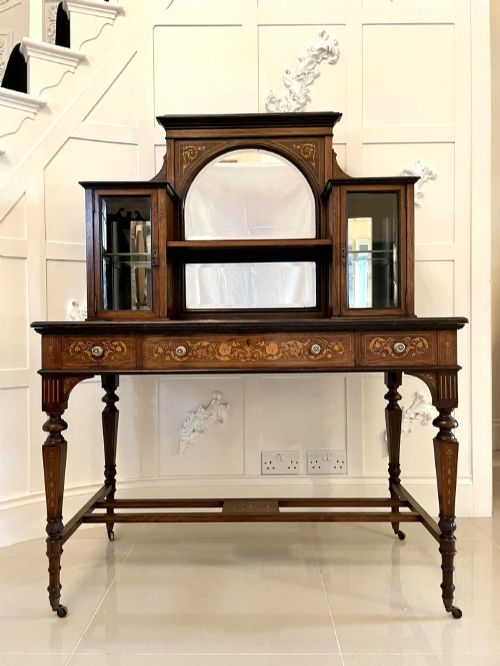
The versions most common on this page span the Victorian and Edwardian periods, alongside Georgian and Regency examples. Makers utilised walnut, mahogany, and rosewood, incorporating detailed marquetry and brass inlay.
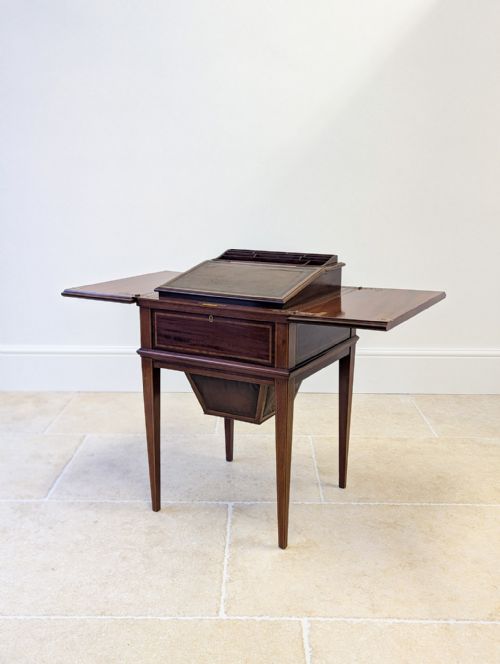
Forms range from traditional fall-front cabinets to bonheur du jour tables and cylinder desks. French and Dutch influences appear frequently alongside British Sheraton Revival styles.
How they were made
Cabinet makers constructed the primary carcasses of these desks using solid timbers like mahogany, walnut, and rosewood, often applying burr walnut or satinwood veneers to prominent surfaces. These foundational woods provided the necessary stability for intricate interior fittings and heavy drop fronts.
Decoration relied heavily on marquetry and metal inlay, embedding contrasting woods, brass, and bronze into the grain. Ormolu mounts and glass elements appeared on French and revival pieces, completing the surface ornamentation.
Several desks include concealed compartments designed for secret letters.
What varies in quality
The calibre of an inlaid escritoire desk rests upon the precision of its marquetry and the choice of veneers. Finer pieces display crisp, seamless wood-to-wood fitting and expressive burr walnut or satinwood grains.
Internal complexity also distinguishes individual examples, with superior desks featuring fitted drawers, hidden compartments, and integrated leather writing surfaces. The fluency of the mechanism on a cylinder or fall-front panel indicates the standard of original construction.
Gillows Oxford Street Workshop
The Inlaid Escritoire Desk Glossary
- Escritoire
- A writing cabinet featuring a fall-front flap that lowers to reveal a fitted interior of small drawers and pigeonholes.
- Marquetry
- Decorative inlay work using various coloured wood veneers to create pictorial or geometric patterns on the surface.
- Bonheur du jour
- A light lady's writing desk with a small cabinet or set of shelves superstructure upon the main writing surface.
- Cylinder desk
- A writing table with a curved, rotating roll-top cylinder that conceals the pull-out desk surface and interior compartments.
- Ormolu
- Gilded bronze ornamentation applied to furniture, frequently found on French revival escritoires and writing cabinets.
Inlaid Escritoire Desk: Frequently Asked Questions
What is an escritoire desk?
An escritoire desk is a specialised writing cabinet featuring a drop-down front panel that opens to reveal a tiered interior of small compartments and drawers.
These pieces were traditionally used for private correspondence and record-keeping, combining enclosed vertical storage with a functional writing surface.
How do I identify a Victorian desk?
Victorian desks typically employ dense timbers such as burr walnut, mahogany, and rosewood, often accented with rich marquetry or brass inlay.
Many examples from this era reflect revival movements, including French Louis XV designs and Sheraton influences.
Where were these desks made?
These writing desks originate primarily from British workshops, alongside significant numbers from French and Dutch makers.
Stylistic influences span Georgian cabinet-making traditions through to Edwardian production and various continental revival periods.
How do I care for inlaid wood?
Inlaid wooden surfaces require stable indoor humidity and protection from direct sunlight to prevent veneer lifting and timber drying.
Regular dusting with a soft cloth preserves the polished finish without the need for heavy chemical polishes.