


Inlaid Ebonised Credenza
An inlaid ebonised credenza brings dramatic nineteenth-century presence to a room, combining dark timber surfaces with bright floral marquetry or metallic mounts.

Inlaid Ebonised Credenza
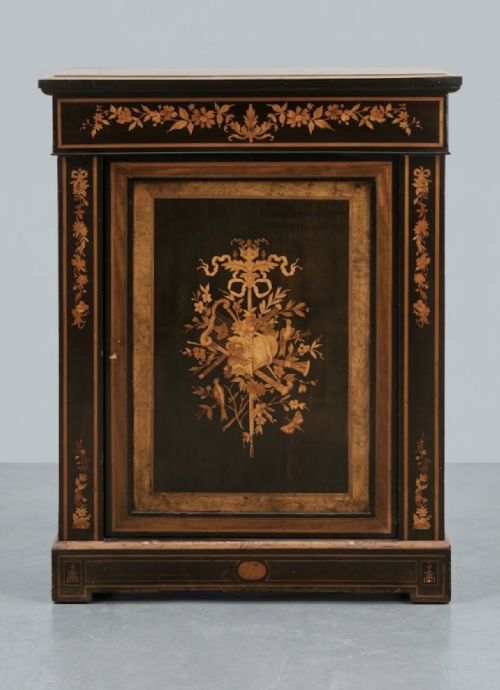
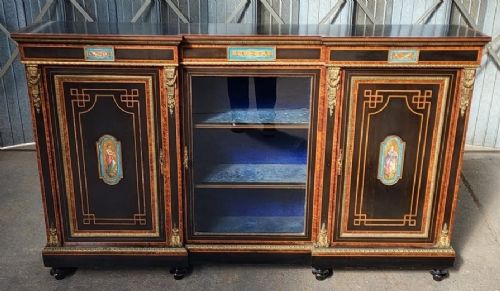
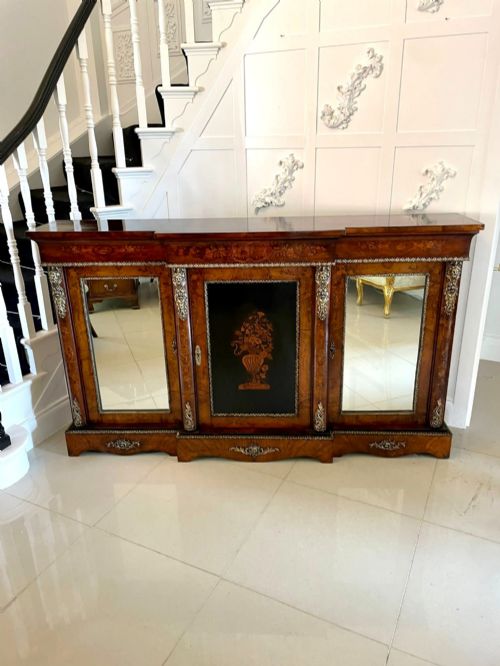
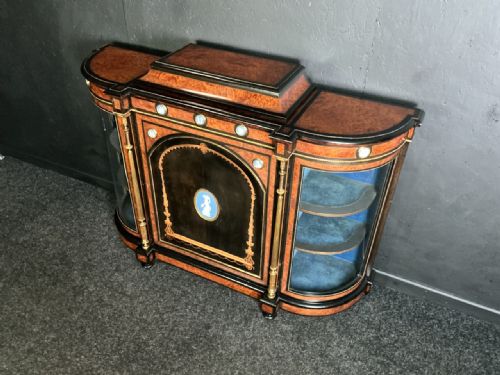
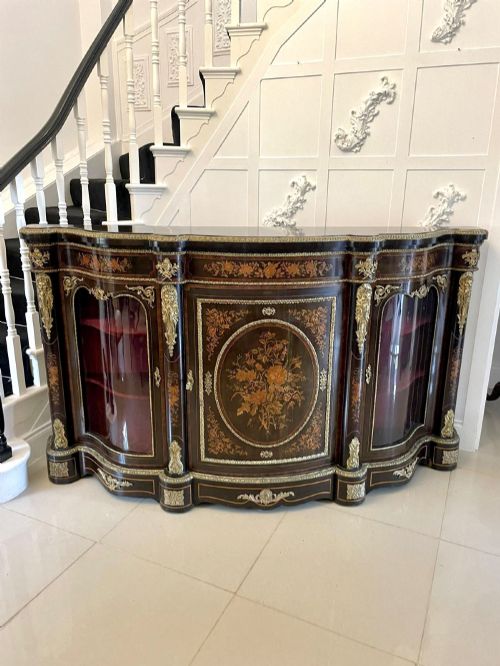
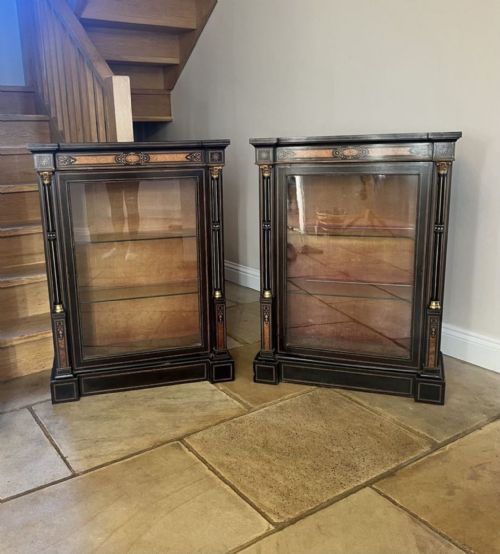
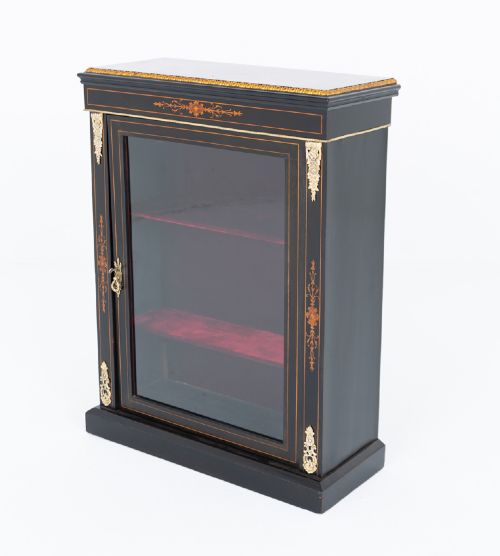
An inlaid ebonised credenza is a low nineteenth-century cabinet designed for display and storage, frequently encountered in Victorian and French Napoleon III styles. These pieces typically feature glazed central doors flanked by curved side cupboards, often topped with marble or polished timber.
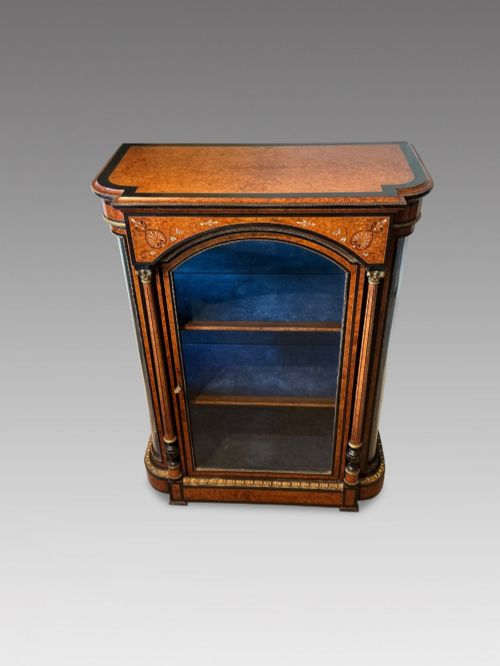
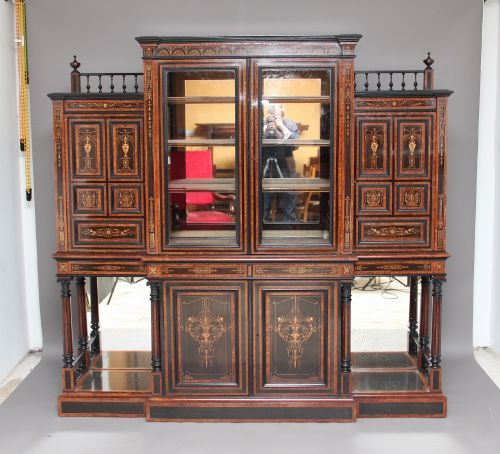
The form developed across the nineteenth century into side cabinets, pier cabinets, and breakfront bookcases alongside the standard credenza shape. Makers applied dark finishes to mimic ebony, setting off contrasting wood veneers, brass, and tortoiseshell inlays.
How they were made
Cabinets were constructed using solid timber carcases overlaid with walnut, burr walnut, or amboyna veneers, which were then treated with dark ebonising stains. Craftsmen embedded floral marquetry, brass stringing, and boullework into the prepared surfaces.
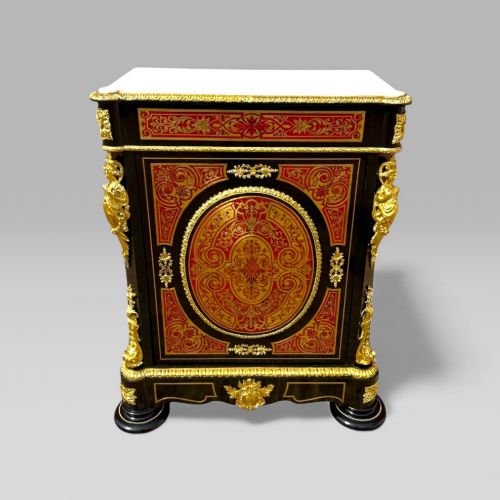
Mounts in ormolu, gilt bronze, and brass were cast and chased to accent the corners, borders, and central panels. Glazing protected the display interiors while marble slabs provided durable tops on French and Victorian examples.
Some nineteenth-century makers hid small velvet-lined compartments behind glazed doors, keeping personal treasures secure from curious visiting guests.
What varies in quality
The refinement of the marquetry and the precision of the brass or boulle inlay dictate the standard of a piece. Finer cabinets display intricate, tightly fitted floral motifs rather than stamped or repetitive patterns.
Casting quality in the ormolu mounts and the weight of the bronze elements distinguish superior workshops from standard commercial production. Heavier carcases utilising solid timber frames and superior walnut or amboyna veneers hold their structure more reliably.
Lamb of Manchester·Gillow
The Inlaid Ebonised Credenza Glossary
- Ebonised
- Wood treated with a dark stain or finish to imitate expensive ebony. This technique gained widespread popularity during the Victorian and Napoleon III periods.
- Marquetry
- Decorative patterns formed from fitted pieces of wood veneer applied to a carcase. Floral and scroll designs appear frequently on nineteenth-century cabinets.
- Boulle
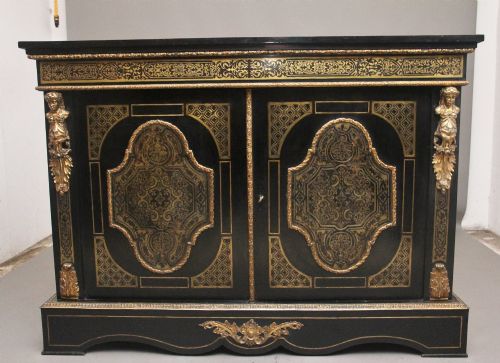
- An elaborate form of marquetry using brass and tortoiseshell inlaid together in intricate patterns. It is strongly associated with French nineteenth-century furniture.
- Ormolu
- Gilt bronze mounts used to decorate furniture edges and panels. Higher quality examples show crisp chasing and heavy metal weight.
- Pier cabinet
- A narrow upright display cabinet designed to fit wall spaces between windows. These tall pieces often feature glazed doors and ebonised timber.
Inlaid Ebonised Credenza: Frequently Asked Questions
What is an ebonised credenza?
An ebonised credenza is a nineteenth-century low cabinet finished in a dark stain to resemble ebony, typically featuring glass doors and contrasting marquetry inlay. These pieces served as both decorative furniture and storage for porcelain and silver.
They appear frequently in Victorian and French Napoleon III interiors, often incorporating brass work, ormolu mounts, and marble tops to create a striking focal point in a reception room.
How do I style a credenza?
Place a credenza against a principal wall in a dining room or drawing room where its surface can hold lamps or decorative objects. The glazed cupboards provide an ideal space for displaying ceramics and glassware.
Keep surrounding furniture balanced by pairing the dark ebonised wood with lighter walls or contrasting nineteenth-century seating to let the marquetry details stand out.
How do I tell Victorian from French pieces?
Victorian cabinets often emphasise burr walnut, amboyna, and floral marquetry with subtle brass stringing. French Napoleon III examples frequently incorporate elaborate tortoiseshell and brass boullework alongside heavy ormolu mounts.
French models more commonly feature marble tops, whereas many British Victorian credenzas retain polished timber top surfaces with serpentine or breakfront shapes.
What is boulle work?
Boulle work is a precise technique of inlaying brass and tortoiseshell together into wood surfaces. Named after French craftsmen, it creates a reflective, patterned finish that catches the light.
This decoration is a hallmark of French revival cabinets from the mid-nineteenth century, contrasting sharply against plain ebonised timber carcases.