

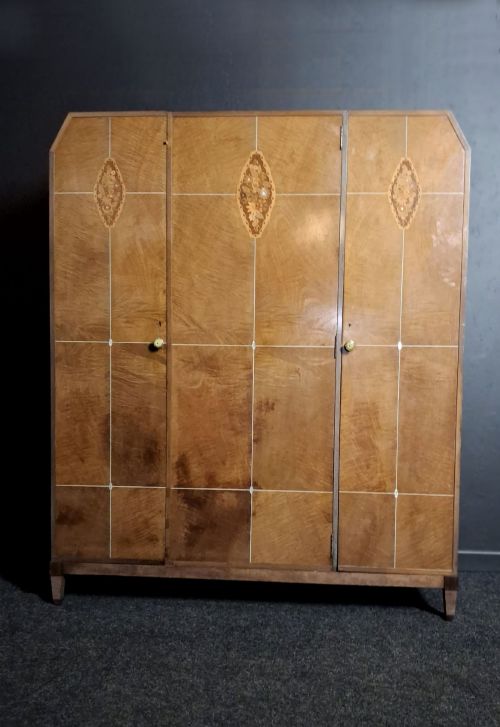
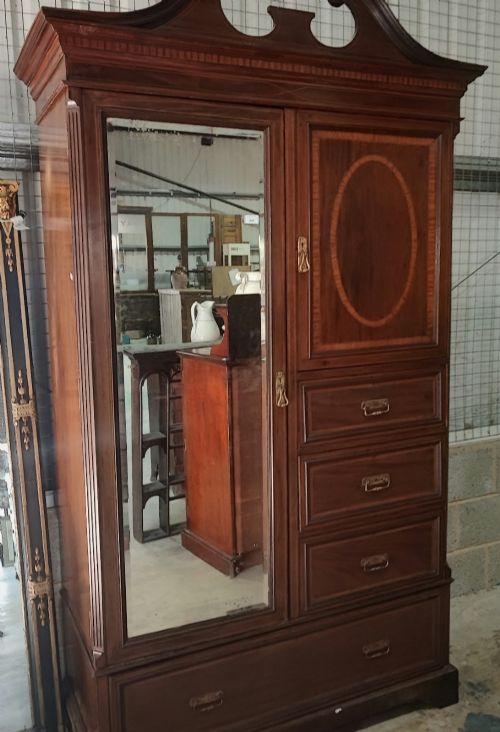
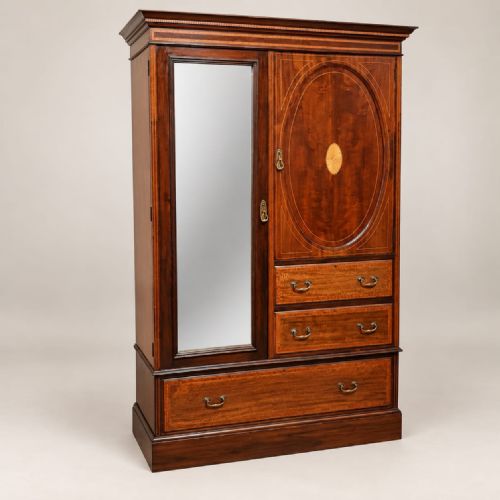
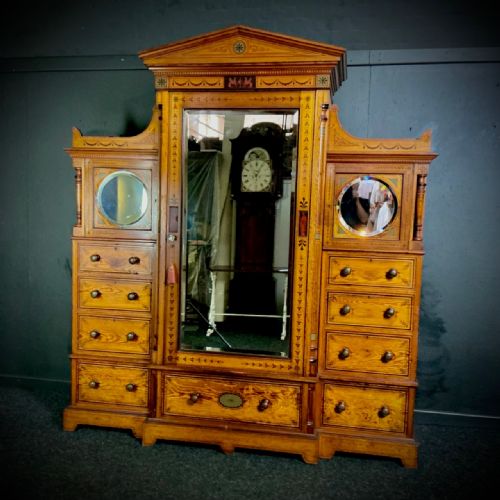
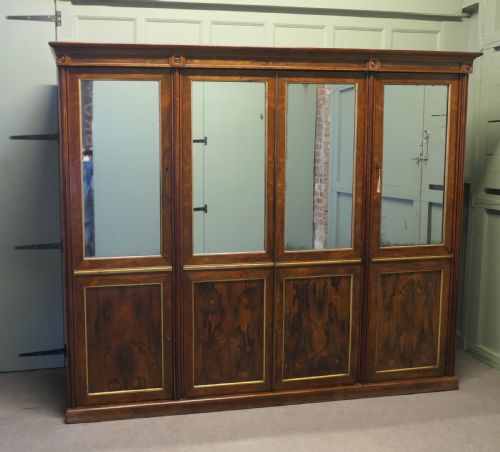
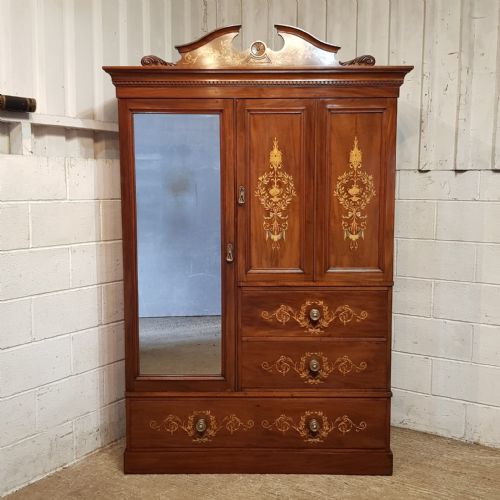
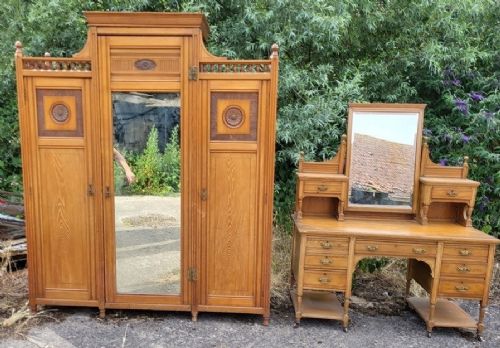
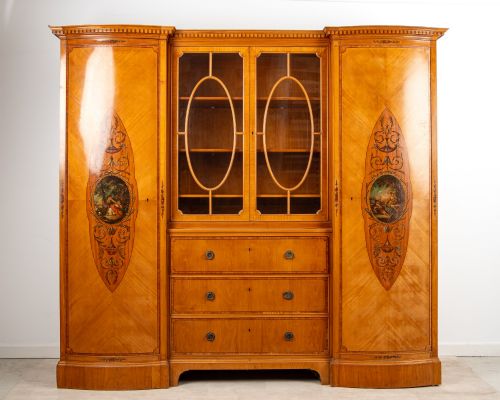
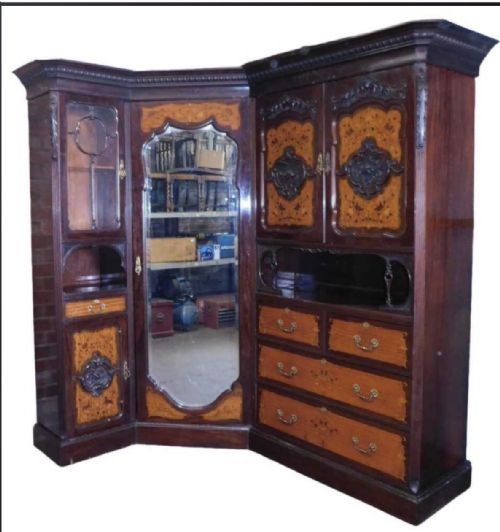
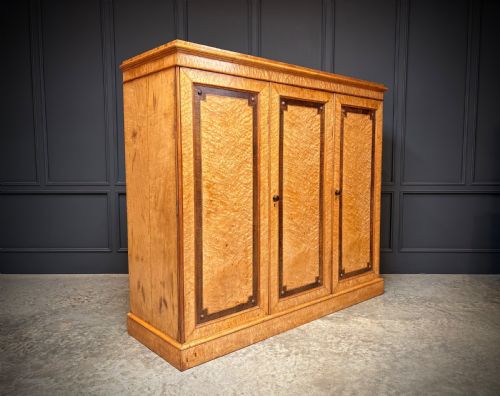


Inlaid Compactum Wardrobe
An inlaid compactum wardrobe offers substantial multi-compartment bedroom storage through fitted hanging space, drawers, and shelving combined within a single architectural timber frame.
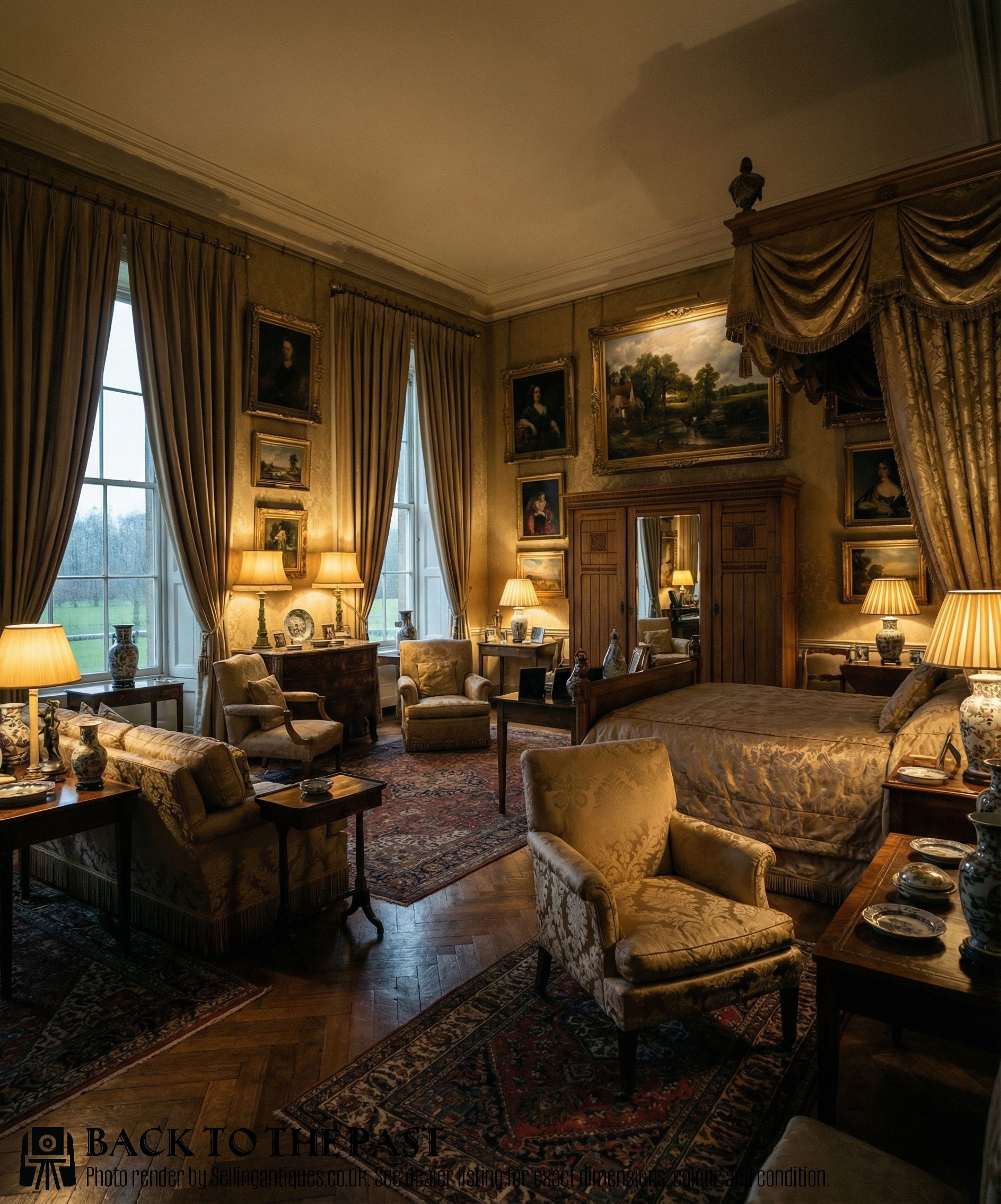
Inlaid Compactum Wardrobe
The inlaid compactum wardrobe combines hanging space with interior drawers and shelving, originating primarily from the Victorian and Edwardian periods. These large bedroom pieces provide comprehensive storage solutions within a single architectural structure.
Edwardian mahogany examples with satinwood inlay appear most frequently alongside Victorian walnut, rosewood, and ash variations. Makers construct these substantial items in sections to facilitate movement and installation within period residences.
Materials and Construction Techniques
Cabinetmakers build these large wardrobes using solid mahogany, walnut, oak, and ash, frequently applying satinwood veneers and decorative inlay. Brass hardware secures the doors and interior fittings while mirror glass panels inset into the timber doors provide full-length reflections.
Marquetry and crossbanding adorn the exterior surfaces, reflecting late Victorian and Edwardian Neo-Classical tastes. Structural integrity relies on modular carcass construction, allowing multi-section wardrobes to be dismantled for transport.
Inlaid Compactum Wardrobe Retail Price Guide 2026
Typical asking prices for inlaid compactum wardrobe among the pieces listed under this phrase on Sellingantiques today, from the lower quarter to the upper quarter. They describe what is for sale here now, not the wider market.
Listings demonstrate that Edwardian examples frequently employ mahogany paired with satinwood inlay, while Victorian variants favor walnut, rosewood, and pitch pine.
Distinctions in Execution and Detail
Quality varies according to the precision of the timber selection, the complexity of the internal fittings, and the finesse of the marquetry inlay. Superior examples incorporate finely figured mahogany or satinwood with detailed hand-painted panels and intact original mirror glass.
Renowned cabinet-making firms deliver higher standards of internal partitioning, dovetailed drawer construction, and robust cornice mouldings. The integration of specialised compartments such as linen presses and sliding trays distinguishes superior multi-section wardrobes.
Edwards and Roberts·Shapland and Petter·Maple and Co·Gillows of Lancaster
The Inlaid Compactum Wardrobe Glossary
- Compactum
- A multi-functional wardrobe that combines hanging spaces, interior drawers, and linen shelves within one unified cabinet.
- Inlay
- A decorative technique where contrasting woods or materials are inserted into recessed cavities on the furniture surface.
- Breakfront
- A cabinet design where the central section projects forward from the flanking wings.
- Marquetry
- Elaborate patterns formed using various tinted wood veneers applied to a structural carcass.
- Crossbanding
- A narrow band of veneer applied across the grain direction along the border of a panel or drawer front.
Inlaid Compactum Wardrobe: Frequently Asked Questions
How do I dismantle an inlaid compactum wardrobe?
These large wardrobes typically separate into distinct modular sections including a central unit, side hanging robes, and a heavy cornice. Unscrewing internal bolts and removing the doors allows safe relocation between rooms.
Professional assistance is often required due to the substantial weight of the dense timbers and mirror glass panels.
What fits inside an antique compactum?
Interior configurations generally include full-length hanging rails, linen shelves, and a tower of internal drawers housed behind central doors. Some models incorporate sliding linen trays or shoe racks.
This division of space provides organised storage for diverse garments without requiring supplementary bedroom furniture.
How do I identify an Edwardian compactum?
Edwardian examples commonly feature pale mahogany or satinwood timbers embellished with delicate Neo-Classical stringing and marquetry motifs. Bevelled oval mirror doors and lighter proportions distinguish them from earlier Victorian variants.
Construction methods from this era often utilise standardised panel widths and machine-assisted dovetailing alongside traditional hand-finishing.
Where should I place a large wardrobe?
Large wardrobes require a stable wall with sufficient clearance to open flanking doors and internal drawers fully. Maintaining distance from direct heat sources prevents the timber panels and decorative inlay from warping.
Rooms with high ceilings accommodate the imposing architectural cornices characteristic of breakfront and triple-door designs.