
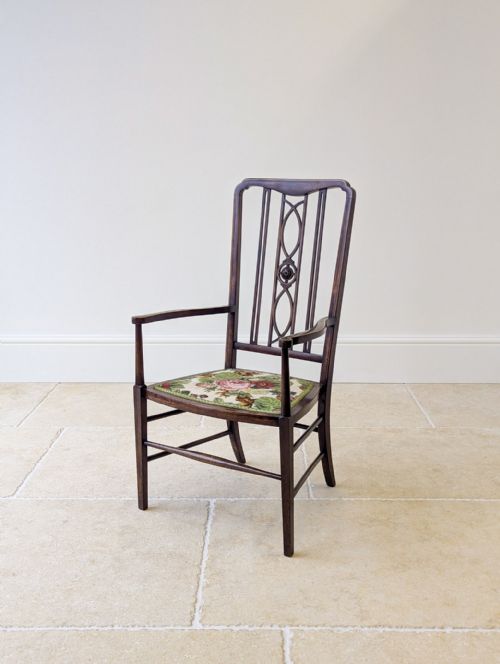
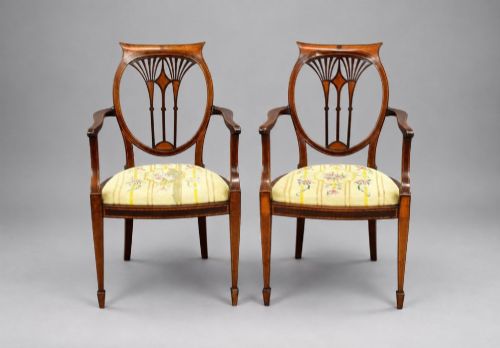
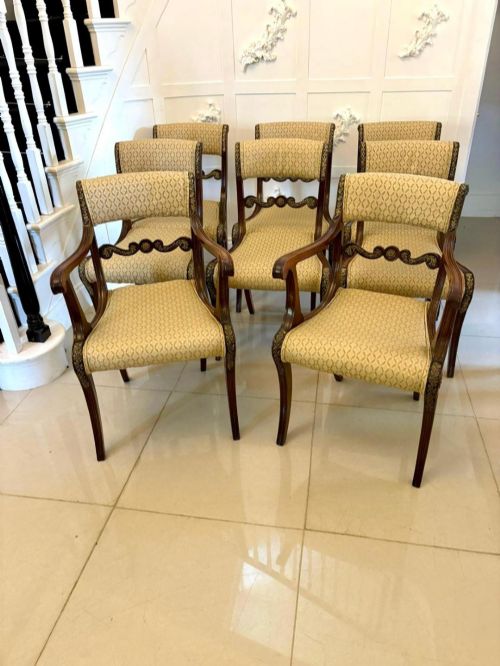
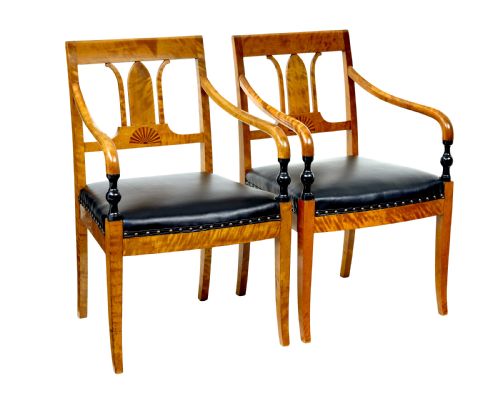
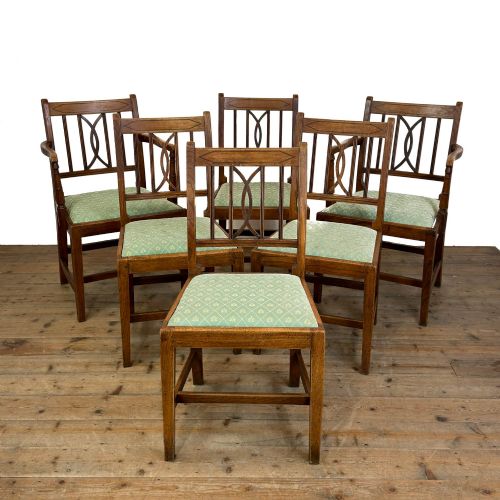


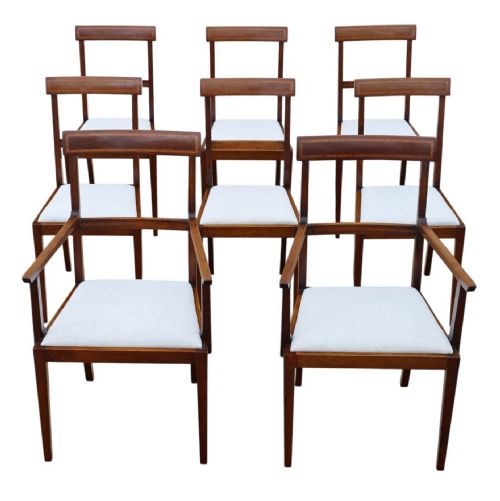


Inlaid Carver Armchairs
These inlaid carver armchairs combine substantial timber frames with delicate contrasting wood details for seating that commands attention in any room.
Inlaid Carver Armchairs
Inlaid carver armchairs combine the supportive structure of an armchair with decorative contrasting wood or brass details set flush into the main timber frame. When you search for inlaid carver armchairs, you encounter sturdy seating designed primarily for desks, dining tables, and salon settings from the Georgian, Victorian, and Edwardian eras. The Edwardian examples appear most frequently, typically constructed from mahogany with slender proportions and subtle decorative lines.
The form developed as an evolution of standard dining and desk seating, providing integrated armrests for added comfort while maintaining a formal silhouette. Makers during the late nineteenth and early twentieth centuries favoured mahogany and satinwood bodies finished with intricate stringing or floral motifs. These pieces serve practical seating roles while functioning as distinct decorative objects within period and contemporary interiors alike.
Materials and construction methods
Makers constructed the primary frames of these chairs using dense hardwoods, predominantly mahogany, walnut, and oak, chosen for their structural strength and ability to hold fine details. Artisans then recessed contrasting light veneers, including satinwood and birch, into shallow channels carved directly into the timber surface. Brass inlays also appear on formal Regency and Georgian pieces, hammered into precision-cut grooves to create crisp metallic borders against dark wood.
Joinery relied on traditional mortise and tenon joints secured with wooden pegs or concealed glue blocks to withstand daily weight and movement. Upholstered drop-in seats or pad-backed cushions used horsehair stuffing beneath fabric or leather covers, held in place with iron or brass tacks. Cabinetmakers finished the exposed wood surfaces with hand-rubbed shellac or wax polish that brought out the natural grain patterns and protected the delicate veneer work.
Listings feature inlaid carver armchairs spanning the Georgian, Victorian, Edwardian, and Regency periods, constructed primarily in mahogany, walnut, and oak.
Assessing craftsmanship and execution
Quality in these armchairs depends on the precision of the joinery and the integration of the decorative elements into the primary timber structure. Superior examples display seamless inlay work where contrasting woods fit flush with the surrounding grain without visible gaps or excessive filler. The carving of the arm supports and back splats reveals the hand of a skilled maker through crisp edges and balanced proportions rather than cast uniformity.
The stability of the frame and the retention of original timber components dictate the long-term integrity of each piece. Chairs that retain their original upholstery webbing and firm structural joints command greater respect from collectors than those with replaced underpinnings or poorly mended stress points. The depth and clarity of the polished finish further distinguish workshop standards, separating utilitarian production from exhibition-grade commissions.
Shoolbred·Jenks & Wood
The Inlaid Carver Armchairs Glossary
- Carver chair
- A term for an armchair, traditionally used at the head of a dining table or as a desk chair. These pieces feature integrated armrests connected to the seat rails.
- Stringing
- A narrow strip of contrasting wood inlay used to create fine linear borders along table edges and chair stiles. This technique defines the panels on Edwardian and Sheraton Revival furniture.
- Marquetry
- An elaborate decorative technique where pieces of various coloured woods, shell, or ivory are assembled into pictorial or geometric veneers. Dutch examples often display floral marquetry across the entire backrest.
- Satinwood
- A durable tropical hardwood known for its golden-yellow colour and lustrous, reflective grain. Makers used it primarily as a contrasting inlay material or for entire high-status salon chairs.
- Elbow chair
- An alternative historical term for an armchair, referencing the supportive rest provided for the user's arms. These items frequently served in libraries, offices, and bedrooms.
Inlaid Carver Armchairs: Frequently Asked Questions
What is a carver armchair?
A carver armchair is a seated piece featuring integrated armrests that match the design of a surrounding set of side chairs. They typically stood at the head of a dining table or served as standalone desk chairs.
The term distinguishes these armed variants from standard dining chairs without armrests, ensuring proper support for the user during extended periods of sitting.
How do I date an inlaid armchair?
Dating relies on examining the timber species, the style of the inlay work, and the structural construction methods of the frame. Edwardian pieces often use fine mahogany with light stringing, while Regency items feature bold brass inlays against dark rosewood or mahogany.
Secondary woods visible beneath the seat rails and the type of fixings used provide further clues to confirm whether a piece belongs to the eighteenth, nineteenth, or early twentieth century.
Were these chairs used at dining tables?
Many carver armchairs served specifically at dining tables, often as part of larger matching sets intended for the host and hostess. Their proportions allowed them to slide underneath standard table heights while offering additional comfort through the armrests.
Other variants functioned as desk chairs, salon seating, or occasional chairs placed in bedrooms and morning rooms rather than formal dining spaces.
How should I care for antique inlaid wood?
Maintain these pieces by keeping them away from direct sunlight and sudden temperature shifts that can dry out the timber and cause veneers to lift. Apply a quality natural beeswax polish periodically to nourish the wood surface and protect the finish from moisture.
Avoid using modern silicone-based sprays, which penetrate the grain and damage the original polish over time.