
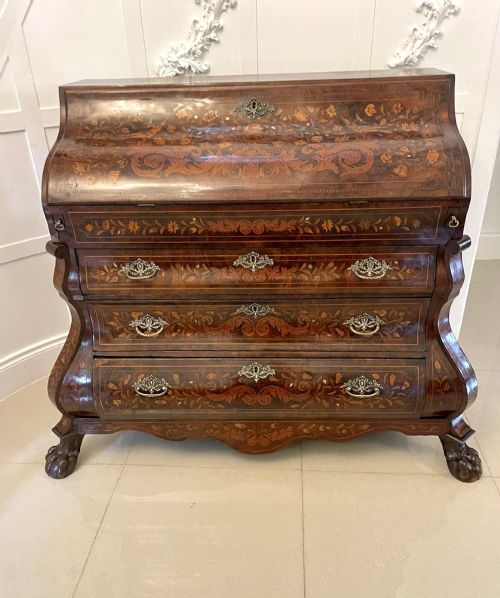
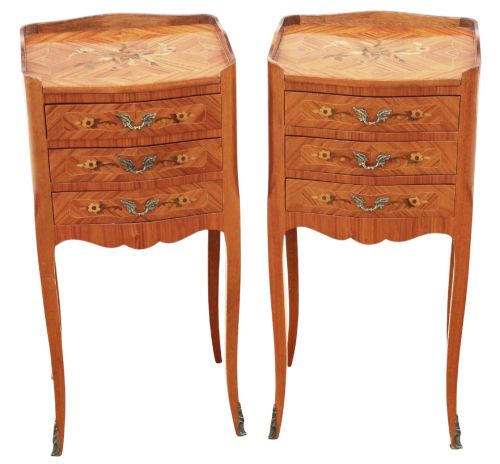
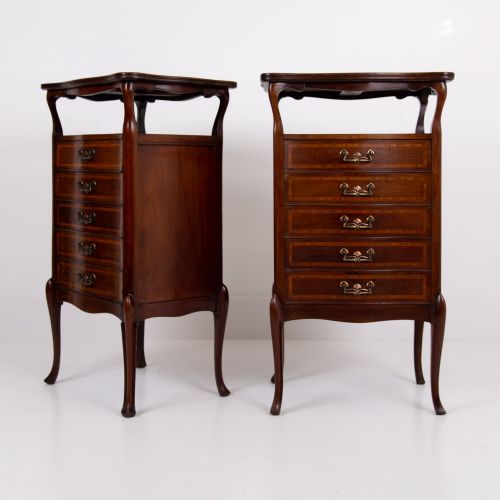
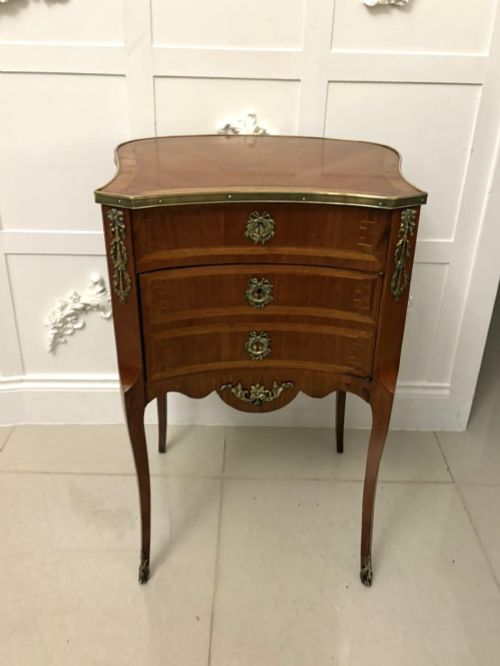
Inlaid Cabinet with Drawers
An inlaid cabinet with drawers brings structured storage and intricate decorative surfaces into a room, offering both concealed compartments and visible display.
Inlaid Cabinet with Drawers
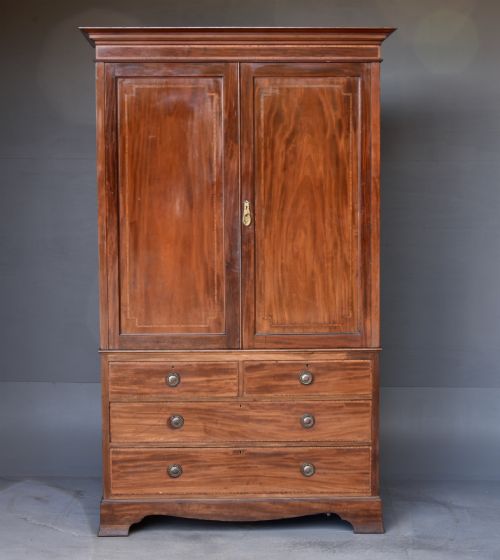
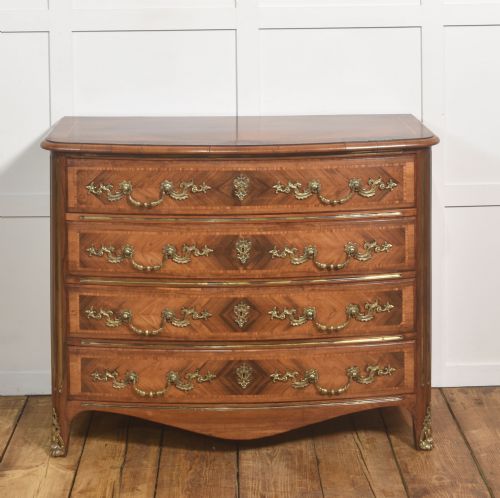
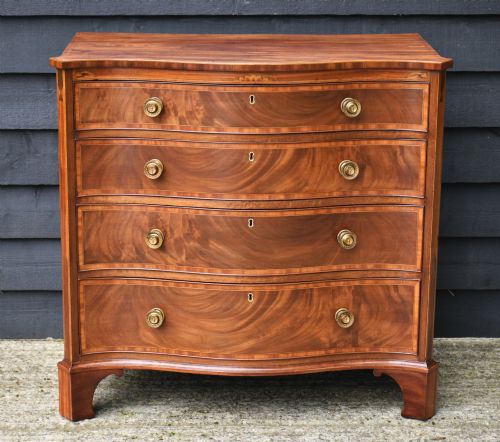
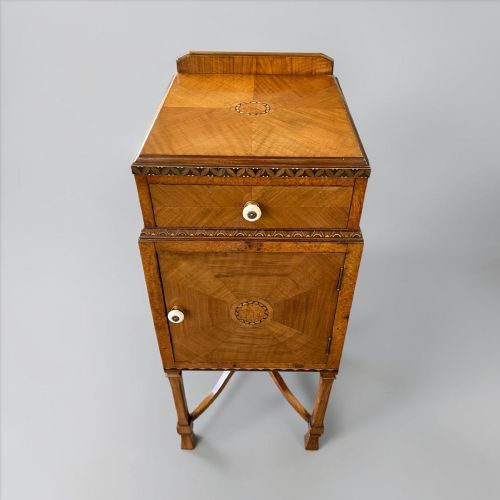
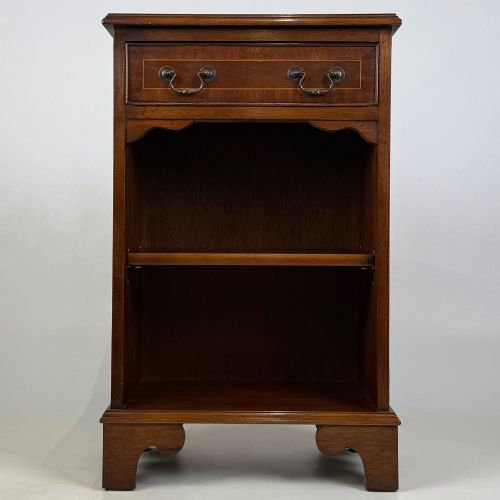
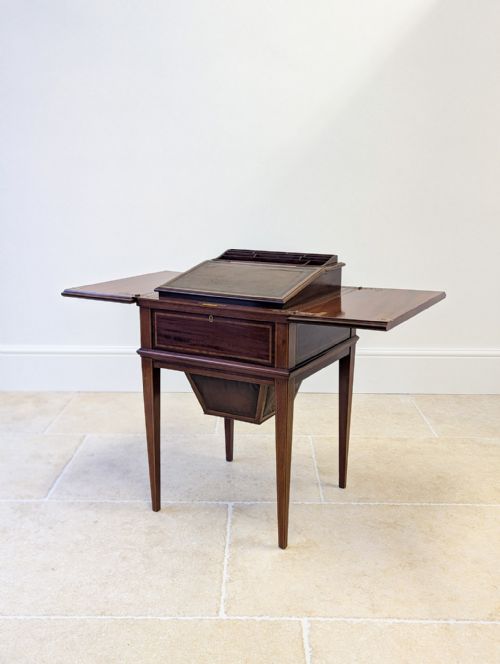
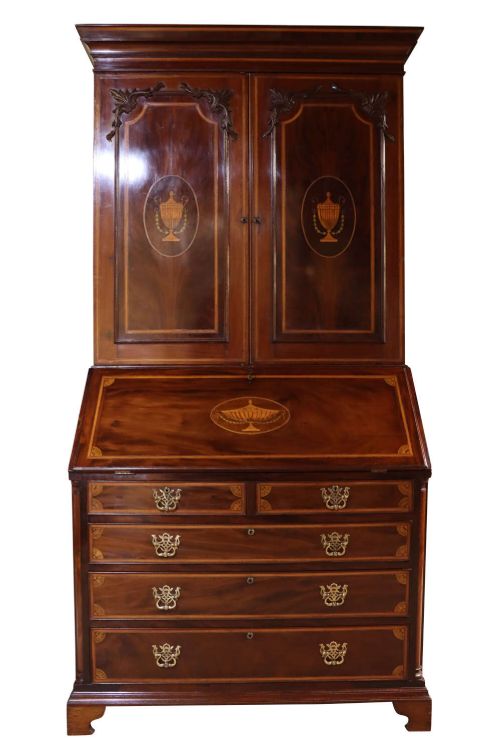
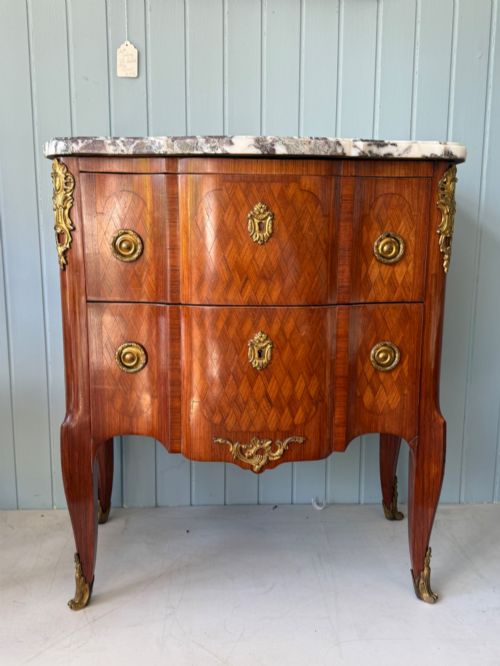
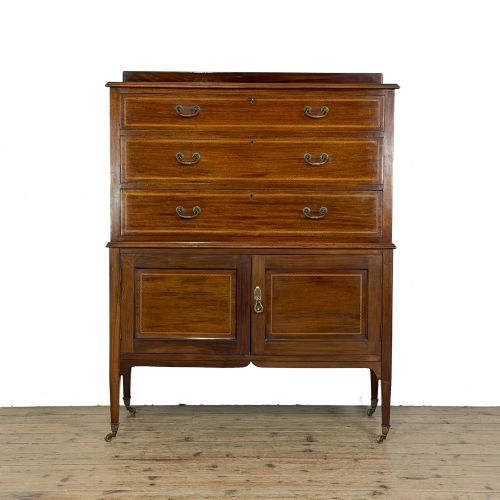
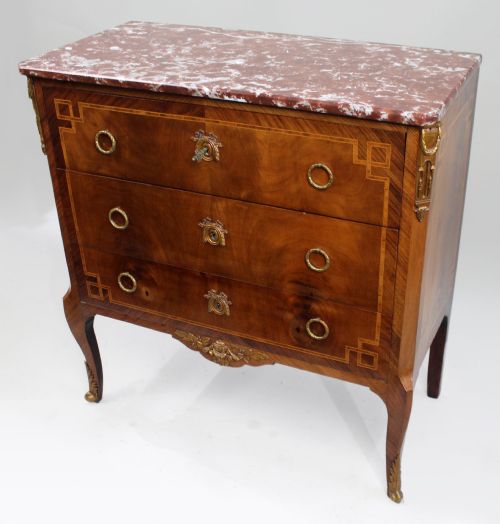
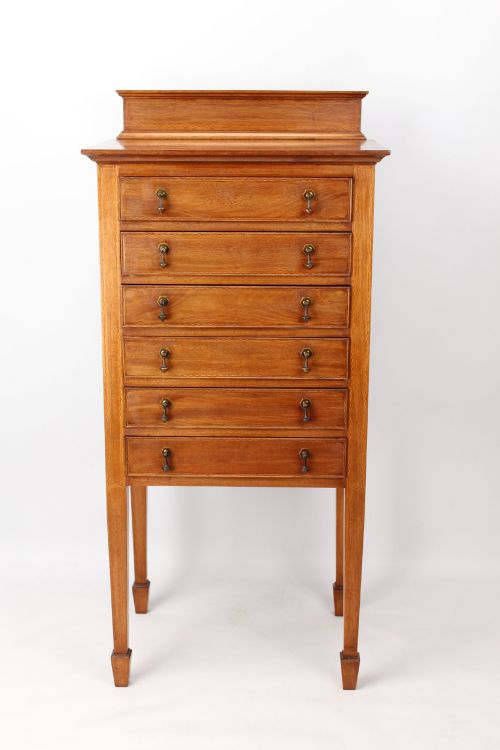
An inlaid cabinet with drawers encompasses varied forms spanning the eighteenth, nineteenth, and early twentieth centuries, including bureau bookcases, side cabinets, commodes, and bedside tables. Pieces emerge from English, French, and broader Continental workshops, reflecting shifting domestic needs from writing and reading to display and organisation.
The Edwardian and Georgian eras dominate the available selection, often presenting mahogany, walnut, or rosewood carcass structures fitted with functional internal compartments. Buyers frequently encounter smaller bedside variants alongside larger bureau bookcases and side cabinets bearing contrasting wood details.
Materials and Technique
Cabinet makers utilised dense timber foundations such as mahogany, walnut, rosewood, and maple, building sturdy carcases designed to withstand decades of daily use. These primary woods provide deep natural grain patterns that contrast effectively with lighter decorative insertions.
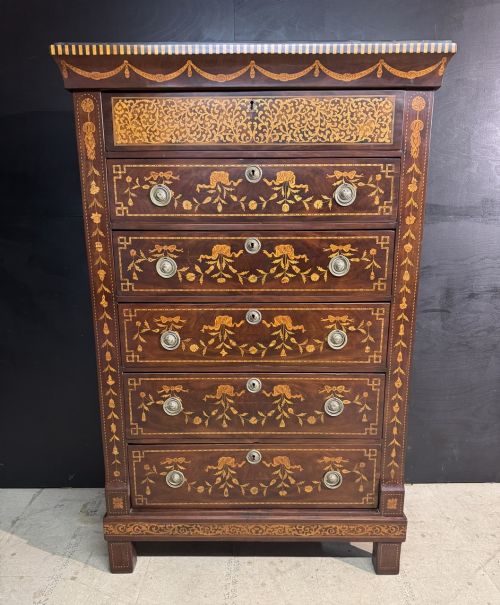
Inlay and marquetry techniques rely on contrasting materials like satinwood, boxwood, and brass to form geometric bands, floral motifs, or complex pictorial scenes. Craftsmen carefully recessed these contrasting elements flush into the primary timber surface before polishing and finishing.
Craftsmanship and Proportion
Superior examples demonstrate meticulous precision in the cutting and fitting of decorative veneers, ensuring tight joints without visible gaps or excessive adhesive filler. The crispness of the surrounding stringing and the natural depth of the timber polish distinguish master workshops from standard production.
Structural integrity and balanced proportions dictate the standing of a piece, with high-grade items retaining original hardware, smoothly operating drawer runners, and well-aligned doors. The harmony between the primary wood and the secondary inlay elements reveals the deliberate intent of the maker.
maples & co
The Inlaid Cabinet with Drawers Glossary
- Inlay
- The technique of inserting pieces of contrasting material into a recessed wooden surface to form a decorative pattern. This differs from marquetry by typically resting within solid wood rather than forming an entire veneer layer.
- Marquetry
- The art of applying decorative veneer pieces to a structure to form intricate pictorial or geometric designs. Craftsmen assemble these veneers prior to gluing them onto the carcase.
- Stringing
- A thin, narrow strip of contrasting wood or light material embedded around drawer perimeters or panel edges. It provides a sharp linear border that frames the main timber panels.
- Bureau bookcase
- A dual-function furniture form combining a sloping fall-front writing desk over drawers with an upper enclosed shelving section. These pieces often feature numerous interior pigeonholes and small drawers.
- Commode
- A low French-style chest of drawers or cabinet originating in the seventeenth century, frequently topped with marble. They serve as both decorative statement pieces and practical storage units.
Inlaid Cabinet with Drawers: Frequently Asked Questions
How do I identify an Edwardian piece?
Edwardian cabinets typically display lighter timbers such as satinwood or mahogany paired with refined Sheraton Revival inlay motifs. Construction methods from this period often incorporate machine-assisted precision alongside traditional hand-finishing.
Examine the interior secondary woods and backboards, which frequently show uniform milling characteristics typical of the early twentieth century. The overall aesthetic leans toward delicate proportions and symmetrical decorative banding.
What is the difference between inlay and marquetry?
Inlay involves chiselling cavities directly into a solid wooden surface and inserting contrasting pieces of wood, metal, or shell. Marquetry creates a complete picture or pattern using multiple veneer sheets assembled across the entire surface.
Understanding this distinction helps clarify the decorative technique used on specific drawer fronts and cabinet doors throughout different periods.
How should I care for a polished wood surface?
Maintain polished mahogany, walnut, or rosewood by dusting regularly with a soft, dry cloth to prevent abrasive particle build-up. Avoid placing wooden cabinets in direct sunlight or near heat sources to prevent timber shrinkage and veneer lifting.
Apply high-quality microcrystalline wax sparingly when the finish appears dry, buffing gently to restore the natural sheen without building up thick residues.
Can I use a bureau bookcase in a modern study?
A bureau bookcase provides versatile storage with enclosed shelving above and a functional fold-down writing surface concealing multiple small drawers below. This makes it practical for managing correspondence and housing books within contemporary spaces.
The enclosed compartments keep clutter hidden while offering a dedicated workspace that closes securely when not in use.