


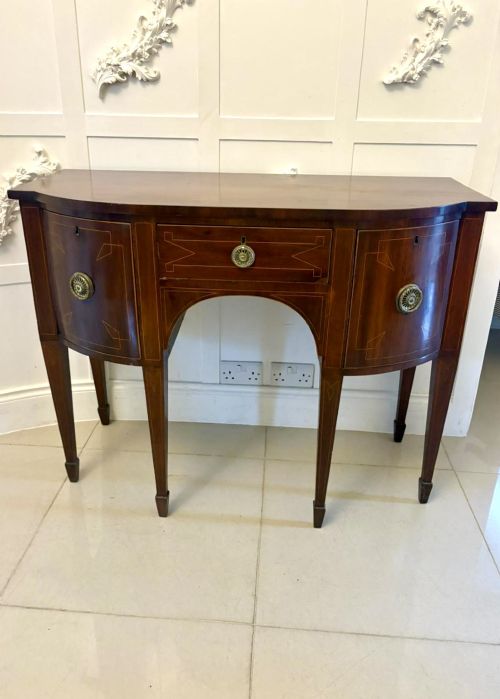
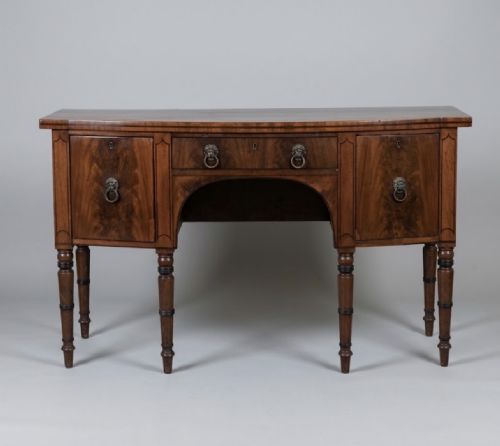
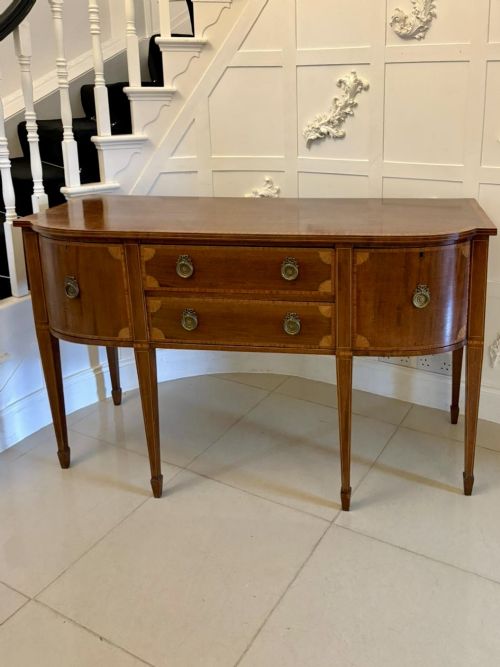
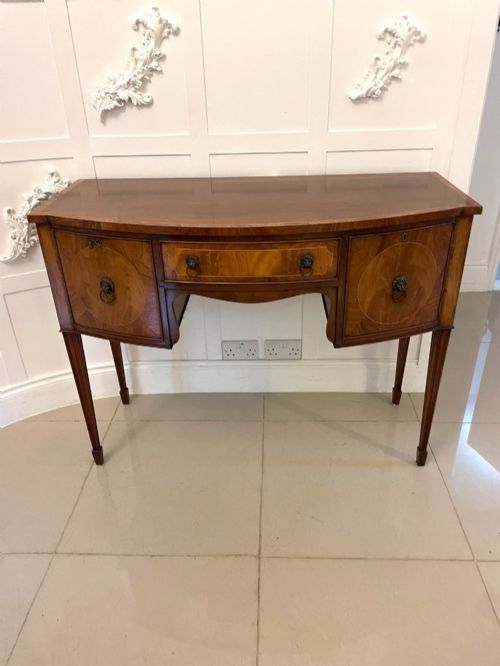
Inlaid Bowfront Sideboard
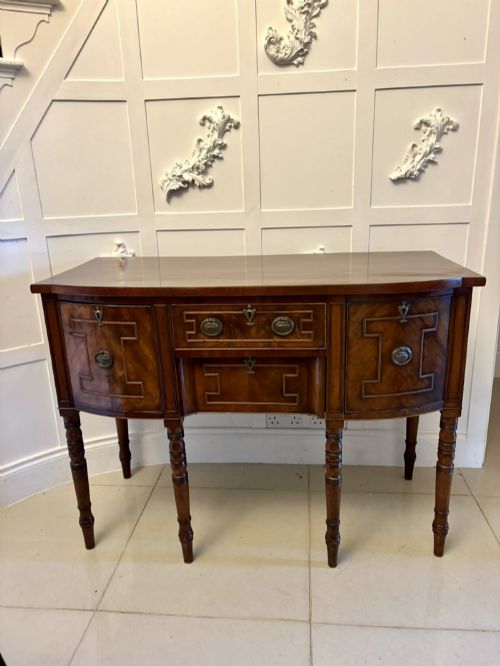
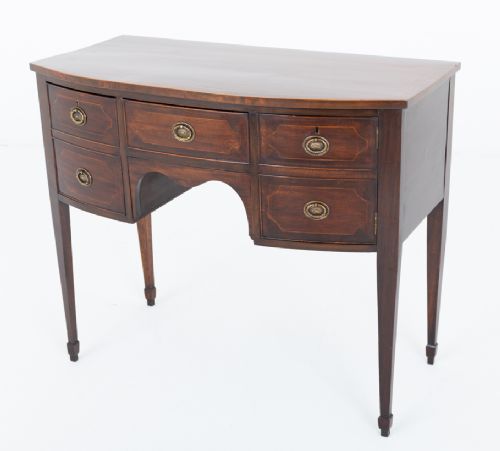
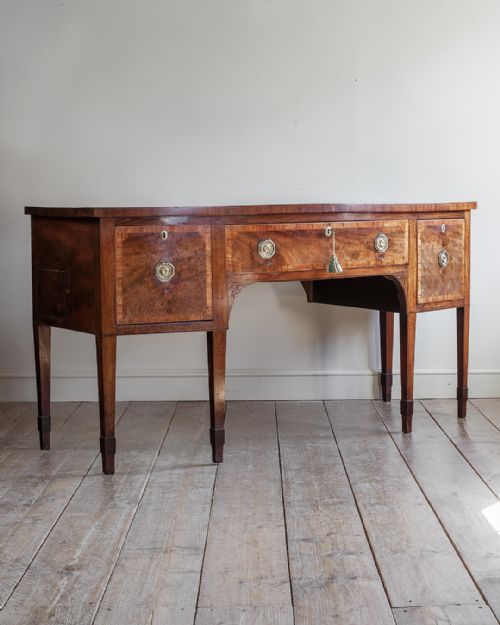
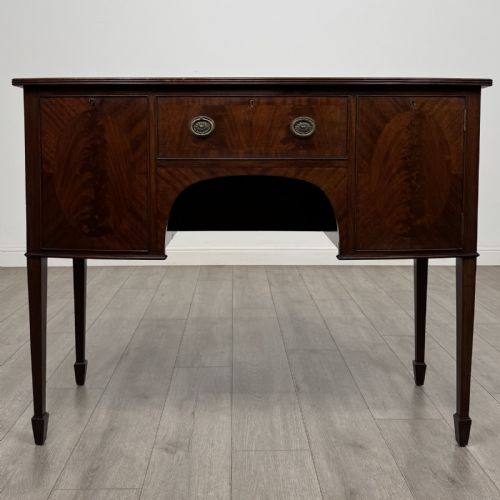
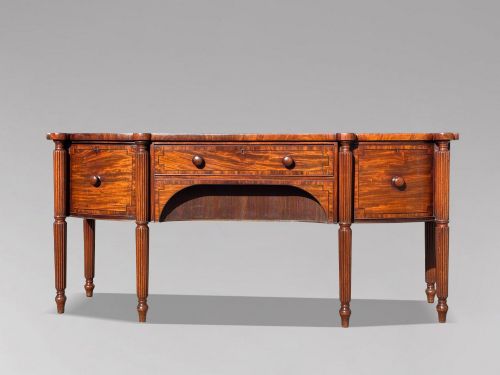
An inlaid bowfront sideboard brings sculptural presence and disciplined timber work to a dining room, uniting curved fronts with precise contrasting stringing.
Inlaid Bowfront Sideboard
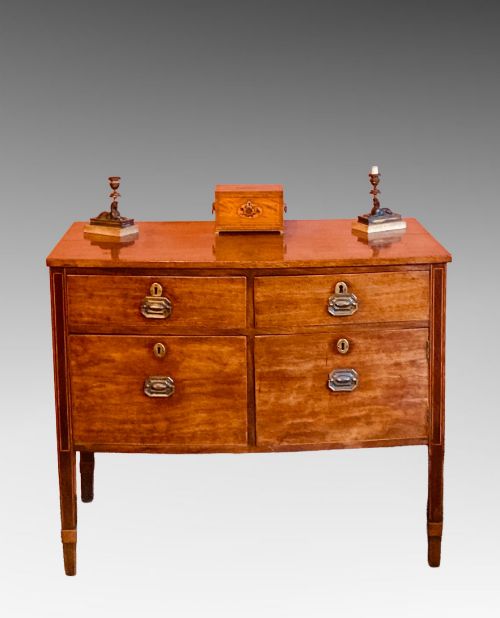
An inlaid bowfront sideboard is a dining room storage piece featuring a prominent convex curved front and decorative linear details. Buyers encounter examples originating from the eighteenth century, the Regency period, and later revival movements.
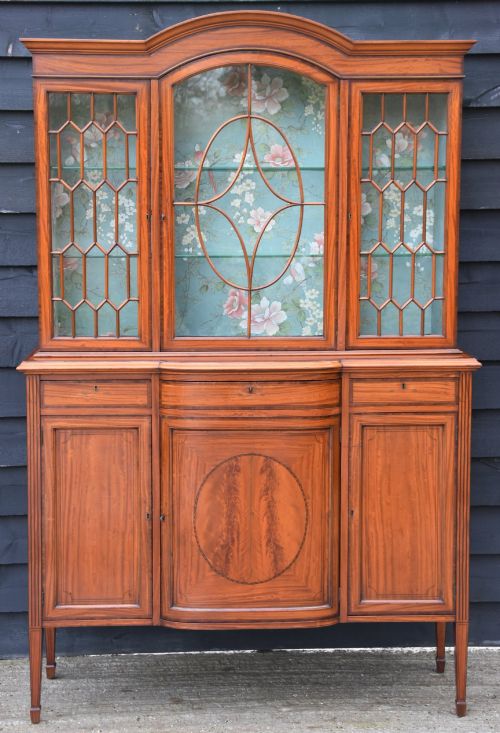
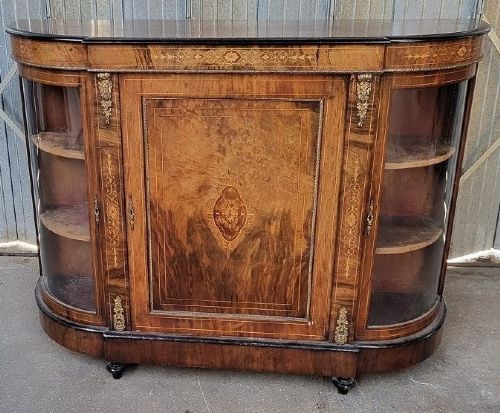
The selection ranges from compact George III and Georgian server designs to expansive Sheraton Revival pieces and Victorian walnut credenzas. Mahogany serves as the principal carcase timber across multiple manufacturing dates.
Sideboards and side cabinets frequently incorporate bow fronts, while related formats include credenzas, dressers, and display cabinets. Pieces span the Georgian, Victorian, Edwardian, and Regency eras.
Materials and construction
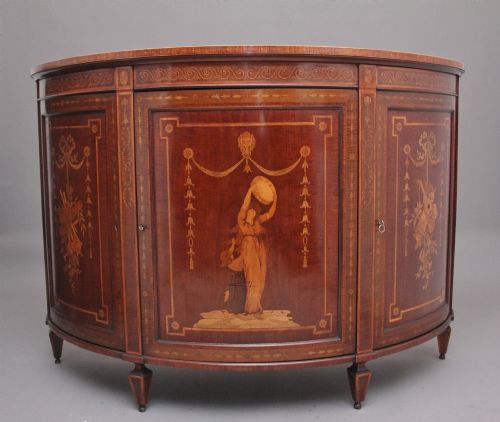
Cabinet makers utilised mahogany as the primary structural timber, often selecting figured varieties or flame veneer for visible surfaces. Satinwood, boxwood, and rosewood provided contrasting tones for stringing, crossbanding, and floral marquetry panels.
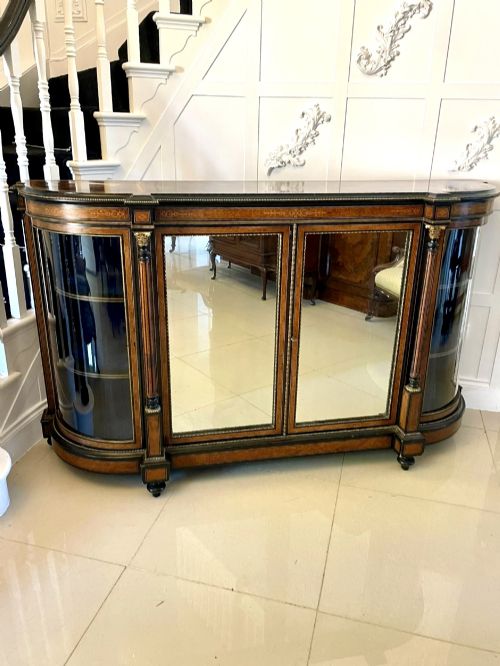
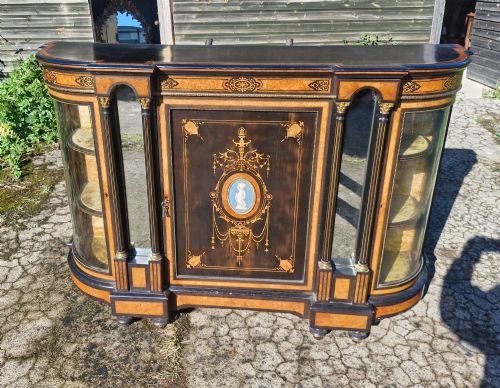
Detailing relied on precision inlay work, brass hardware, and occasionally ormolu mounts on Victorian burr walnut and ebonised carcases. Glass doors feature on specific side cabinet and credenza variations.
Inlaid Bowfront Sideboard Retail Price Guide 2026
Typical asking prices for inlaid bowfront sideboard among the pieces listed under this phrase on Sellingantiques today, from the lower quarter to the upper quarter. They describe what is for sale here now, not the wider market.
Listings span the eighteenth century through the Edwardian era, incorporating mahogany, satinwood, burr walnut, and ormolu.
Distinctions in manufacture
The standard of execution rests on timber selection and the precision of the contrasting inlay work. Figured mahogany surfaces and crisp boxwood or satinwood stringing separate superior examples from plain utility pieces.
Construction integrity shows in the fluidity of the curved bow front and the harmony of the proportions across the carcase. Finer pieces demonstrate careful attention to grain alignment and balanced decorative banding.
The Inlaid Bowfront Sideboard Glossary
- Bowfront
- A convex curved cabinet front that projects outward in an arc. This shape softens the room and defines the silhouette of the sideboard.
- Inlay
- A technique where pieces of contrasting wood, such as boxwood or satinwood, are inserted into recessed cavities to form decorative patterns. It provides linear definition to the carcase.
- Crossbanding
- A border veneer applied around the perimeter of a drawer front or top with the wood grain running perpendicular to the centre panel. It creates a neat framing effect.
- Marquetry
- Elaborate decorative veneer work assembled into pictorial or floral motifs using various coloured woods. This method appears on select revival and Victorian pieces.
- Credenza
- A low cabinet piece associated with Victorian dining and drawing rooms, frequently fitted with glass doors and ormolu mounts. It shares category space with sideboards on this page.
Inlaid Bowfront Sideboard: Frequently Asked Questions
How do I place an inlaid bowfront sideboard in a modern dining room?
Position the sideboard against a principal wall where the curved front and timber grain can catch ambient light without obstructing foot traffic. The balanced proportions allow it to anchor a room while providing functional surface space.
Pair the piece with simple dining furniture to let the historical timber work and contrasting stringing remain the visual focal point of the interior.
What is the difference between George III and Sheraton Revival sideboards?
George III sideboards date from the eighteenth and early nineteenth centuries, displaying period cabinet-making techniques and authentic proportional restraint. Sheraton Revival pieces date from later periods like the Edwardian era, reinterpreting those earlier classical motifs.
Revival examples often utilise lighter satinwood veneers and more exuberant marquetry, whereas original Georgian pieces rely primarily on figured mahogany and understated boxwood inlay.
How were these sideboards used originally?
Dining rooms required these large pieces of furniture to store serving dishes, cutlery, and glassware during large meals. The broad top surface served as a station for carving meats and displaying silver serving pieces.
Drawers and cupboards kept dining accessories organised out of sight, fulfilling a purely domestic role before transitioning into prized decorative antiques.
How can I tell an 18th century piece from a later revival?
Examine the secondary timbers inside the drawer boxes and the construction methods used on the carcase back and interior framing. Eighteenth-century pieces exhibit hand-cut joinery and timber ageing consistent with the period.
Later Sheraton Revival pieces, by contrast, often display standardised machine-cut elements and brighter, less oxidised satinwood or mahogany veneers typical of the Edwardian era.