


Inlaid Book Stand
An inlaid book stand brings refined timber and crisp decorative detail to a room, holding everyday volumes within easy reach on a revolving or static table.
Inlaid Book Stand
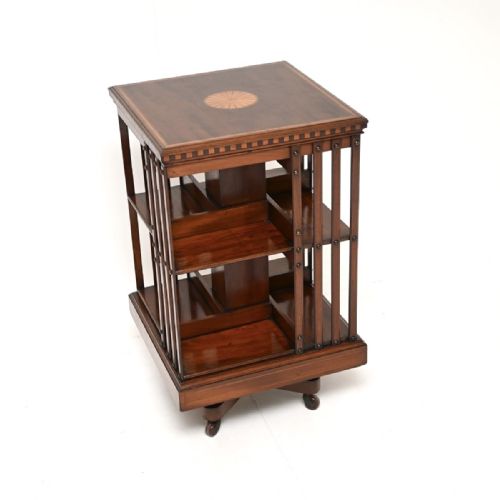
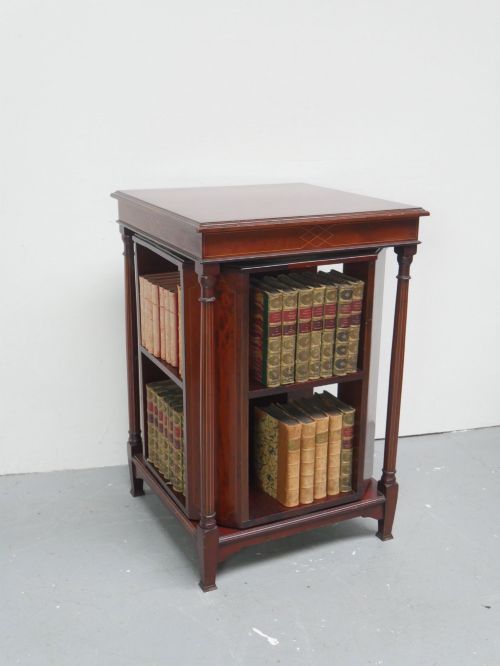
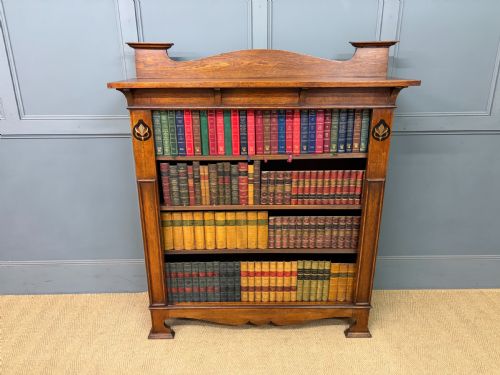
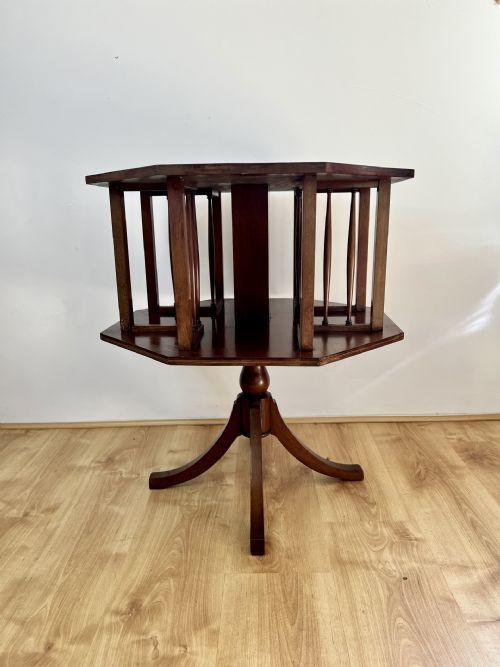
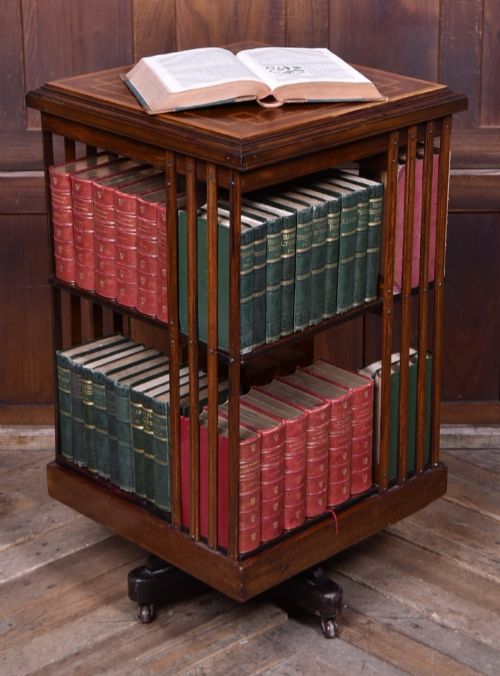
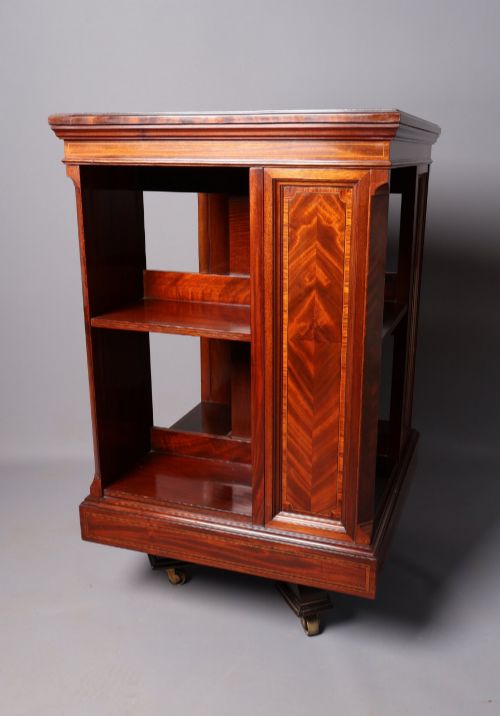
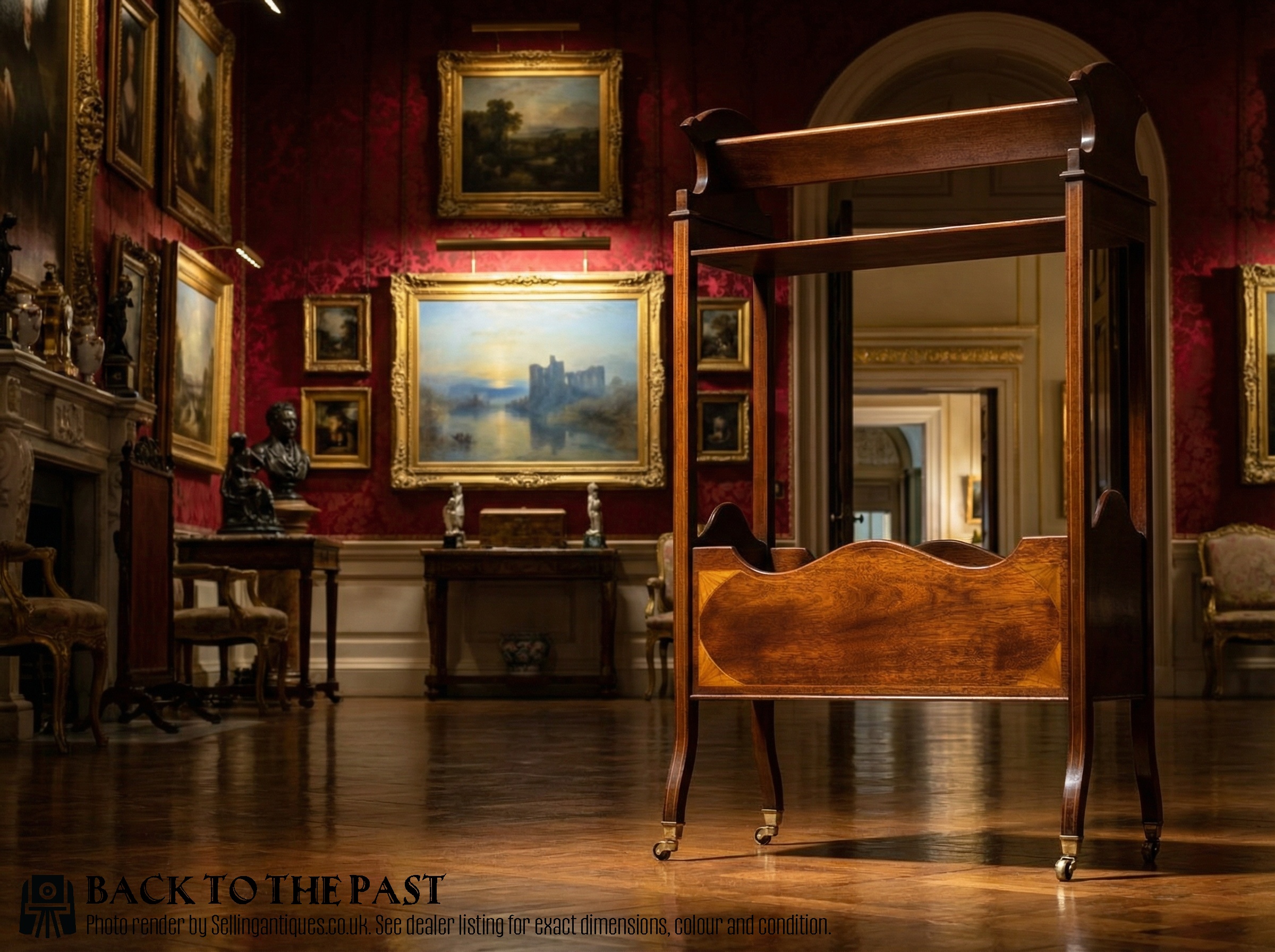
When you search for an inlaid book stand, you encounter pieces designed to sit upon a tabletop or stand freely on the floor, frequently taking the form of revolving bookcases and compact troughs from the Edwardian era and Victorian periods.
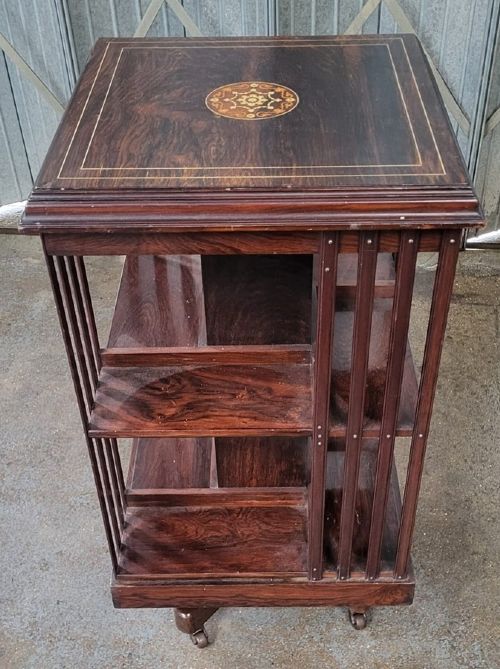
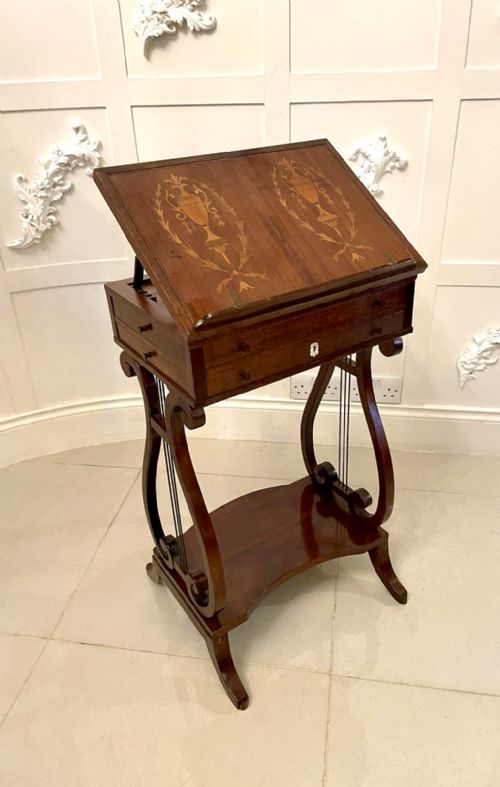
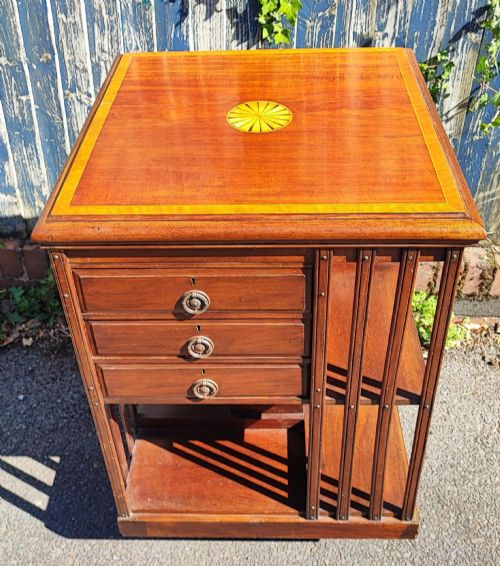
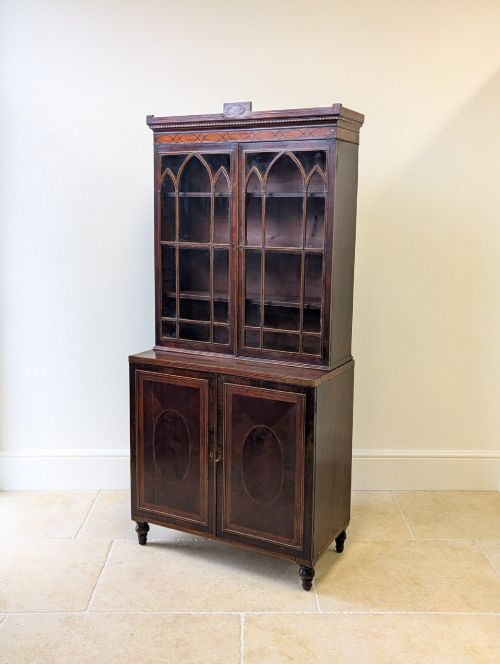
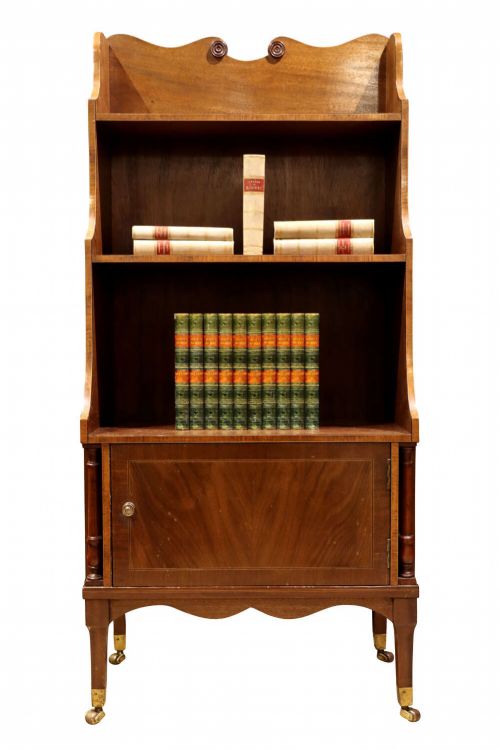
The most common examples on this page are Edwardian revolving bookstands fashioned from mahogany with contrasting satinwood or wood inlay, though earlier Georgian, Regency and 19th-century interpretations also appear.
These items served to keep current reading matter close to a desk or armchair, combining practical shelving with the decorative marquetry and banded borders popular at the turn of the twentieth century.
Materials and Construction
The makers of these stands relied primarily on solid and veneered mahogany, frequently enriched with satinwood, rosewood, walnut and ebony stringing to create geometric or floral motifs.
Revolving models required a concealed internal cruciform mechanism of wood and iron to allow smooth rotation, whilst table-top book slides and troughs often utilised brass mounts, castors and hinges to support heavier folios.
Listings span the nineteenth century through the Edwardian period, showcasing mahogany, rosewood, walnut, satinwood, and brass.
Craftsmanship and Proportion
Quality in these pieces is dictated by the crispness of the timber inlay and the tightness of the joinery, particularly where vertical slats meet the rotating platform or base.
Superior examples demonstrate well-figured flame mahogany, finely balanced proportions that prevent wobbling during rotation, and original brass castors or mountings rather than later replacements.
Shapland & Petter·Asprey
The Inlaid Book Stand Glossary
- Inlay
- A technique where pieces of contrasting wood, shell or metal are fitted into a recess flush with the surrounding surface to form a decorative pattern. This decorative method defines the visual character of Edwardian and Victorian library pieces.
- Revolving Bookcase
- A freestanding tiered shelving unit mounted on a concealed central pivot allowing it to spin freely. This clever design enabled access to a larger library from a seated position.
- Satinwood
- A durable, light-coloured tropical timber prized for its lustrous sheen and used extensively for contrasting stringing and banding. It provides a bright foil against darker mahogany backgrounds.
- Book Trough
- An open-topped portable stand designed to hold a small selection of books upright on a desk or table. These compact items kept reference volumes orderly in private studies.
Inlaid Book Stand: Frequently Asked Questions
What is an inlaid book stand used for?
These stands were built to hold working libraries, ledgers or current reading material within arm's reach of a desk, table or armchair. Their rotating or open formats allowed readers to browse titles quickly without leaving their seat.
Over time, they transitioned from strict working furniture into decorative pieces for drawing rooms and studies, prized as much for their inlaid timber surfaces as their utility.
How do I tell an Edwardian stand from a Victorian one?
Edwardian pieces, particularly those dating around nineteen hundred, tend to feature lighter mahogany with delicate satinwood crossbanding and Sheraton-revival motifs. They often lean towards airy revolving bookcase designs.
Victorian stands generally employ heavier timbers such as burr walnut, rosewood or darker mahogany, frequently incorporating brass mounts, heavy mouldings and more robust architectural proportions.
How do revolving book stands work?
A concealed internal spider mechanism rests beneath the tiered shelving, featuring a central iron spindle and ball bearings that support the weight while permitting smooth 360-degree rotation.
This ingenious engineering allowed users to access four separate quadrants of books from a single stationary position beside a desk or fireplace.
Where should I place a book stand at home?
Tabletop versions suit wide sideboards, desks or wide window sills where they can display treasured volumes or current reading. Freestanding revolving stands work best beside an armchair or sofa where their 360-degree access remains fully functional.
Keep them away from direct heat sources and strong sunlight to protect the polished mahogany veneer and delicate wood inlay from drying out.