

Inlaid Bedside Drawers
Inlaid bedside drawers bring timber craft and subtle surface pattern directly to the bedside, spanning French, English and Italian traditions.
Inlaid Bedside Drawers
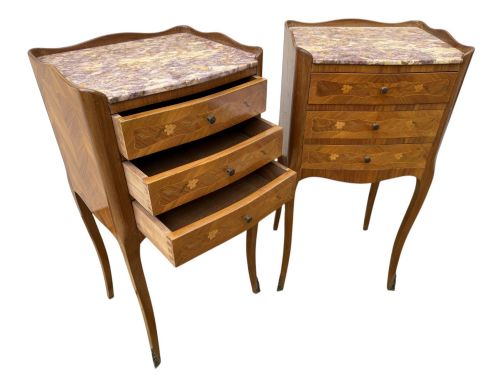
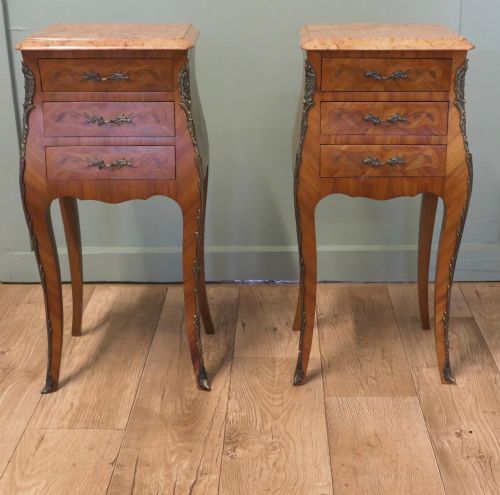
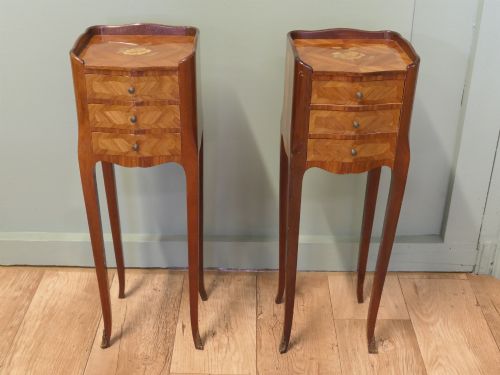
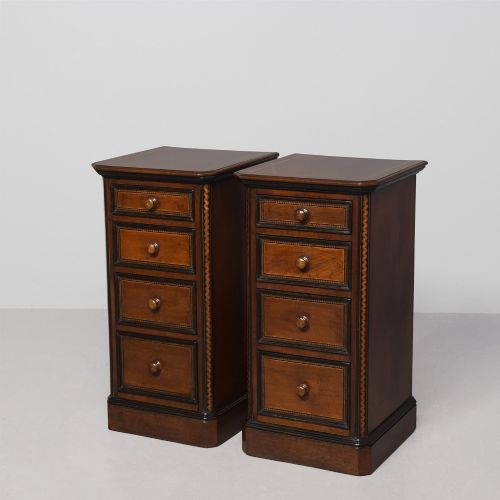
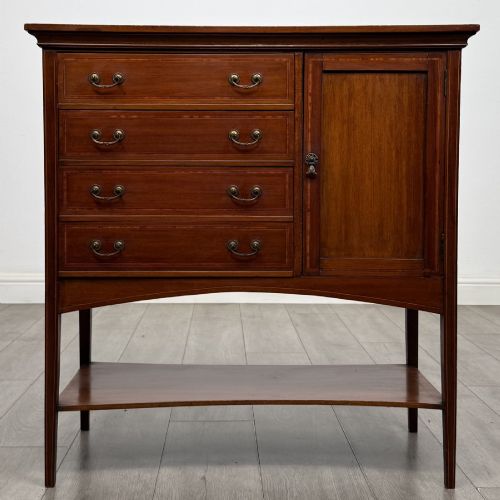
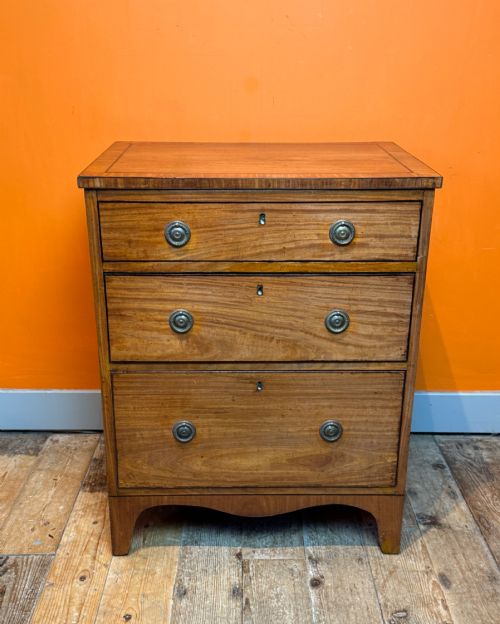
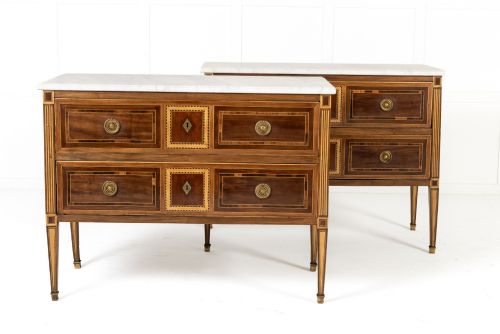
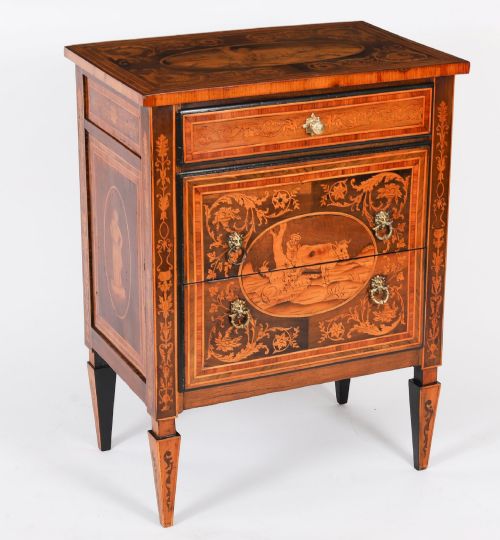
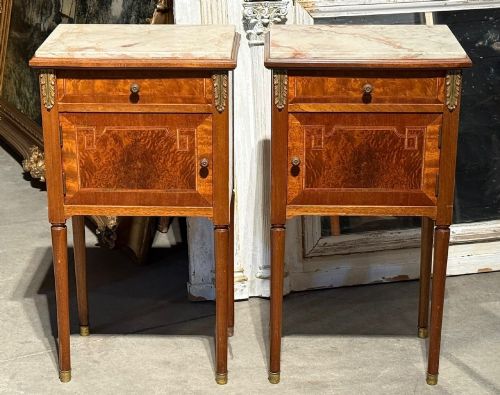
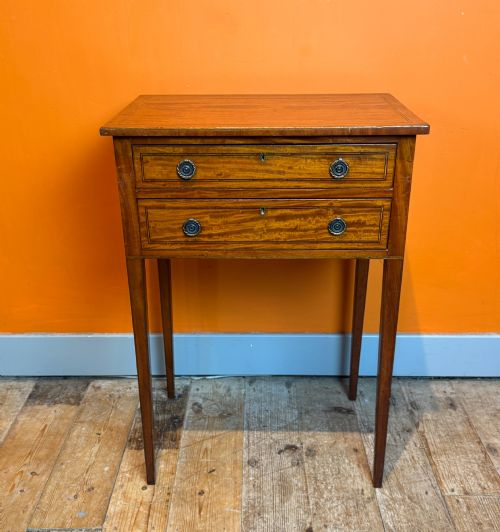
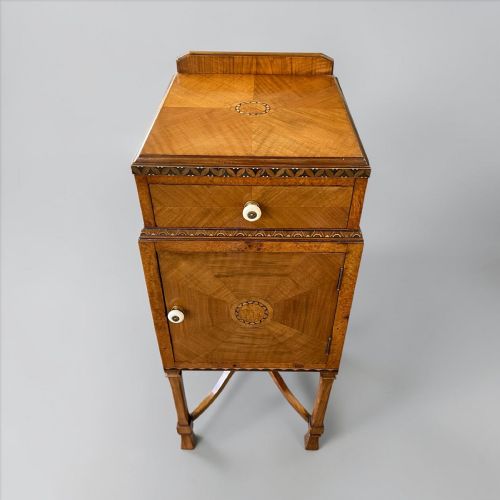
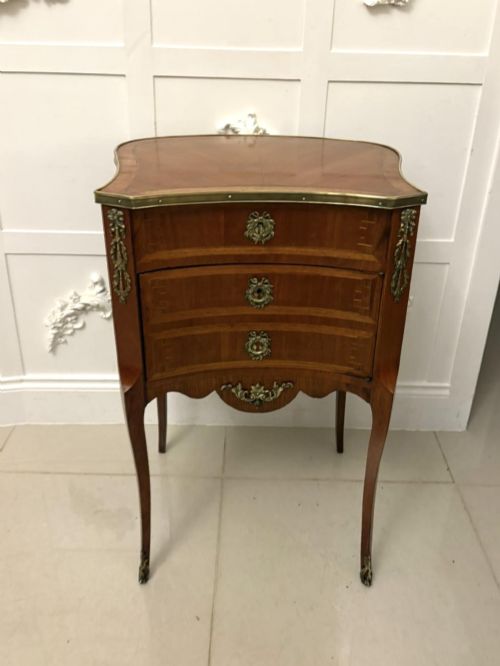
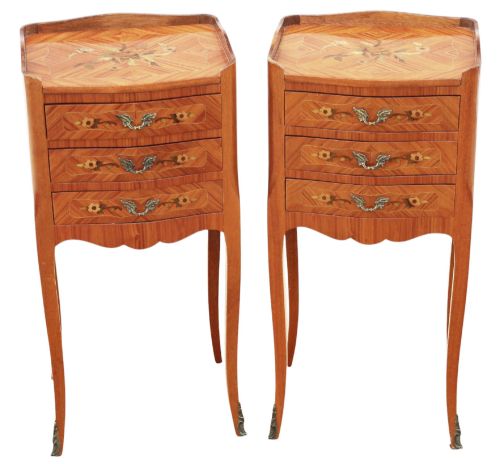
Inlaid bedside drawers appear in various forms across this selection, including bedside cabinets, commodes, small chests of drawers and nightstands. These pieces serve practical bedside storage needs while displaying decorative surface work.
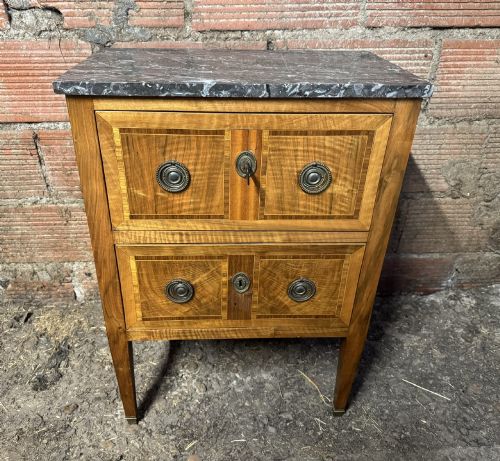
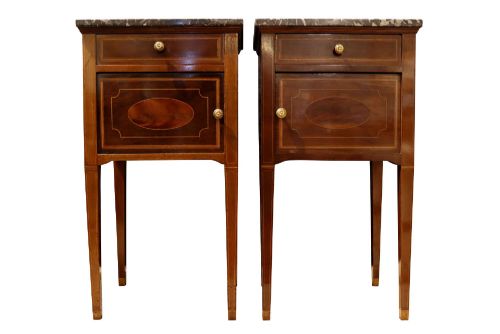
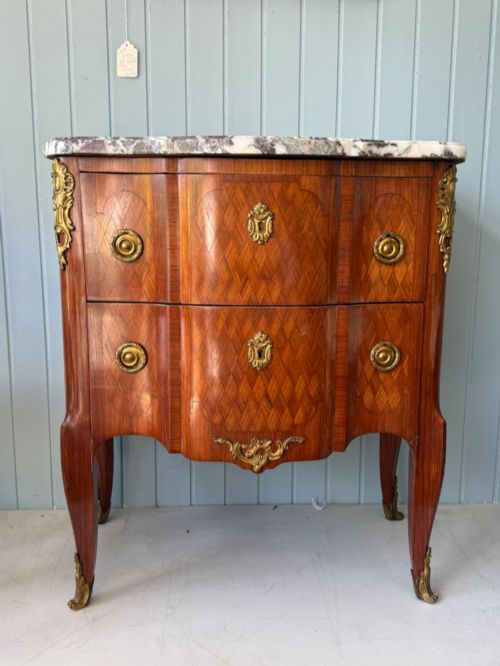
The objects span multiple periods and origins, featuring English Victorian and Edwardian examples alongside 18th century Italian pieces and numerous French styles from the 19th and early 20th centuries. Cabinets often take the form of compact commodes with marble tops or small cupboards with fitted drawers.
Materials and construction
Construction relies upon foundational timbers such as mahogany, walnut, rosewood and oak, overlaid with contrasting veneers like satinwood and kingwood. Artisans shape these timbers into straight-sided chests or curved bombe profiles.
Surface decoration incorporates detailed marquetry and inlay work, often finished with brass handles and ormolu mounts. Marble tops frequently cap French cabinets and commodes to provide durable surfaces.
Inlaid Bedside Drawers Retail Price Guide 2026
Typical asking prices for inlaid bedside drawers among the pieces listed under this phrase on Sellingantiques today, from the lower quarter to the upper quarter. They describe what is for sale here now, not the wider market.
Listings incorporate items spanning the 18th century through to the 1930s, featuring materials such as walnut, mahogany, marble and ormolu.
Judging quality
Quality rests in the precision of the marquetry and the crispness of the timber contrast. Finer examples display meticulous grain matching and tightly fitted joints across drawers and doors.
The selection of secondary materials, such as polished marble tops and cast brass or ormolu hardware, distinguishes standard production from more ambitious workshop pieces.
The Inlaid Bedside Drawers Glossary
- Marquetry
- Decorative veneer work arranged in pictorial or geometric patterns across a surface. This technique uses different coloured woods to create contrast.
- Bombe
- A swollen or bulging outward curve on the front and sides of a cabinet. This silhouette appears frequently in continental pieces.
- Ormolu
- Gilt bronze mounts applied to furniture for decoration. These metal details accent corners, feet and drawer pulls.
- Satinwood
- A pale, lustrous timber utilised for contrasting inlay work and stringing. It provides bright highlights against darker woods.
Inlaid Bedside Drawers: Frequently Asked Questions
What periods do these bedside drawers come from?
The pieces span the 18th, 19th and early 20th centuries. Examples include Georgian, Victorian, Edwardian and later French revival styles.
Craftsmanship reflects the prevailing aesthetic of each era, from Sheraton revival mahogany to French Louis XV marquetry.
Are most of these cabinets sold in pairs?
Many listings comprise matched pairs or near pairs intended to flank a bed symmetrically. Single cabinets also appear for individual placement.
Pairs often originate from bedroom suites produced during the Victorian and Edwardian periods.
What timber types are most common?
Mahogany and walnut form the primary structure for many English pieces. French items frequently utilise kingwood, rosewood and satinwood veneers.
Contrasting woods create the decorative inlay patterns seen across the drawer fronts and tops.
How do I care for marble-topped cabinets?
Marble surfaces require regular dusting and prompt wiping of liquids to prevent staining. Mild soap and water suffice for routine cleaning.
Avoid acidic cleaners that can etch the polished stone surface over time.