


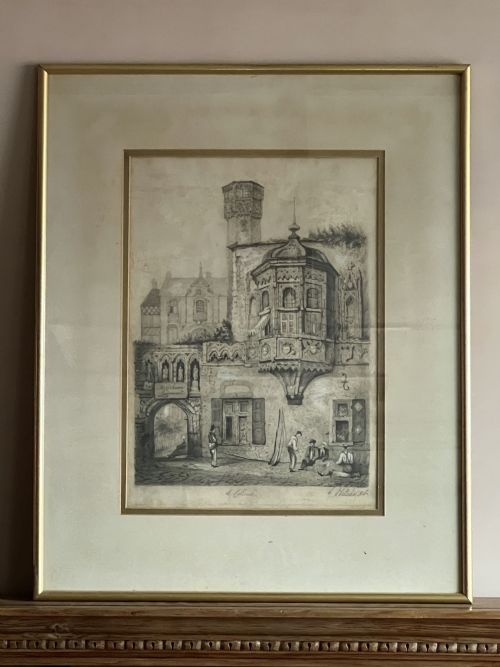


Ink Monochrome Landscape
These ink monochrome landscape works on paper offer direct views in black and sepia tones, prized by collectors for their immediate draughtsmanship.
Ink Monochrome Landscape
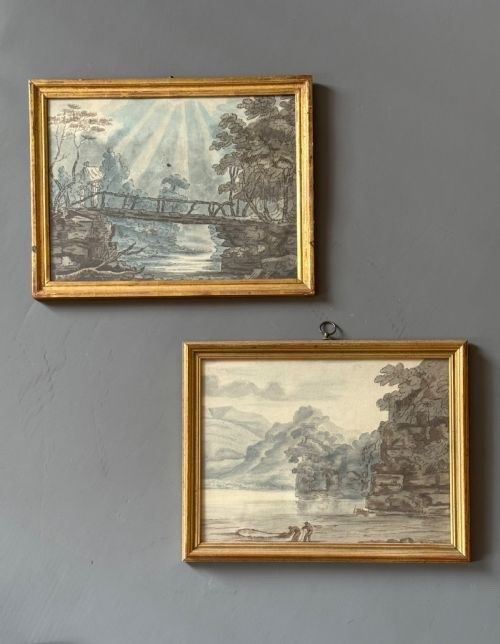
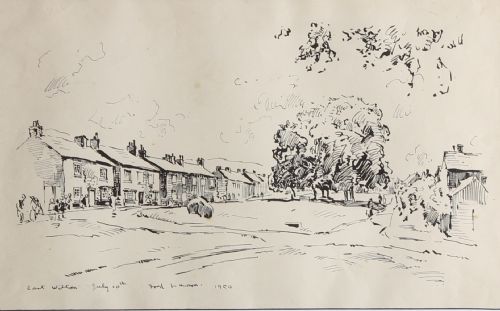
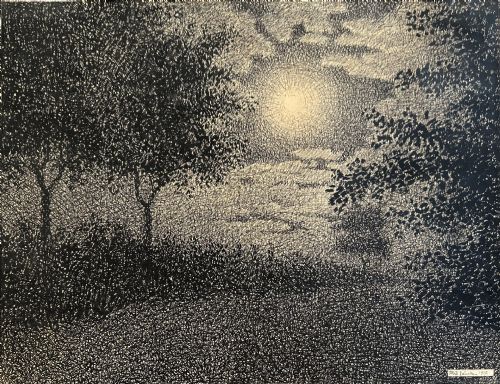
When you search for ink monochrome landscape, you encounter framed artwork and original drawings executed across several centuries. The selection spans the eighteenth century through to the mid-twentieth century, including works by named artists and anonymous schools.
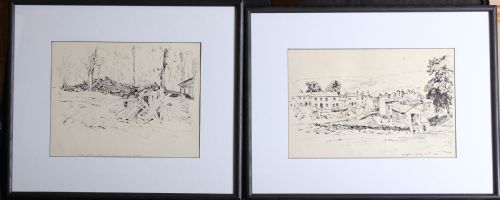
Framed drawings and watercolour paintings dominate the group, often mounted behind glass in wood or gilt wood frames. Examples range from eighteenth-century Georgian topographical sketches to mid-century British views.
Buyers will find both single sheets and pairs depicting rural scenes, castles, market crosses, and lake district views. The medium relies on pen, ink, wash, and pencil on paper to capture scenery without full colour.
What varies in quality
The sophistication of the penwork and the confidence of the wash separate ambitious topographical records from routine sketches. Strong composition and precise line work elevate a piece.
Condition of the paper and the clarity of the ink strokes determine the visual impact. Attributions to documented hands also distinguish individual sheets within the category.
The listings feature works on paper spanning from the 18th century through the 1960s, employing ink, wash, pencil, and watercolour.
Fred Lawson·Stanley Orchart·Edward Dayes·Peter Tillemans·Dr Thomas Monro·Thomas Lound·Claude Lorrain
The Ink Monochrome Landscape Glossary
- Monochrome
- Executed in a single colour or shades of one colour, such as black, sepia, or grey. This approach emphasises line and tonal wash over a full palette.
- Wash
- A thin, semi-transparent layer of diluted ink or watercolour applied with a brush. It builds shadow and depth behind pen lines.
- Topographical
- Representing specific real-world locations accurately, such as castles, rivers, and market crosses. These drawings often serve as historical records of places.
- Gilt wood
- Wood framing finished with a thin layer of gold leaf or metallic paint. It frequently surrounds eighteenth and nineteenth-century works on paper.
Ink Monochrome Landscape: Frequently Asked Questions
How do I date an ink landscape drawing?
Dating relies on the paper type, framing, stylistic conventions, and any inscribed signatures or dates. Eighteenth-century examples often feature laid paper and sepia ink wash.
Twentieth-century pieces tend to show different framing materials and more modern draughtsmanship. Comparing the subject matter to known periods helps narrow the timeframe.
What is the difference between wash and watercolour?
Wash uses diluted ink or a single pigment tone to create shadows and tonal depth in monochrome. Watercolour introduces multiple blended pigments to show natural colour.
Works described with wash rely primarily on light and dark contrast rather than a varied palette.
How should I display works on paper?
Keep works on paper away from direct sunlight to prevent fading of the ink and yellowing of the paper. Glazing protects the delicate surface from dust and atmospheric moisture.
Maintain stable humidity levels in the room where the framed artwork hangs.
Are these works original or prints?
The items listed are original hand-drawn and painted works on paper rather than mechanical reproductions. Close inspection reveals pen strokes and brush marks in the ink.
Each sheet is a unique creation by an artist or school.