



Industrial Work Table
An industrial work table brings honest utility to a room, offering robust construction and heavy timber surfaces suited for daily use.
Industrial Work Table
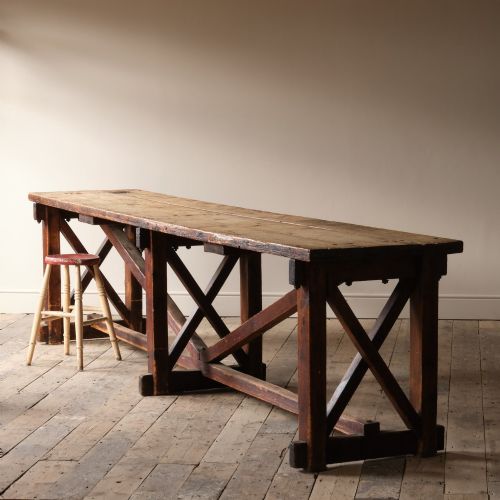
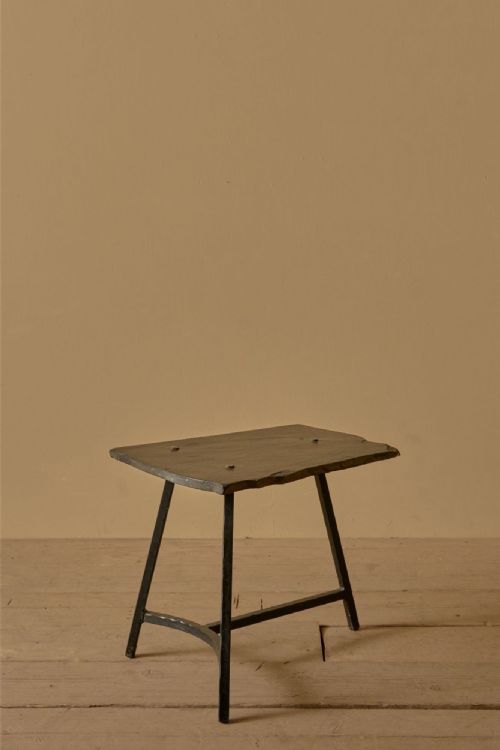
When you search for an industrial work table, you encounter heavy furniture designed originally for manual labour, workshops, and trade kitchens. The selection spans robust pine and oak workbenches, sturdy butchers blocks, and practical cast iron framework tables from the nineteenth and early twentieth centuries.
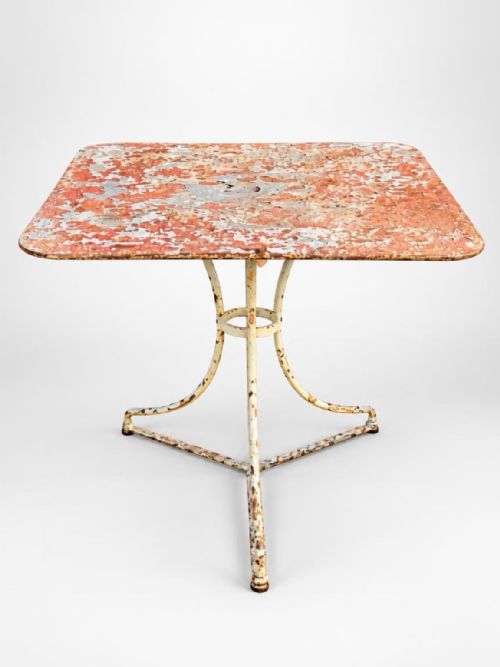
The version you meet most often on this page is the French artisans workbench, frequently fitted with a working vice and constructed from beech or oak. Alongside these, English factory tables and garden metalwork provide alternative forms originating from the Victorian era up to the nineteen-twenties.
Origins heavily influence the appearance, shifting between rustic French country proportions and utilitarian English factory designs. These tables serve reliably as kitchen islands, side consoles, or central dining surfaces within modern interiors.
Materials and construction
Makers built these pieces using heavy structural metals paired with thick domestic hardwoods. Cast iron and wrought iron form the rigid bases, providing stability and support for daily workshop tasks.
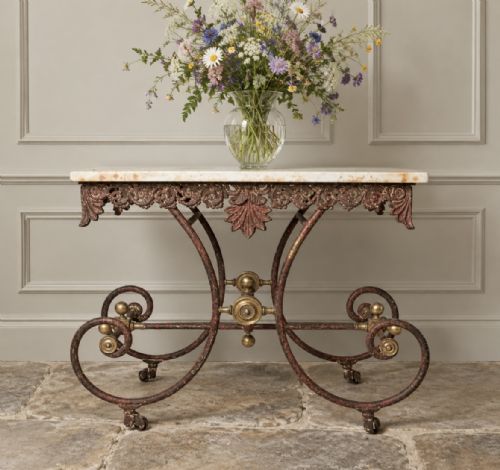
Tops combine dense timbers such as pine, oak, beech, and occasional marble or copper surfaces. Artisans joined these materials with traditional carpentry methods, incorporating vices and metal fixings to withstand heavy labour.
Industrial Work Table Retail Price Guide 2026
Typical asking prices for industrial work table among the pieces listed under this phrase on Sellingantiques today, from the lower quarter to the upper quarter. They describe what is for sale here now, not the wider market.
Listings feature pieces spanning the mid nineteenth century through to nineteen thirty, constructed from oak, pine, beech, and cast iron.
Evaluating quality
The distinction between tiers rests upon the integrity of the original construction and the character of the timber. Superior pieces retain their functional mechanisms, such as operational wooden vices and heavy metal framework, rather than purely decorative adaptations.
Substantial hardwood tops bearing authentic working patina outrank lighter pine alternatives. The balance between the weight of the metal base and the thickness of the timber defines the success of each piece.
Trussant and Cie
The Industrial Work Table Glossary
- Workbench
- A heavy sturdy table used by artisans for manual trade work. These often include integrated wooden vices and tool wells.
- Butchers block
- A thick timber table designed for food preparation. The surface uses vertical grain blocks of oak or beech to absorb impact.
- Trestle work table
- A long surface supported by triangular framing units rather than four corner legs. This construction allows maximum legroom along the length.
- Cast iron
- An iron-carbon alloy poured into moulds to create rigid bases. It provides the heavy weight characteristic of factory furniture.
- Bistro table
- A small table used in French cafes and outdoor spaces. These frequently combine cast iron pedestals with marble or timber tops.
Industrial Work Table: Frequently Asked Questions
How do I clean a timber top?
Wipe the surface with a damp cloth and mild soap, avoiding harsh chemical cleaners that strip the aged finish.
Treat the bare timber occasionally with food-safe oils to maintain the wood moisture and protect against stains.
Can I use these tables outdoors?
Pieces featuring cast iron bases and metalwork tolerate sheltered outdoor settings during dry weather. Unprotected timber surfaces suffer when exposed to persistent dampness and rain.
Store wooden work tables indoors over winter to preserve the joints and prevent timber warping.
Are the wooden vices still operational?
Many surviving workbenches retain functioning wooden screws and vices from their workshop days. The operational capacity depends on the previous usage and current wood movement.
Inspect the individual listing details to confirm whether the vice mechanism moves freely.
How do I date a piece?
Dating relies upon material choices, manufacturing techniques, and structural hardware styles. Nineteenth-century examples generally feature hand-cut joinery and heavy cast iron components.
Nineteen-twenties pieces often introduce folding metal mechanisms and simpler tubular iron frames.