



Brown Pine Desk
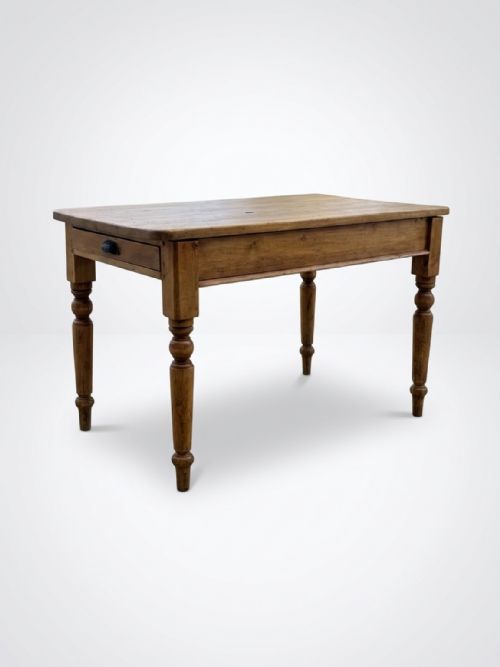
A brown pine desk offers honest utility and plain timber grain, spanning simple Victorian schoolrooms and country farmhouses.
Brown Pine Desk
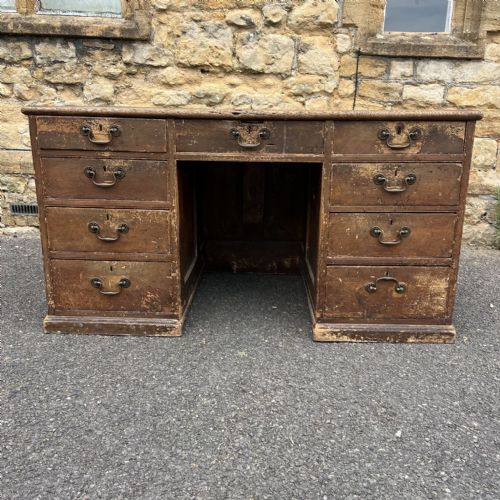
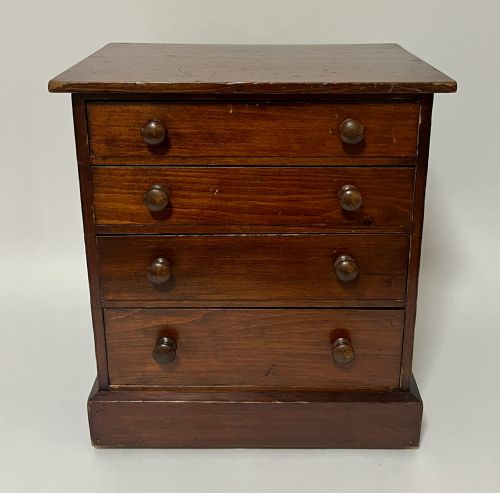
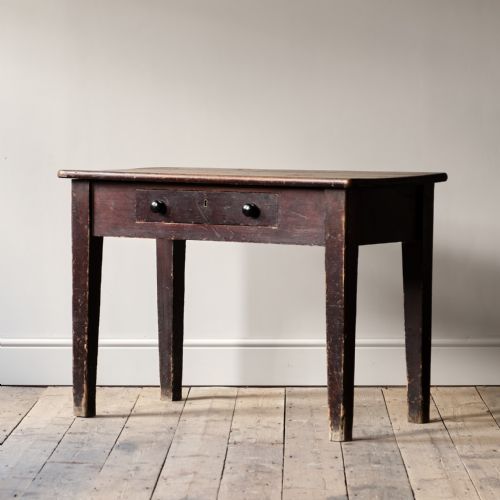
A brown pine desk brings together practical workspace forms from the Victorian, Georgian, and Edwardian eras. Buyers searching for a brown pine desk encounter utilitarian writing tables, kneehole pedestal desks, and estate writing tables built for hard work.
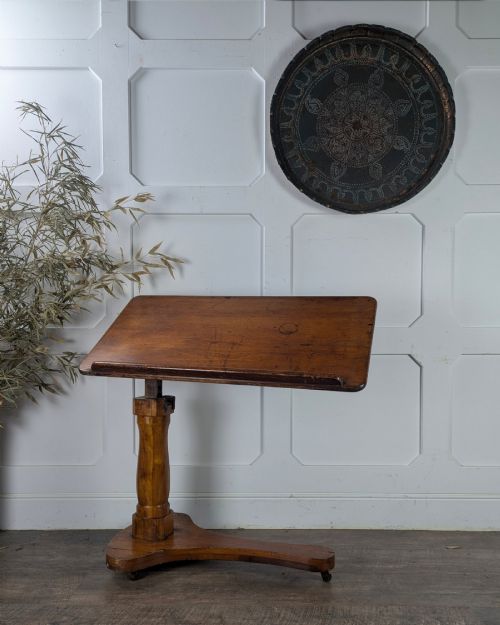
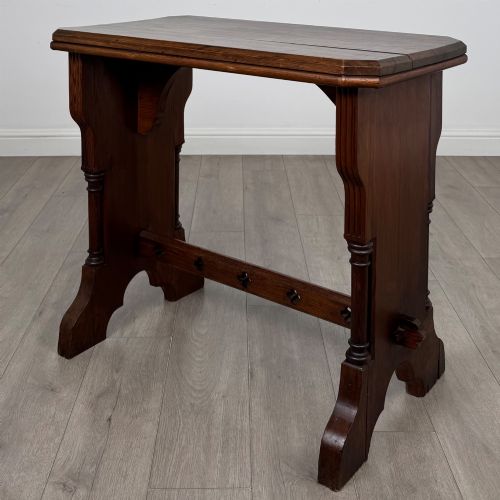
Most examples originate from the nineteenth and early twentieth centuries, constructed in regional British workshops or European rural settings. These pieces range from plain farmhouse surfaces to ecclesiastical and Gothic Revival reading tables.
The timber varies from ordinary softwood deals to denser pitch pine with distinct figuring. Side tables, lecterns, and filing pieces often share the same sturdy construction lineage.
Materials and construction
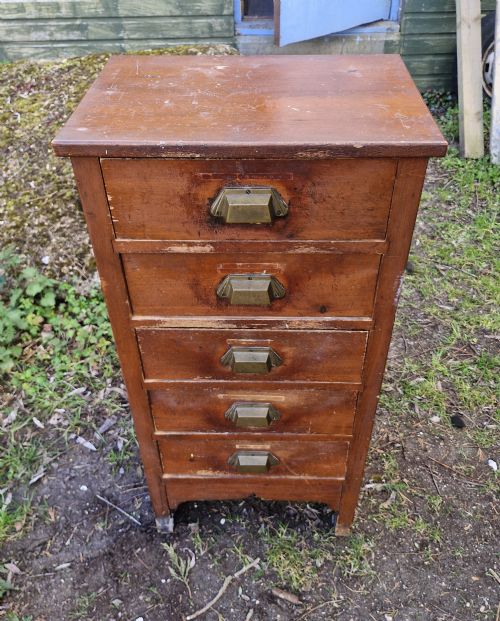
Carpenters built these desks primarily using solid pine and pitch pine, occasionally combining them with oak or iron for structural strength. Metal elements such as brass handles and iron trestle supports appear on specific office and work tables.
Surfaces show plain timber boards, painted finishes, or scraped pine treatments, while drawers utilise hand-cut joints. The joinery focuses entirely on durability rather than elaborate ornamentation.
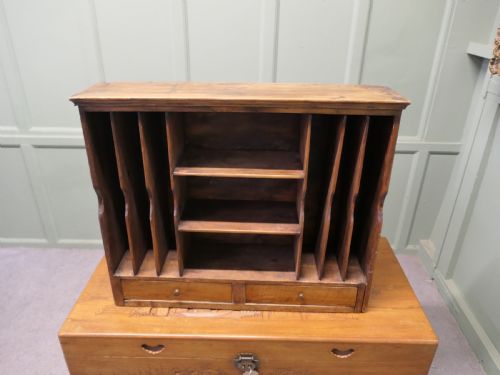
The furniture forms recorded here extend across side tables, trestle work tables, kneehole pedestal desks, and church furniture.
Evaluating quality and character
Quality rests in the original integrity of the timber, the thickness of the top boards, and the retention of period hardware like brass handles. Untouched surfaces and genuine period patination distinguish superior items from later domestic alterations.
Proportion and structural honesty dictate value, separating simple everyday school or kitchen boards from finer ecclesiastical or architectural writing tables.
The Brown Pine Desk Glossary
- Pitch pine
- A dense, resinous softwood variety prized for its prominent grain pattern and durability in nineteenth-century furniture. It ages to a deep warm amber tone.
- Kneehole desk
- A writing table featuring a central recess for the user's legs, flanked by pedestals of small drawers. This form became common during the Victorian period.
- Trestle table
- A board surface supported by two or more upright frames connected by a horizontal beam. This ancient form provides excellent legroom beneath the desk.
- Ecclesiastical
- Pertaining to church or chapel furnishings, often displaying Gothic architectural motifs. These pieces utilise heavy pitch pine timbers.
- Provenance
- The documented history of ownership or origin attached to an antique. It provides verifiable context for where and when the piece was used.
Brown Pine Desk: Frequently Asked Questions
How do I date an old pine desk?
Examine the construction methods, drawer joints, and surface patination to estimate the age. Tool marks and original hardware help place the piece within the Victorian or Georgian periods.
Matching the wood type, such as pitch pine or painted deal, to known regional styles also clarifies the manufacturing era.
What is the difference between pine and pitch pine?
Pitch pine contains a higher resin content, making it heavier, harder, and more durable than ordinary softwood pine. It displays a distinctively bold, striated grain pattern.
Standard pine tends to be lighter in weight and colour, accepting paint or simple clear finishes more evenly across the surface.
How should I clean a waxed pine desk?
Remove dust with a soft, dry cloth and avoid using harsh modern chemical polishes that strip the historic wax. Applying a natural beeswax periodically nourishes the dry timber.
Buffing the surface gently restores the soft lustre without damaging the underlying patinated finish accumulated over decades.
Are these desks suitable for daily computer work?
Many antique writing tables and pedestal desks provide adequate surface area and height for modern laptops and paperwork. Careful measurement of kneehole clearances ensures comfortable seating.
Solid wood construction ensures the frame easily supports technological equipment while retaining its traditional appearance.