


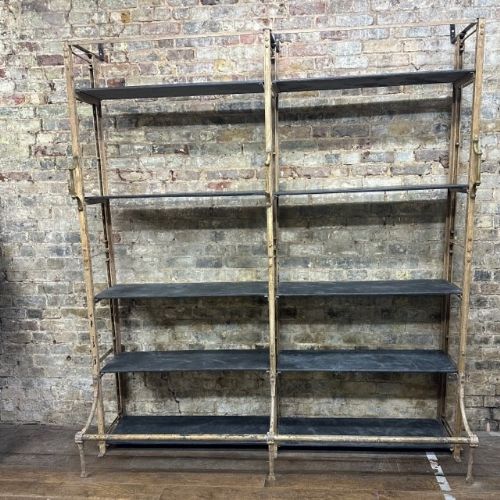


Industrial Shelving Unit
An industrial shelving unit brings robust utility and utilitarian character into a modern interior.
Industrial Shelving Unit
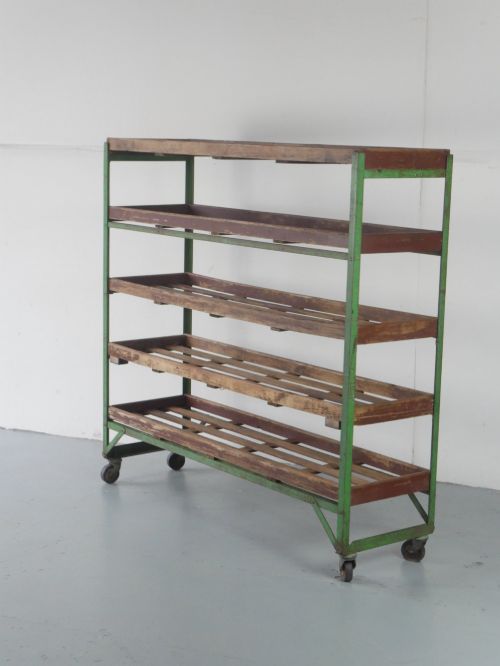
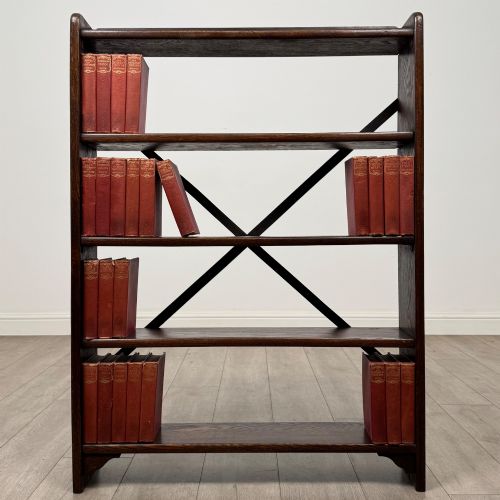
When you search for an industrial shelving unit, you are looking at sturdy storage solutions originally designed for commercial, bakery or workshop use. The versions you are most likely to meet on this page span the nineteenth century through the early twentieth century, taking forms such as bakers racks, open bookcases and pigeon holes.
These pieces originate from English and French workshops, utilising robust materials intended for heavy daily service. Styles range from Victorian industrial to French provincial and rustic iterations, reflecting their practical origins in shops and patisseries.
How they were made
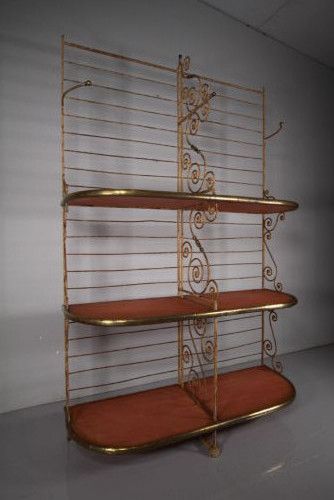
The construction relies heavily on combinations of iron, wrought iron, and brass paired with timbers like pine and oak, creating a rigid framework capable of holding heavy loads. Metal components often display scroll-work or stamped details, while wooden sections utilise traditional joinery suited to commercial environments.
Surfaces frequently show original paint finishes, distressed metal patination, or natural slate, recording decades of hard use in field kitchens, bakeries and shop displays without modern synthetic coatings.
Object types range from traditional French boulangerie racks and bakers racks to English shop display stands, pigeon holes and kitchen dressers.
What varies in quality
The distinction between standard utility items and superior examples lies in the refinement of the ironwork and the integrity of the timber. Pieces with hand-forged scroll-work, maker stamps, or rarer materials like slate or brass show a higher grade of manufacture than basic workshop shelving.
Proportion and scale also dictate quality, as larger Parisian bakers racks or substantial shop display stands demonstrate greater architectural presence than smaller domestic storage units.
The Industrial Shelving Unit Glossary
- Bakers rack
- A sturdy metal and wood shelving unit originally used in French boulangeries for cooling or displaying bread. These pieces often feature decorative iron scroll-work.
- Pigeon holes
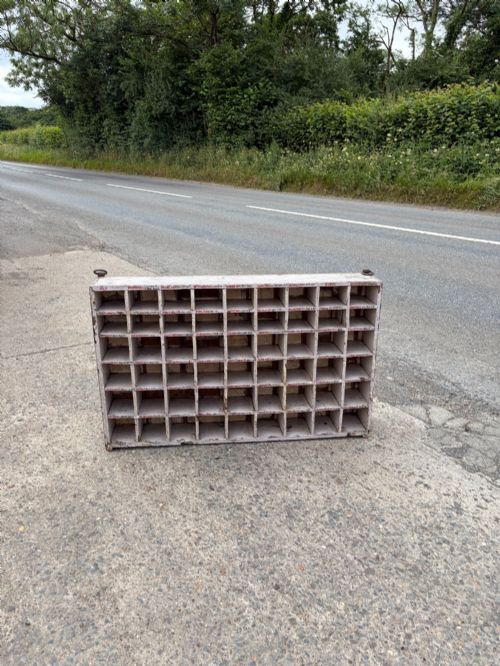
- A set of small, open rectangular compartments designed for sorting mail, documents or small goods. They are commonly found in pine or oak.
- Patisserie rack
- A commercial display stand utilised in French pastry shops. They are typically constructed from wrought iron and metal.
- Shop display stand
- A commercial fixture built to exhibit goods to customers in nineteenth century retail spaces. They combine structural iron strength with accessible shelving.
- Field kitchen dresser
- A utilitarian storage unit designed for mobile or temporary culinary use. These pieces often incorporate metal drainage or storage surfaces.
Industrial Shelving Unit: Frequently Asked Questions
What is an industrial shelving unit?
An industrial shelving unit is a heavy-duty storage fixture originally built for commercial, workshop or bakery environments. They combine robust metal frameworks with wooden or slate shelves.
These pieces derive their aesthetic from strict utility, making them popular for contemporary homes seeking functional storage with historical character.
How were bakers racks used?
Bakers racks were utilised in traditional French boulangeries and bakeries to store, cool and display freshly baked bread and pastries. Their open construction allowed air circulation around the goods.
Today, they serve equally well in kitchens as storage for cookware or in living spaces for displaying books and objects.
Are pigeon hole cabinets antique?
Pigeon hole cabinets seen on this page date from the nineteenth and early twentieth centuries, constructed primarily from timbers such as pine and oak. They were standard office and postal sorting fixtures.
Their compartmentalised design makes them practical for organising stationery, craft materials or small collections in a modern setting.
How do I care for metal shelving?
Metal shelving units require minimal maintenance, usually limited to dusting and occasional gentle cleaning to preserve the original patination and paint finishes. Avoid harsh chemical cleaners that might strip historical surfaces.
Ensuring the unit is placed on a stable floor protects the often heavy iron and wooden framework from undue structural stress.
What materials are common?
Common materials include wrought iron, cast iron, brass, steel, pine, oak and slate. These substances reflect the heavy-duty commercial origins of the pieces.
Combinations of metal frames with wooden shelves or slate slabs provide both the structural strength and the distinctive visual contrast characteristic of the period.