

Indian Inlay Occasional Table
These pieces of Indian inlay occasional table are intricate items shaped by detailed handwork, bringing patterned surfaces and rich timber into a room.
Indian Inlay Occasional Table
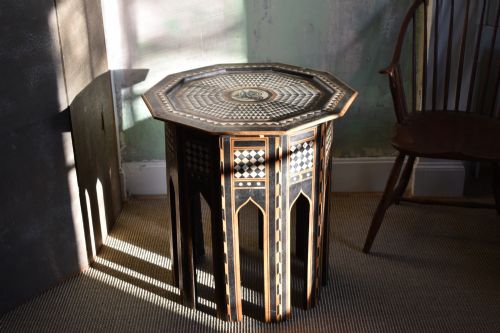
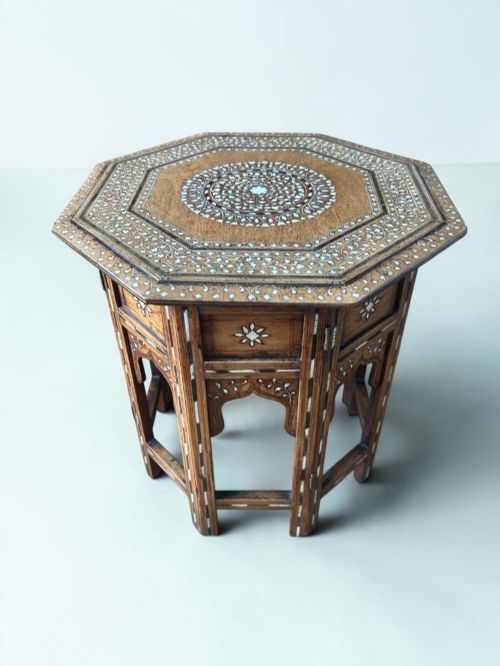
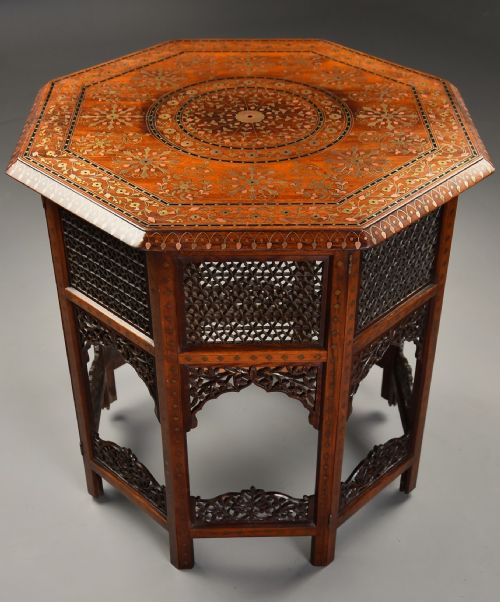
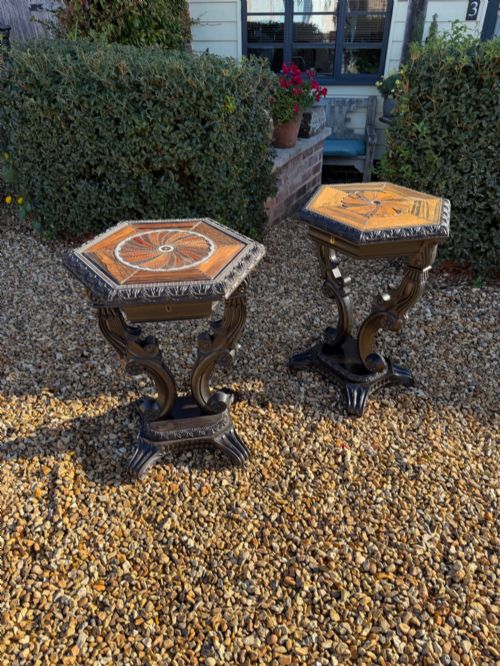
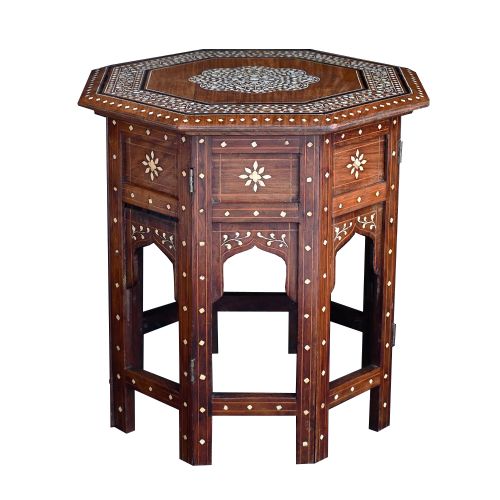
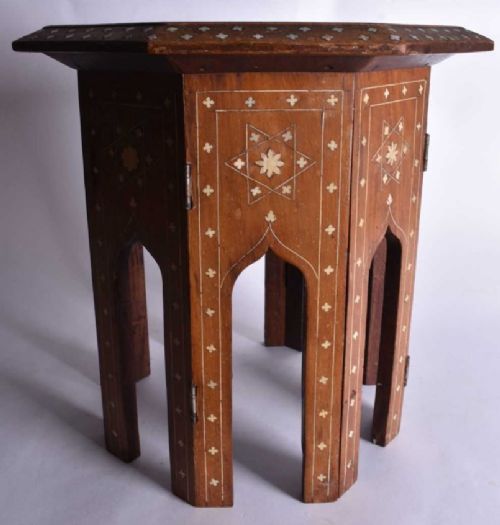
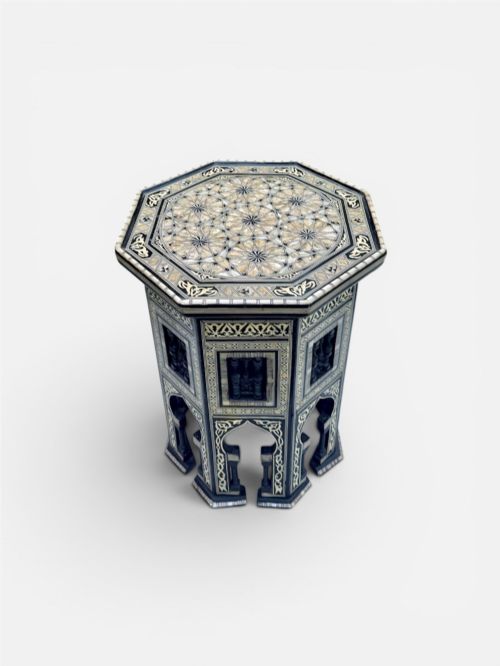
Makers utilised distinct regional styles including Hoshiarpur, Anglo-Indian, and Moorish Revival to shape these tables. Buyers encounter folding occasional tables, pedestal supports, and chess top designs alongside larger side tables.
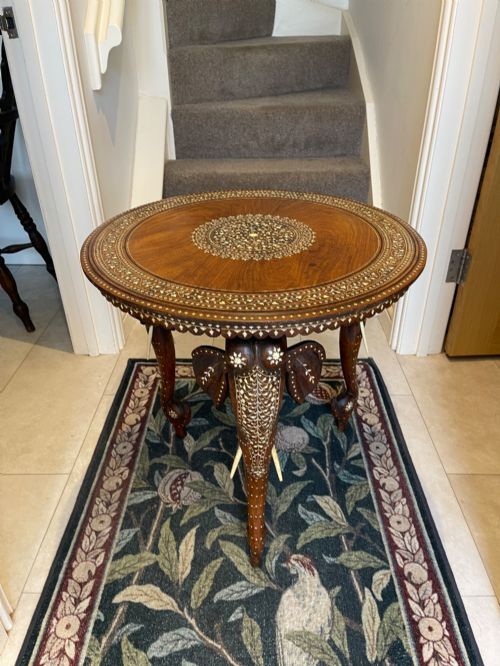
The objects stem from periods such as the Victorian era and the decades leading up to nineteen thirty. Common configurations include elephant tables and pedestal tables featuring geometric or figurative carving.
How they were made
Artisans built these tables using dense timbers such as teak, rosewood, ebony, and hardwood. These woods provide a stable foundation for complex surface decoration.
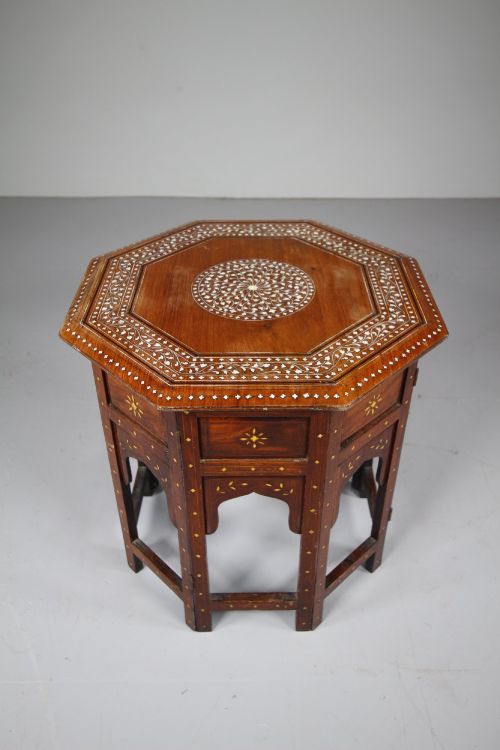
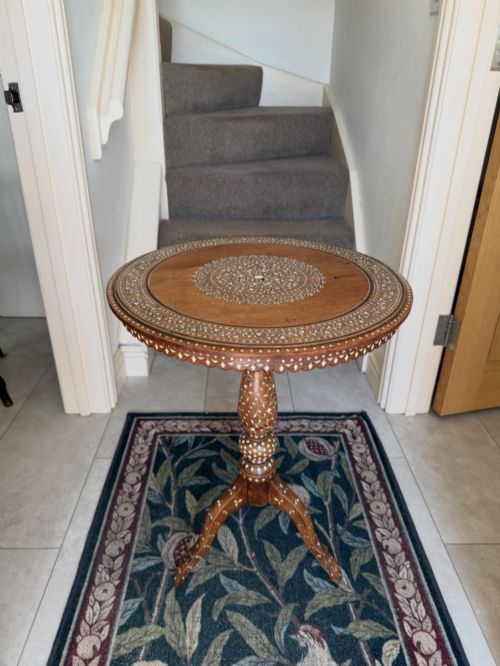
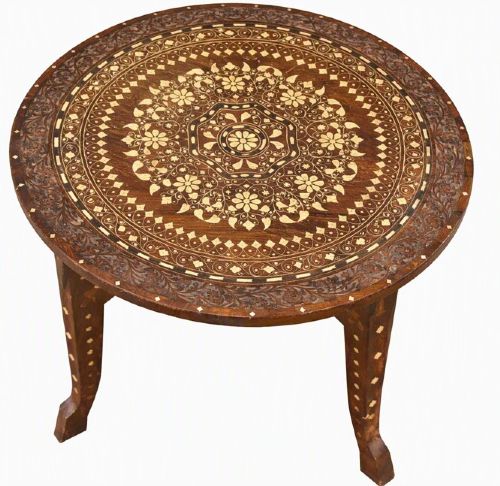
Workers embedded bone, mother-of-pearl, and brass into the timber base to form floral and geometric patterns. Inlaid elements are secured by hand, accompanied by intricate overall carving on the frame.
Indian Inlay Occasional Table Retail Price Guide 2026
Typical asking prices for indian inlay occasional table among the pieces listed under this phrase on Sellingantiques today, from the lower quarter to the upper quarter. They describe what is for sale here now, not the wider market.
Several tables take the form of elephants, supporting tabletops on their backs as part of traditional Hoshiarpur decorative design.
What varies in quality
The density and precision of the inlay work distinguish different examples on the market. Pieces with continuous bone or mother-of-pearl decoration across the top demonstrate higher execution than simpler brass-accented versions.
The complexity of the structural woodwork also marks the grade of an item. Tables featuring fully carved folding bases and detailed edge detailing require greater skill than plain turned legs.
Liberty And Co·Bombay Furniture Company
The Indian Inlay Occasional Table Glossary
- Hoshiarpur
- A region in Punjab known for producing intricately carved wooden furniture with bone and brass inlay. Pieces from this centre often display dense geometric and floral motifs.
- Inlay
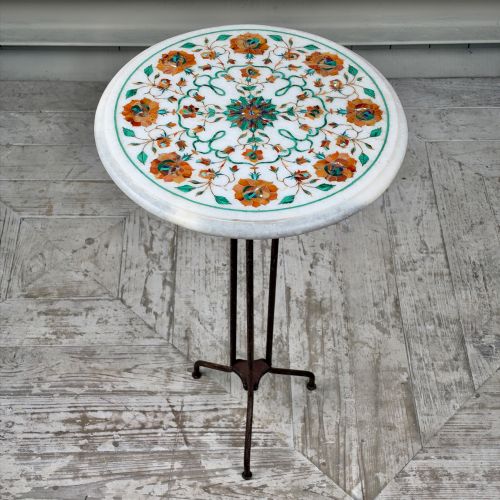
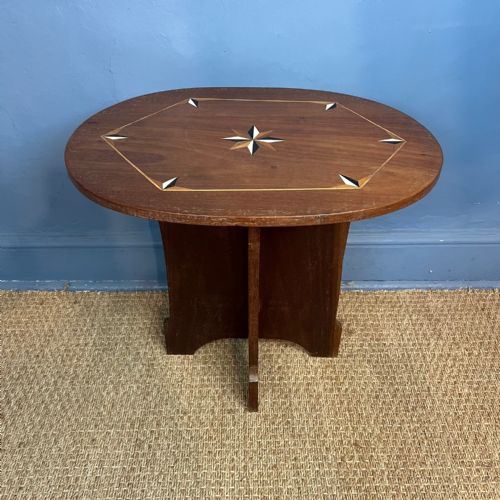
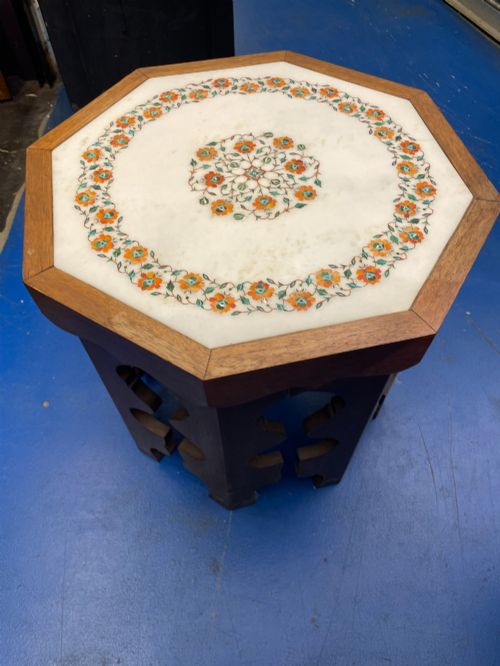
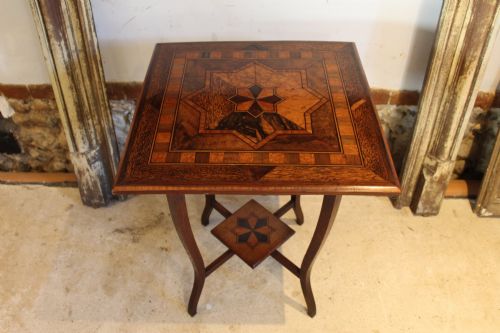
- A technique where materials like bone, mother-of-pearl, or metal are set flush into recesses cut into a wooden surface. This method creates decorative patterns across tabletops and frames.
- Anglo-Indian
- A designation for items created during the British period in India, combining local craftsmanship with European furniture forms. These objects merge traditional carving with shapes suited to Western homes.
- Moorish Revival
- A style drawing on Islamic architecture and design elements, popular in European and colonial furnishings. It utilises star patterns, arches, and multifaceted surfaces.
- Octagonal
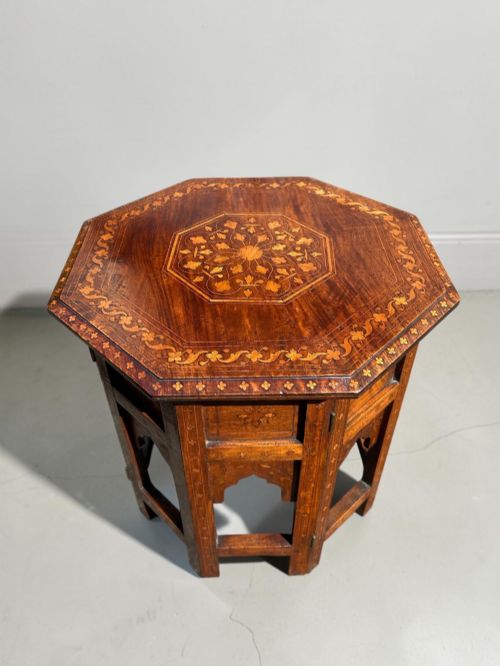
- Having eight sides, a common geometry for the tops and bases of these tables. This shape allows for symmetrical arrangements of inlaid panels.
Indian Inlay Occasional Table: Frequently Asked Questions
What is an Indian inlay occasional table?
These pieces are small, portable tables featuring detailed surface patterns created with materials set into wood. They were produced in various shapes for use as side tables or display surfaces.
Craftsmen drew on regional traditions to carve the timber and apply intricate decorations, resulting in distinctive furnishings for domestic spaces.
How do I identify a Hoshiarpur table?
Hoshiarpur tables are distinguished by dense, all-over carving and intricate inlay work using bone, brass, or shisham wood. They frequently feature octagonal tops and folding bases.
The surface decoration typically incorporates elaborate floral and geometric motifs covering the entire structure.
What materials are used in these tables?
The primary structure is built from timbers such as teak, rosewood, ebony, or hardwood. These provide a dark, durable base for lighter decorative elements.
Inlay components consist of bone, mother-of-pearl, and brass wire or sheet, contrasting sharply with the surrounding wood.
How do I care for an inlaid table?
Keep the timber clean with a soft, dry cloth and avoid excessive moisture or direct sunlight that could dry out the wood. Natural waxes help maintain the finish of the timber.
Take care around the inlaid sections, as bone and mother-of-pearl benefit from gentle treatment to remain secure within their channels.