


Carved Marble Side Table
A carved marble side table combines sturdy stone with intricate timber or gilt framing to anchor a room with functional surface space.
Carved Marble Side Table
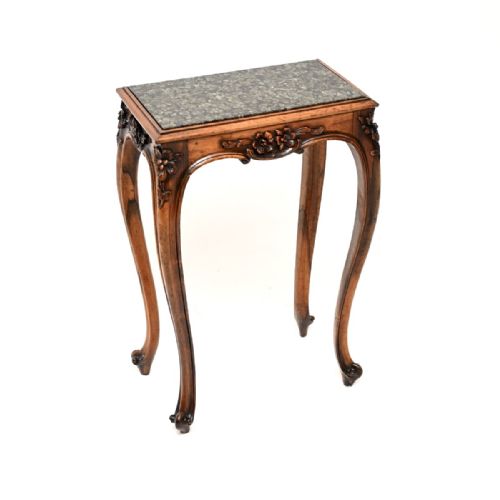
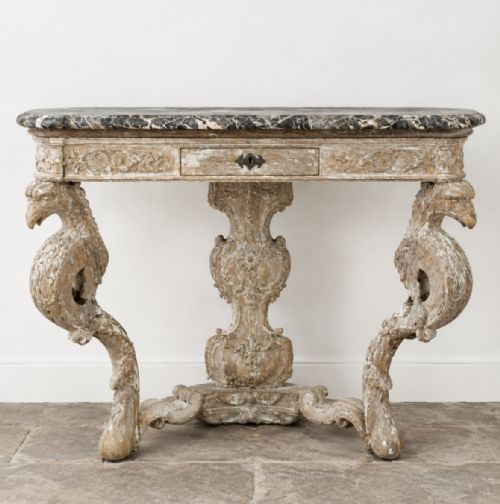
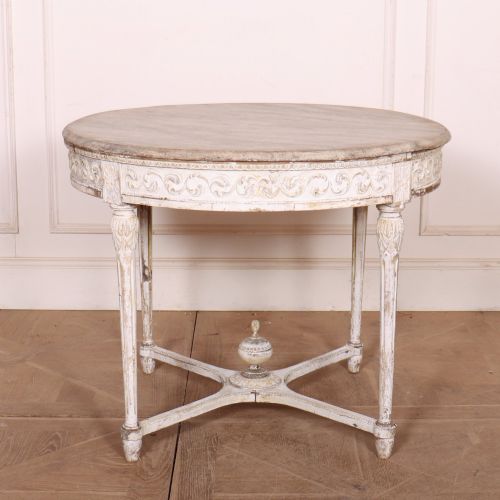
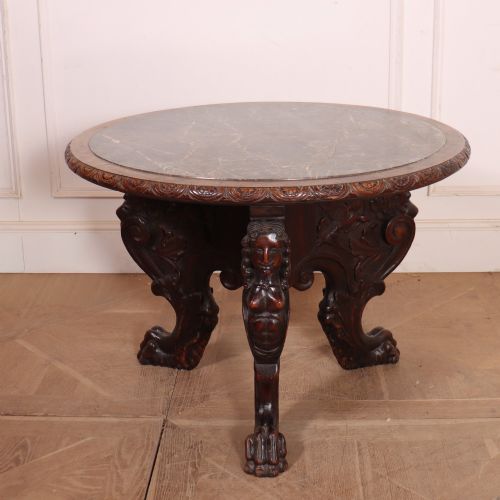
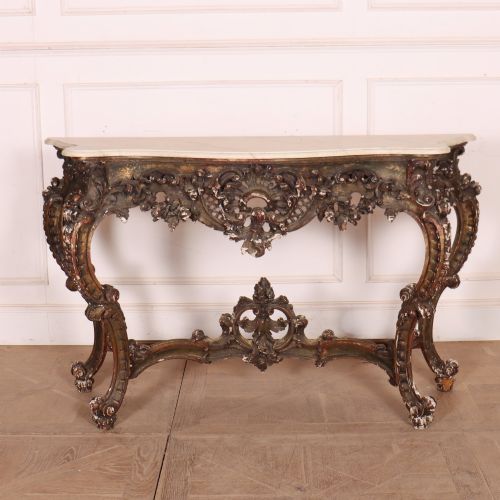
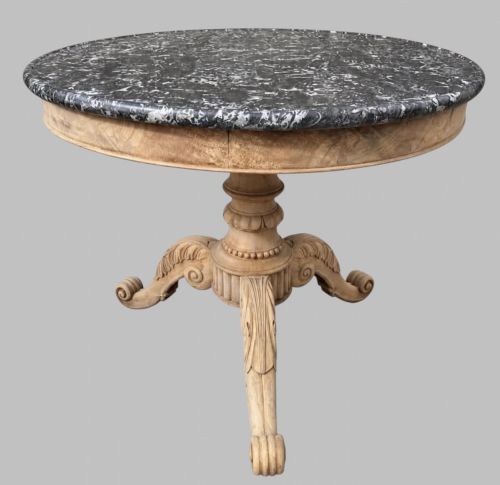
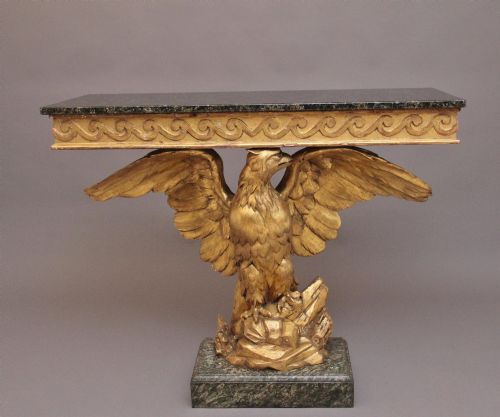
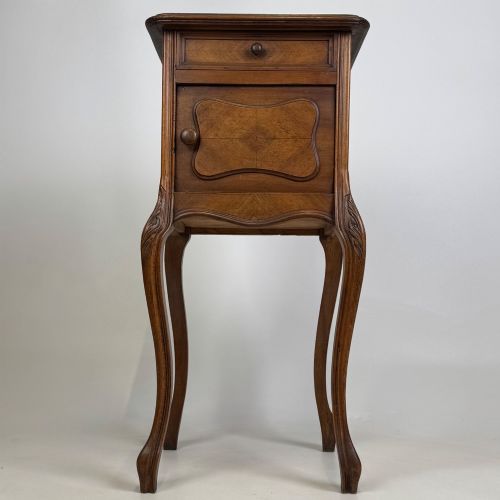
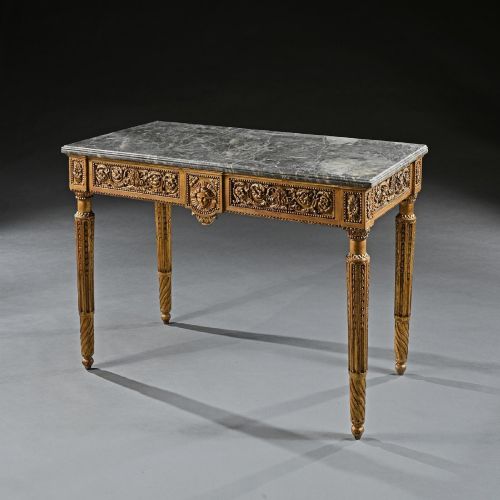
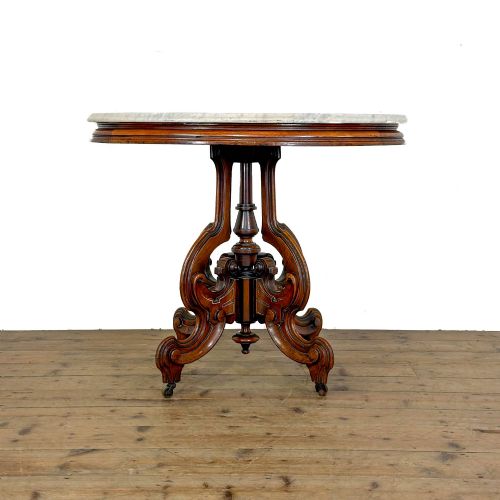
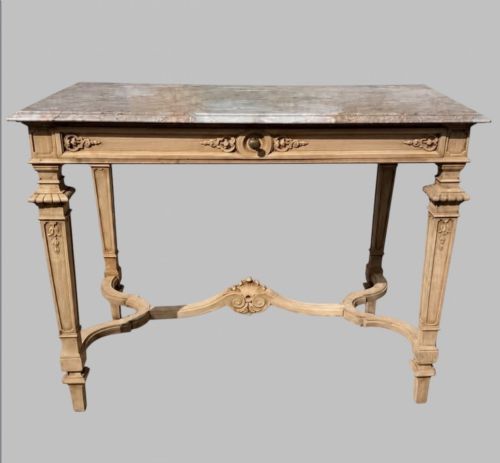
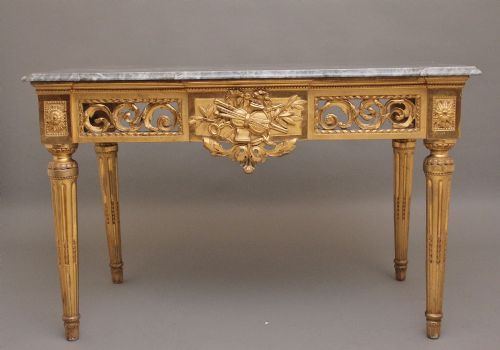
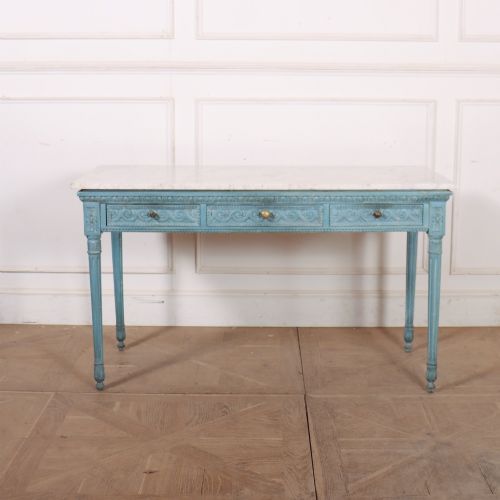
A carved marble side table brings a solid stone slab together with a decorative wooden frame, serving as a stable surface for lamps, vases or everyday items. The selection spans the eighteenth and nineteenth centuries, taking the form of console tables, gueridon tables, and compact stands.
Italian and French workshops dominate the older end of the range, often employing giltwood or carved walnut to frame figured marble tops. English examples tend to utilise mahogany or oak, showing restraint in their carving compared to continental counterparts.
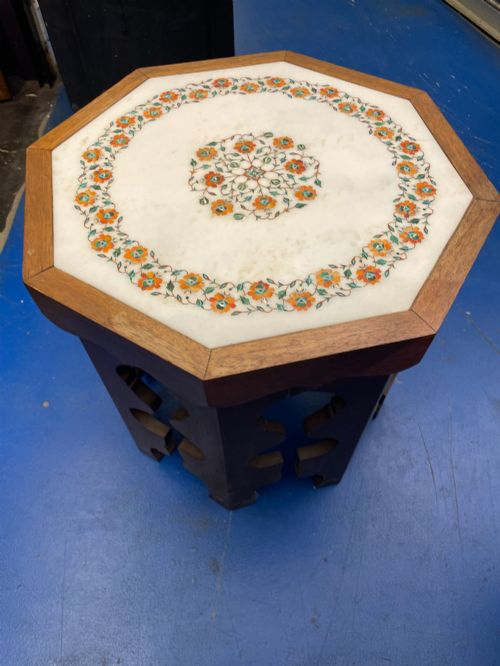
Buyers also encounter pieces originating from Chinese workshops, which pair hard woods like rosewood or teak with inset marble panels. These varied origins mean a buyer can choose between the ornate scrollwork of European revivals and the clean geometry of Asian stands.
Materials and Construction Methods
Makers shaped the structural frames from timbers such as mahogany, walnut, oak, and rosewood, applying hand-carving directly to the solid wood. Giltwood and gesso frames received layers of gold leaf over a prepared base, requiring steady hands and patient application.
The stone tops, ranging from plain white marble to heavily veined varieties like breche d'alep, were quarried, cut, and polished by hand to fit the precise contours of each wooden base. Inlaid versions, such as those featuring mother of pearl, required meticulous chisel work to seat decorative elements flush into the hardwood surface.
Some nineteenth-century French tables hide tiny secret drawers beneath their marble tops, perfect for losing the house keys.
Distinctions in Quality
The depth and crispness of the hand-carving dictate much of the visual distinction between examples, with superior pieces showing sharp undercut foliage and confident scrollwork rather than soft, shallow moulding. The choice of timber and the natural figuring of the marble further separate standard production from exceptional works.
Integration between the heavy stone top and the supporting frame reveals the maker's skill, as top-tier tables feature custom rebates and sturdy joinery that securely distribute the substantial weight of the marble without relying on modern fasteners.
The Carved Marble Side Table Glossary
- Gueridon
- A small circular table on a central pillar or tripod base, frequently topped with marble. Originating in seventeenth-century France, these tables gained renewed popularity during the nineteenth century for domestic use.
- Console table
- A wall-mounted or freestanding table designed to stand against a vertical surface, usually featuring an elaborate front and a flat top. They often supported heavy marble slabs in formal reception rooms.
- Giltwood
- Timber that has been coated with a thin layer of gold leaf over a gesso ground. This finish reflects candlelight and adds richness to decorative frames.
- Serpentine front
- A furniture front characterised by a concave central section flanked by two convex curves, or the reverse. This undulating shape requires skilled carpentry and careful stone-cutting to execute.
Carved Marble Side Table: Frequently Asked Questions
How do I clean a marble top?
Use a soft, damp cloth with mild, neutral soap to wipe down the stone surface after use. Avoid acidic cleaners or abrasive scouring pads that can etch or dull the polished finish over time.
Dry the marble thoroughly with a clean towel to prevent water spots. Applying a specialist stone sealer periodically helps protect the surface from accidental spills.
Where should I place a console table?
Console tables sit naturally against a hallway wall, an entrance foyer, or beneath a large hanging mirror in a living room. Their shallow depth allows them to provide surface space without blocking household traffic.
Pairing a wall-fixed console with sturdy brackets ensures stability if the piece is tall or carries a particularly heavy stone top.
How can I tell an eighteenth-century table from a later copy?
Examine the construction methods visible underneath the frame, looking for hand-cut joints, timber shrinkage, and tool marks left by period hand-planes. Older giltwood pieces often show layers of gesso and bole beneath worn areas of gold leaf.
Later revival pieces from the Victorian and Edwardian eras display more uniform machine sawing and standardised fixings. Comparing the patina of the wood and the wear patterns on the marble helps confirm the age.