






Indian Colonial Cabinet
An indian colonial cabinet brings together dense tropical timbers and intricate indigenous carving from the nineteenth century and early decades of the twentieth.
Indian Colonial Cabinet
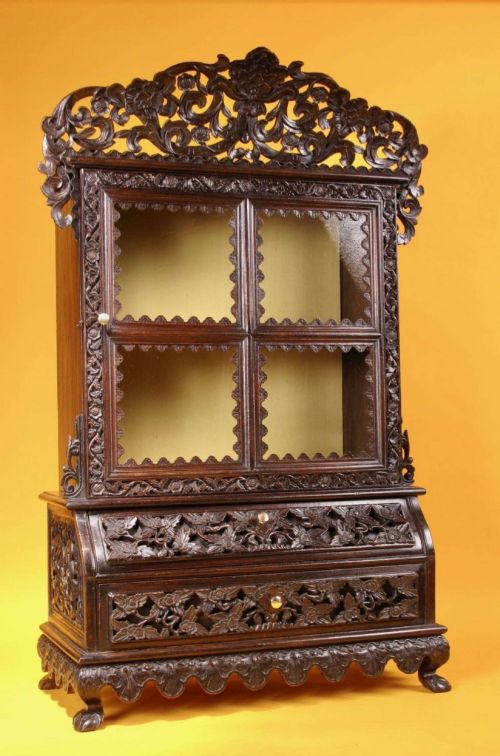
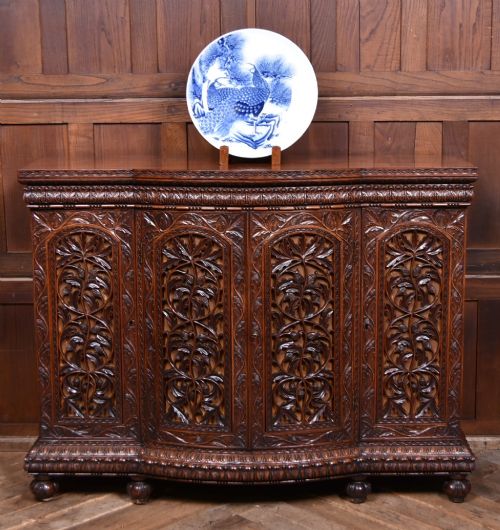
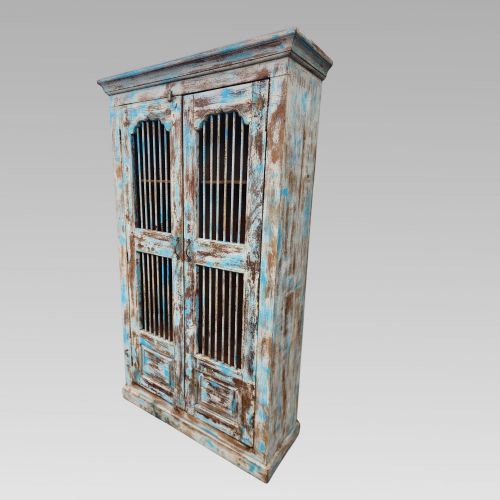
An indian colonial cabinet encompasses a variety of storage forms created during the nineteenth and early twentieth centuries, including display cabinets, sideboards, side cabinets, and cupboards. You are most likely to encounter nineteenth-century pieces alongside items dated around 1900, 1910, 1920, and 1930.
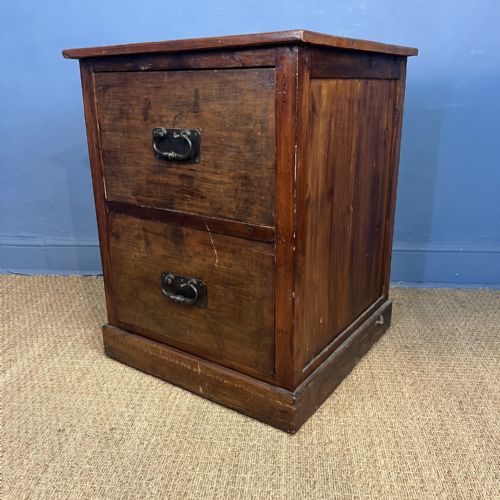
The objects span multiple functional categories beyond standard cupboards, featuring desks, cellarettes, collector chests, filing cabinets, bookcases, and linen presses. Stylistic labels in the evidence include Anglo-Indian, Anglo-Indian Colonial, Rustic Indian, Colonial Indian, Anglo-Burmese, and Victorian Colonial.
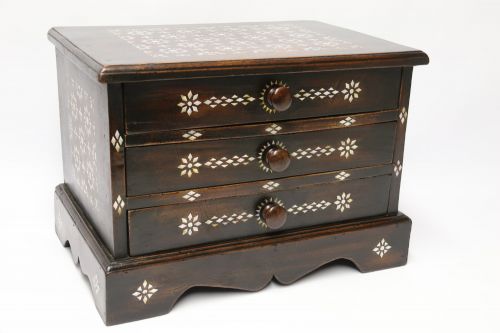
These items reflect the exchange of cabinet-making traditions between British occupants and local artisans across the region. Forms range from large sideboards and storage wardrobes to small desktop smokers' cabinets and glazed bookcases.
Materials and construction
Makers utilised dense tropical timbers native to the region, relying predominantly on teak, padauk, rosewood, hardwood, and solid satinwood, supplemented by occasional elm and ebonised finishes. These woods provided the heavy structural stability necessary for large sideboards and intricately carved display cabinets.
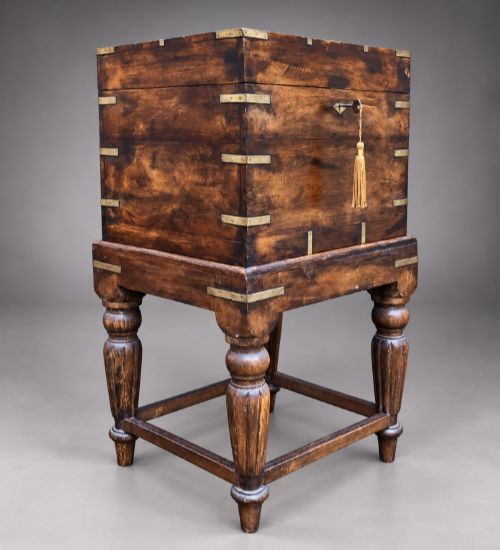
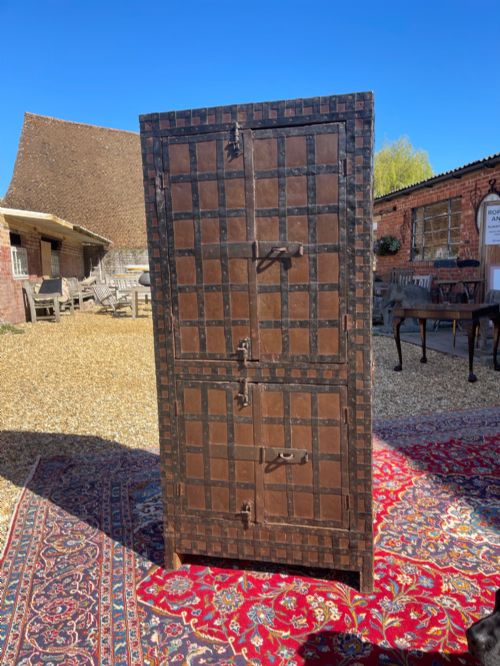
Metal elements such as brass and iron appear as structural bindings, hinges, and decorative mounts, particularly on metal-bound cupboards and wine chests. Glass is integrated into glazed doors for display cabinets and bookcases to showcase contents.
Indian Colonial Cabinet Retail Price Guide 2026
Typical asking prices for indian colonial cabinet among the pieces listed under this phrase on Sellingantiques today, from the lower quarter to the upper quarter. They describe what is for sale here now, not the wider market.
Keep a spare key ready; old brass locks on these colonial cabinets love a mysterious disappearance.
Differentiating quality in the range
The standard of carving determines much of the distinction between pieces, moving from restrained mouldings to deeply carved figures, foliage, and architectural motifs executed in padauk or hardwood. Relief work requires precise hand control that separates standard storage cupboards from ornate display cabinets and pedestal sideboards.
Timber selection and joinery execution also drive variation across the selection, distinguishing standard utility pieces from finely grained rosewood, satinwood, or heavy padauk furniture. Integrated fittings, such as specialised drawers in collector chests and filing cabinets, indicate the level of bespoke attention given by the maker.
The Indian Colonial Cabinet Glossary
- Anglo-Indian
- A term describing furniture produced under British influence in India, combining local craftsmanship with European forms. It accounts for a large portion of the cabinets, desks, and sideboards seen here.
- Padauk
- A dense, reddish-brown tropical hardwood favoured by cabinet-makers for its durability and suitability for deep carving. It appears frequently in sideboards and glazed cupboards.
- Cellarette
- A specialised chest or cabinet designed to hold wine bottles and decanters securely. Examples in this category often feature fitted interiors and robust stands.
- Davenport
- A compact writing desk featuring a sloped writing surface above a pedestal of drawers. The evidence shows these executed in carved hardwood.
- Linen Press
- A tall storage piece designed originally for flat textiles, combining upper cupboard doors with lower drawers. Miniature versions also occur in nineteenth-century workshops.
Indian Colonial Cabinet: Frequently Asked Questions
What is an indian colonial cabinet?
An indian colonial cabinet is a piece of storage or display furniture made during the nineteenth or early twentieth centuries, blending British forms with indigenous carving traditions.
These items range from large sideboards and wardrobes to small desktop cabinets, constructed primarily from tropical timbers like teak and padauk.
How were these cabinets used?
They served practical domestic and administrative functions in colonial households, acting as sideboards for dining rooms, bookcases for studies, and specialised chests for wine or smoking accessories.
Filing cabinets and collector chests also indicate specialised record-keeping and archiving uses by British and local residents.
What timbers should I expect?
The primary materials recorded are dense tropical hardwoods, specifically teak, padauk, and rosewood, alongside occasional satinwood, elm, and ebonised finishes.
Metal fittings in brass and iron frequently reinforce the structures of wine chests and heavy storage cupboards.
How do I date these pieces?
Dating relies on stylistic markers and recorded production periods spanning the nineteenth century through the 1930s, including Victorian examples and specific decades like 1860, 1880, 1900, 1910, and 1920.
Changes in form, from heavy Victorian revival sideboards to later rustic or painted storage cupboards, help place items within this timeline.