





Indian Carved Side Chair
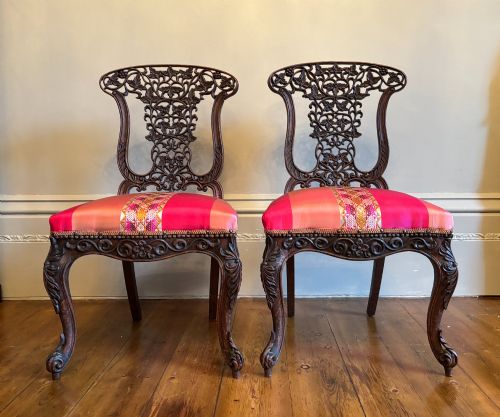
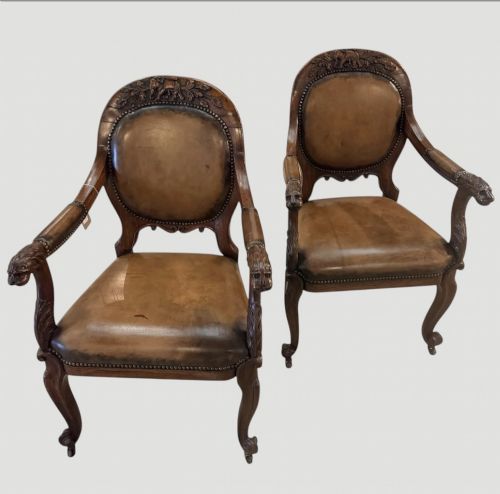
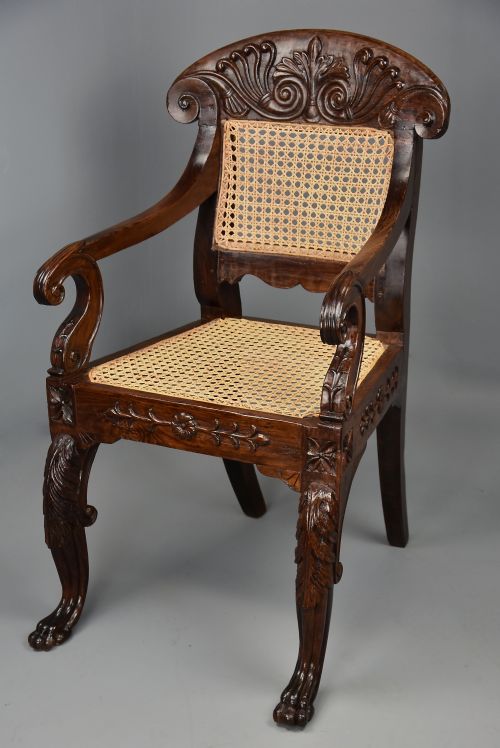
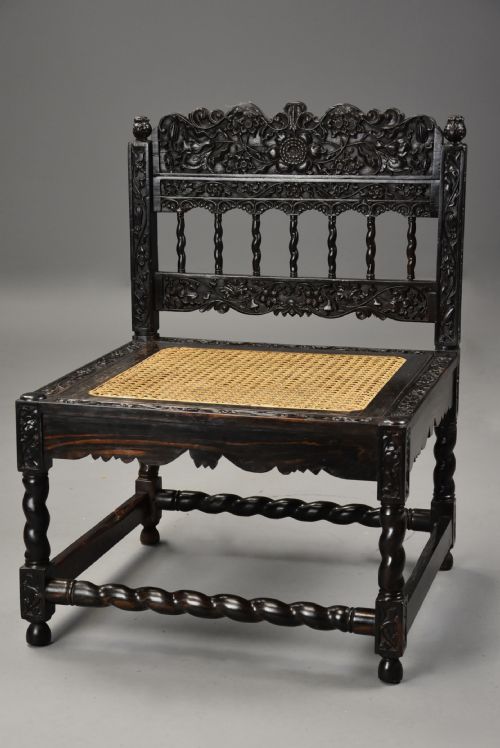
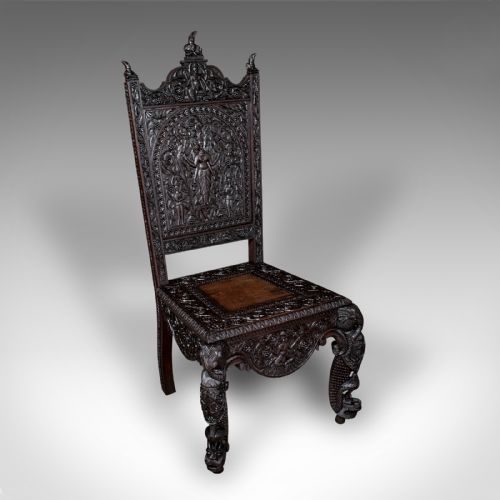
An indian carved side chair brings dense foliage, figures and mythical beasts straight into a room through deep-relief timber work.
Indian Carved Side Chair
An indian carved side chair sits at the intersection of traditional South Asian craftsmanship and European seating forms from the seventeenth to the twentieth century. These pieces appear in styles ranging from Anglo-Indian and Anglo-Burmese Colonial to Indo-Portuguese and Burmese, spanning periods like the Georgian, Victorian, and nineteen-thirties.
The selection on this page centres heavily on nineteenth-century examples alongside specific items dated to seventeen-hundred, eighteen-thirty, eighteen-fifty, eighteen-eighty, eighteen-ninety, nineteen-twenty, and nineteen-thirty. Forms include side chairs, accent chairs, dining chairs, hall chairs, music chairs, and low chairs.
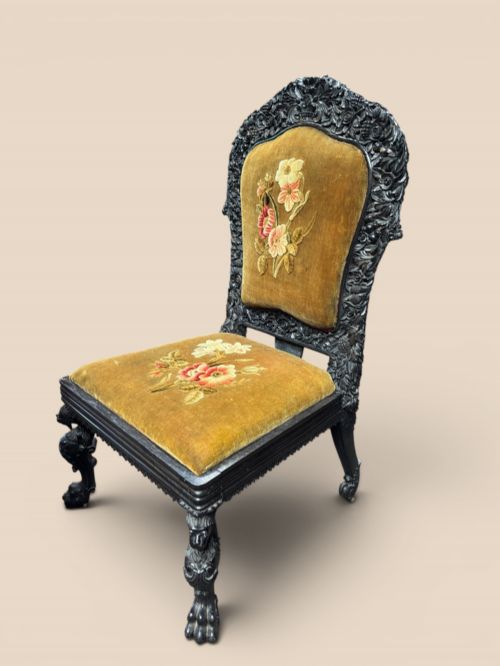
Timbers dominate the construction, with solid ebony, padauk, rosewood, teak, hardwood, satinwood, and gilt wood appearing across the current and archived listings. Artisans utilised caning, velvet, and added brass elements alongside various upholstery fabrics to complete the seating surfaces.
How they were made
Carpenters worked dense exotic hardwoods such as ebony, padauk, rosewood, and teak, which allowed for microscopic detail in carving without splintering the grain. Artisans employed hand chisels and gouges to execute deep-relief foliage, scrollwork, and figurative motifs directly into the solid timber structure.
Construction methods merged traditional joinery with European furniture forms like the Regency, William IV, and Savonarola designs. Caning was woven directly through drilled frame apertures for open seats, whilst other versions incorporated drop-in pads or upholstered panels covered in velvet.
Indian Carved Side Chair Retail Price Guide 2026
Typical asking prices for indian carved side chair among the pieces listed under this phrase on Sellingantiques today, from the lower quarter to the upper quarter. They describe what is for sale here now, not the wider market.
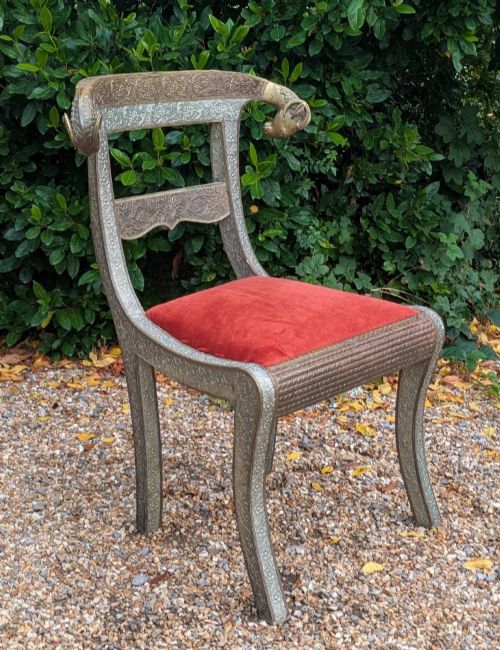
Watch for ram heads and harpist seats hiding amongst the foliage.
What varies in quality
Depth and crispness of the chisel work dictate the visual strength of the carving, separating fluidly articulated figures and foliage from flat or hurried execution. The choice of primary timber influences both weight and natural sheen, with dense solid ebony and figured padauk sitting at the upper end of the scale.
Structural integrity depends on the rigidity of the original joints and the preservation of the carved members against shrinkage or old timber movement. Uniformity across matched sets of dining or library chairs marks a higher level of workshop output than assembled groups.
The Indian Carved Side Chair Glossary
- Padauk
- A heavy, dense tropical timber with a reddish-brown hue that darkens with age, frequently utilised for carved furniture. It takes a fine polish and holds intricate chisel work exceptionally well.
- Anglo-Indian
- Furniture made in India during the British colonial period, combining traditional local carving techniques with European forms. These pieces often merge British chair patterns with South Asian iconography.
- Caning
- A seating material woven from split rattan cane, allowing for a flexible and breathable panel. It provides a light visual weight to heavy hardwood frames.
- Savonarola chair
- A folding chair constructed from multiple intersecting curved wooden slats, creating a lattice pattern. This Renaissance-revival form was adopted by Indian workshops during the nineteenth century.
Indian Carved Side Chair: Frequently Asked Questions
What periods do these chairs come from?
The listings span from the seventeenth century through the Georgian and Victorian eras up to the nineteen-thirties.
Nineteenth-century examples form the majority of the available inventory, reflecting heightened colonial production.
Which woods were used to build them?
Workshops utilised dense tropical hardwoods including ebony, padauk, rosewood, teak, satinwood, and general heavy hardwoods.
Some specialist pieces also incorporate gilt wood or brass mounts alongside the carved timber frames.
How do I identify an Anglo-Indian chair?
Anglo-Indian chairs combine standard European chair skeletons with South Asian relief carving depicting foliage, animals, or deities.
Look for influences from specific eras such as the Regency or William IV applied to exotic timbers.