





Impressionist Winter Landscape Painting
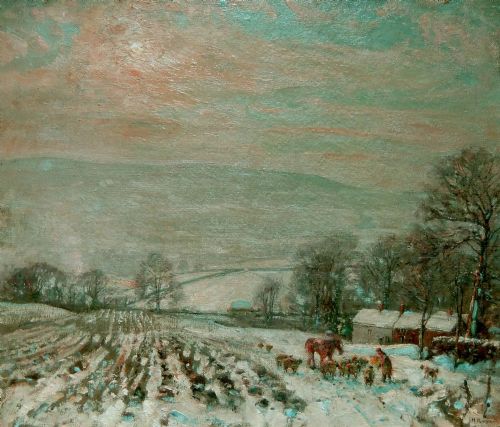
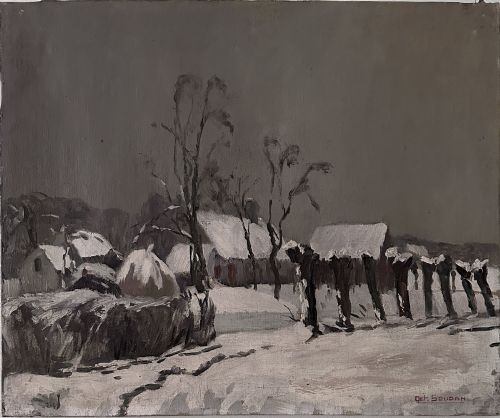
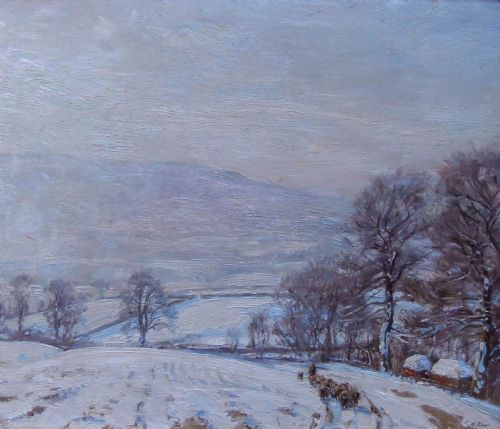
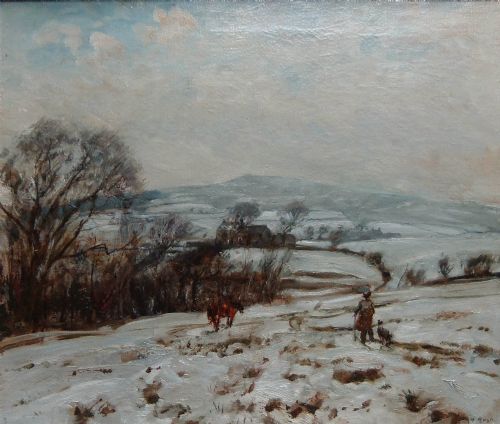
An impressionist winter landscape painting captures cold seasons through loose brushwork, bringing snowy fields, frosty villages, and dim twilight indoors.
Impressionist Winter Landscape Painting
An impressionist winter landscape painting focuses on cold weather scenes, featuring villages, snow-covered valleys, and rural pastures rendered in loose brushwork. You will frequently encounter works originating from the nineteenth century through the mid twentieth century, capturing scenes from British, French, and Canadian locations.
The subjects on this page typically encompass framed artworks, oil paintings on canvas or board, and watercolours depicting seasonal farm work, sheep in snow, and frosty hillsides. These pieces range from pastoral Edwardian views to French school compositions and post-impressionist pastels.
Makers represented include painters working within British impressionism and the French school, documenting rural life in places like Wharfedale, Swaledale, and Normandy. The predominant forms are oils and watercolours framed for display.
Materials and technique
Artists apply oil paint or watercolour onto stretched canvas, wooden board, or heavy paper, utilising brisk brushstrokes to capture fleeting effects of light on snow. Some works incorporate gouache or pastel alongside watercolour to build texture in winter skies and frosted ground.
Support materials range from traditional primed canvas to wood panels and paper sheets, often protected behind glass when executed in water-based media. Pigments are layered to convey the dull grey light and pale blue shadows characteristic of cold weather.
The selection includes oil paintings, watercolours, gouache, and pastels created by British and French artists.
Assessing quality
Quality rests on the artist's ability to render light and atmosphere convincingly using minimal brushstrokes, distinguishing masterly handling of snow from flat application. The strength of the composition and the subtlety of colour tones in winter light determine the visual impact.
Condition of the pigment and the support, whether canvas, board, or paper, influences the preservation of the piece, alongside the appropriateness of the framing to the period of the artwork.
Herbert Royle·Gaston Cornil·Fred Lawson·Arthur Winter Shaw·William Tatton Winter·Ernest Higgins Rigg·William Greaves·Emily M Paterson·Anthonij Anton Mauve·Matthew Hale·Angus Rands·William Cave Day
The Impressionist Winter Landscape Painting Glossary
- Impressionism
- A nineteenth century painting style characterised by relatively small, thin, yet visible brush strokes and an emphasis on accurate depiction of light. This approach prioritises the general impression felt by the viewer over minute detail.
- Gouache
- An opaque water-based paint consisting of pigment, water, and a binding agent such as gum arabic. It dries to a flat finish and is frequently combined with watercolour in works on paper.
- Pastel
- A dry painting medium in the form of a stick, consisting of powdered pigment and a binder. Pastel artworks require framing under glass to protect the delicate powder surface.
- Provenance
- The chronology of the ownership or location of a historical object. A documented history adds significant context to antique paintings.
Impressionist Winter Landscape Painting: Frequently Asked Questions
What is an impressionist winter landscape painting?
These artworks depict cold weather scenes using visible brushwork and loose application of oil, watercolour, or pastel. They focus on capturing light and atmosphere rather than exact botanical or architectural detail.
Subjects commonly include snow-covered Yorkshire dales, French villages, and rural pastures under winter skies. They reflect pastoral life and rural labour during the colder months of the year.
How were winter landscape paintings displayed?
Most works are framed to protect the canvas, board, or paper and to complement the visual tones of the painting. Watercolour and pastel examples require glass to shield the fragile surface from dust and moisture.
Oil paintings on canvas or board are typically mounted in wooden frames, sometimes gilded, suited to the domestic interiors of their respective periods.
How do I date these paintings?
Dates are determined by signatures, recorded artist life spans, stylistic traits of the period, and occasionally inscriptions on the reverse of the canvas or board. Twentieth century pieces often show different handling of light compared to nineteenth century works.
Archival records and exhibition labels attached to the framing also help establish the decade in which the painting was produced.
Where were these winter scenes painted?
Locations recorded in the evidence span British rural regions like Wharfedale and Swaledale, French settings such as Normandy and Montmartre, and Canadian landscapes. Artists travelled to these rural and urban spots to record seasonal conditions.
Local topography informs the specific titles given to the works, identifying exact valleys, farms, and harbours.