


Canvas Winter Landscape Art
Canvas winter landscape art brings cold weather scenes to life through oil paint applied to canvas across various historical periods.
Canvas Winter Landscape Art
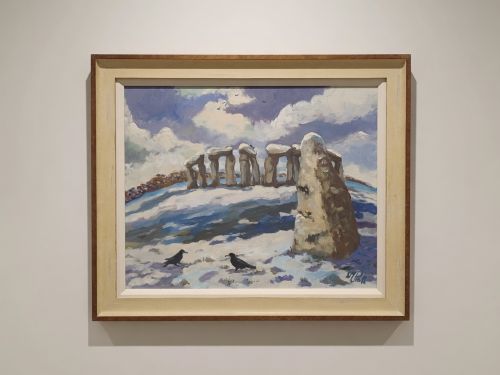
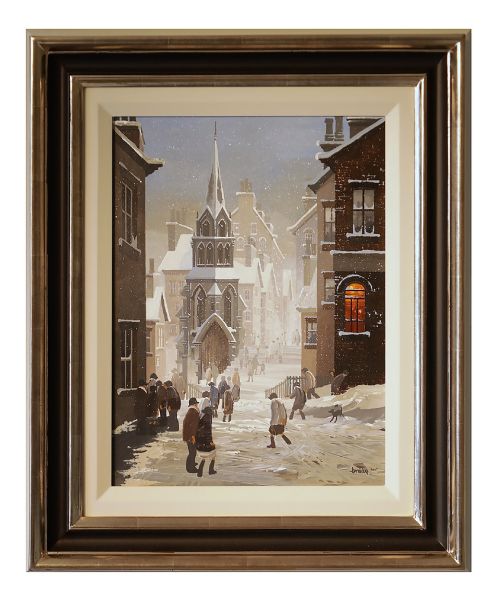
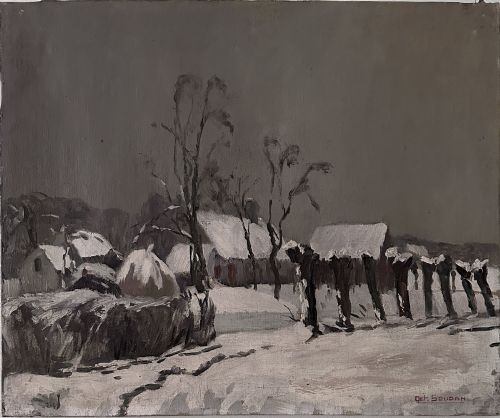
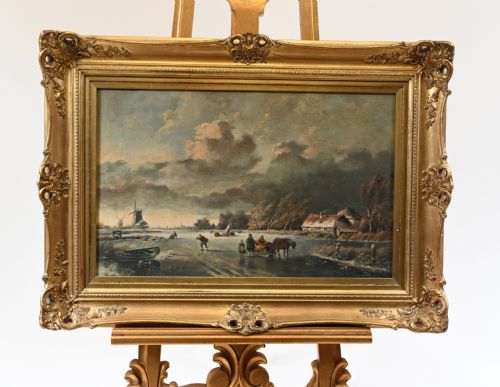
Canvas winter landscape art captures frozen scenes, snow-covered villages, and cold weather pastoral views through painted works. The selections span the nineteenth century through the mid-twentieth century, featuring regional British views alongside Dutch and continental scenes.
Buyers encounter rural Yorkshire settings, Dutch frozen lakes, and coaching scenes rendered on fabric supports. These works range from early twentieth-century impressions to Victorian animal and genre paintings.
The material forms are principally oil paint on stretched canvas, occasionally supported by wood panels or accompanied by giltwood frames. Works often depict figures on ice, livestock in snow, or solitary winter houses.
Materials and Technique
Paintings rely on oil paint applied to woven canvas stretched over wooden frames. Artists built texture with heavy brushwork or thin glazes to capture the chill of snow and ice.
Gilt and giltwood frames frequently accompany these canvases, providing period-appropriate presentation. The physical support consists of prepared canvas fastened to timber stretchers.
Hunting hounds and stagecoaches brave the snowdrifts repeatedly across these nineteenth-century winter canvases.
Evaluating the Works
Quality rests in the handling of light on snow, atmospheric perspective, and the assurance of brushwork across the canvas. Stronger compositions convey the specific chill and stillness of winter through confident tonal shifts.
The distinction between standard decorative pieces and accomplished works lies in the depth of the painting technique and the artist's command of winter light.
Herbert Royle·John Charles Maggs·Ernest Higgins Rigg·Brian Shields Braaq·Thomas Hicks
The Canvas Winter Landscape Art Glossary
- Canvas
- A heavy woven fabric used as a surface for oil painting. It is typically stretched tightly across a wooden frame before application of the ground and pigment.
- Oil Paint
- A slow-drying paint made with pigments suspended in a drying oil, usually linseed oil. This medium allows artists to blend colours smoothly and build textured impasto layers.
- Giltwood
- Wood that has been coated with a thin layer of gold leaf or gold paint. Frames made of this material are common on nineteenth and twentieth-century paintings.
- Stretcher
- The wooden framework that holds a painter's canvas taut. It typically consists of four pieces of timber joined at the corners.
- Impressionism
- A style of painting that focuses on capturing the visual impression of a moment, particularly through shifting light and unblended brushstrokes.
Canvas Winter Landscape Art: Frequently Asked Questions
What periods do these paintings date from?
The available works span from the nineteenth century through the mid-twentieth century, including pieces from the Victorian era and the 1950s and 1960s.
Earlier examples from the 1870s and 1880s sit alongside interwar and post-war modernist interpretations.
What subjects typically appear in these scenes?
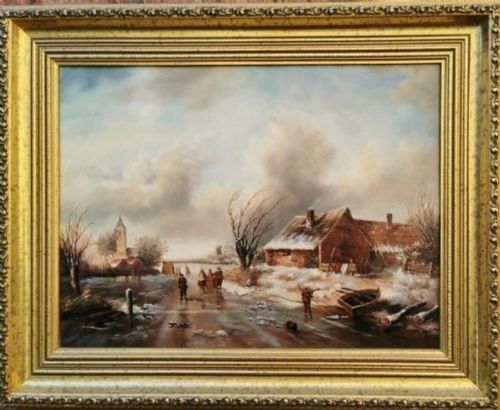
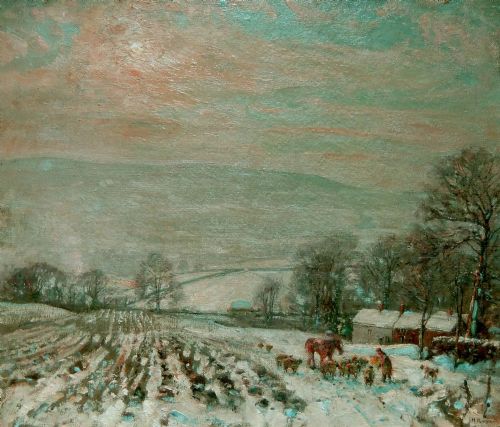
Common subjects include frozen rivers with figures skating, sheep and cattle in snowy fields, and stagecoaches caught in winter storms. Village rooftops, rural Yorkshire landscapes, and nocturnal country views also feature prominently.
Some works incorporate domestic animals or figures outside traditional rural houses.
How should I care for an oil painting on canvas?
Keep the canvas away from direct sunlight, damp environments, and extreme temperature fluctuations. Gentle dusting with a soft, dry brush maintains the surface.
Avoid using water or chemical cleaners on the paint or the gilt frame.
Are these works signed by the artists?
Several pieces feature signatures from listed artists or attribution to specific nineteenth and twentieth-century painters. Other works remain unsigned or reflect regional stylistic traditions such as the Dutch School.
Signatures where present help contextualize the origin and date of the artwork.