

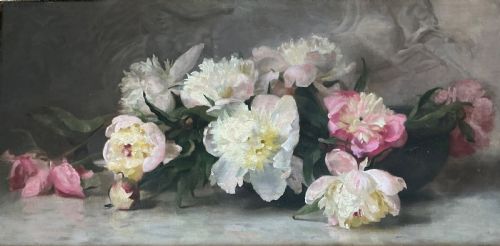


Impressionist Still Life Flowers
Impressionist still life flowers capture fleeting light upon domestic blooms through loose brushwork and vibrant colour.
Impressionist Still Life Flowers
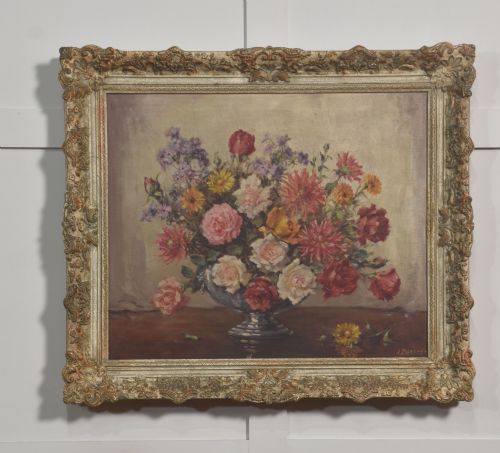
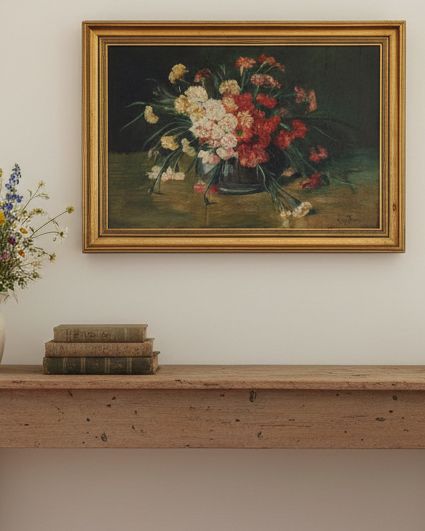
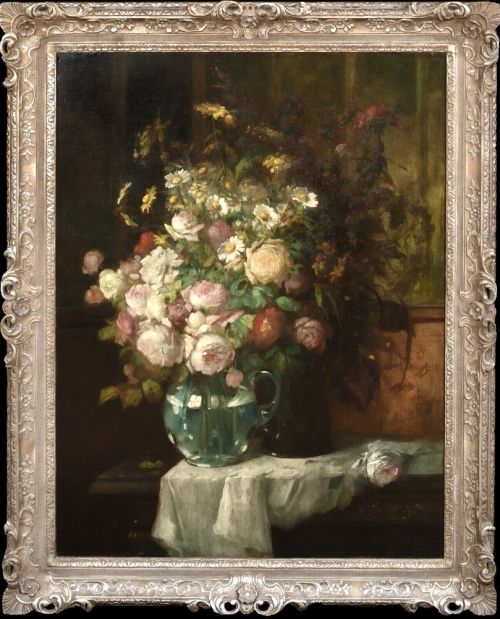
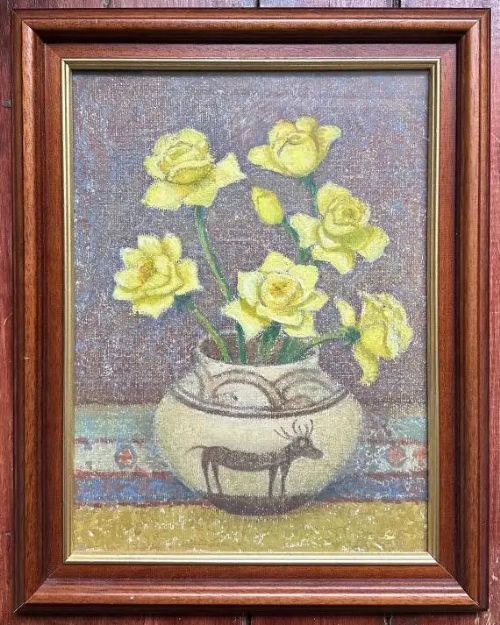
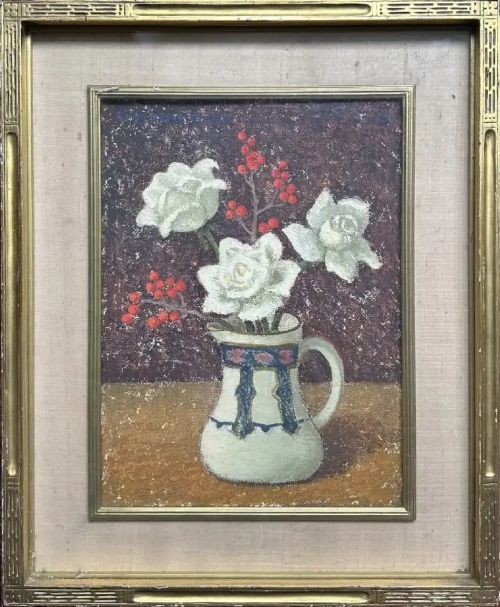
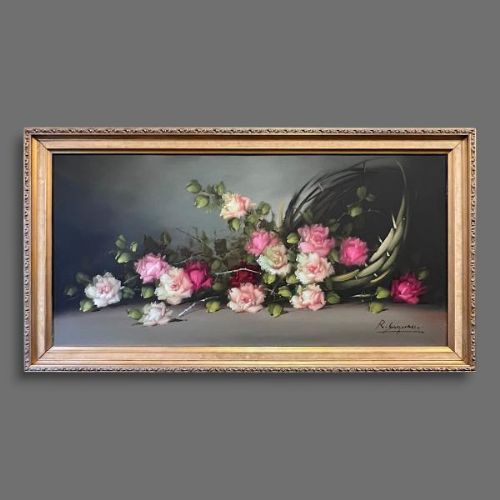
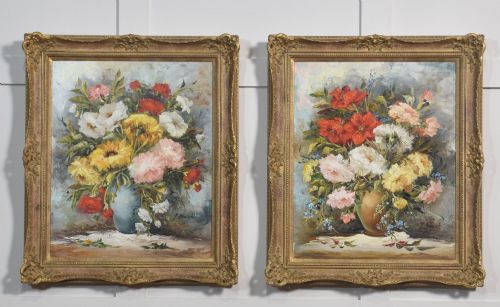
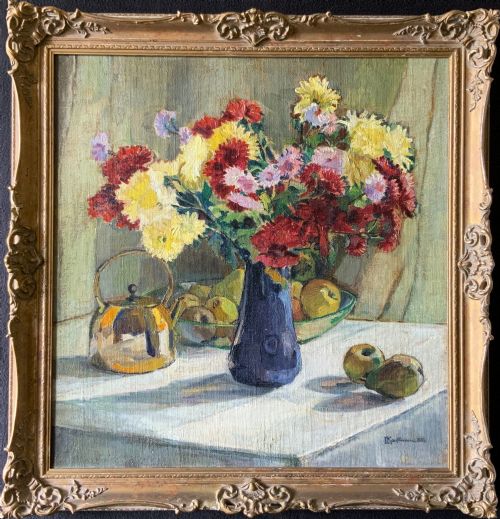
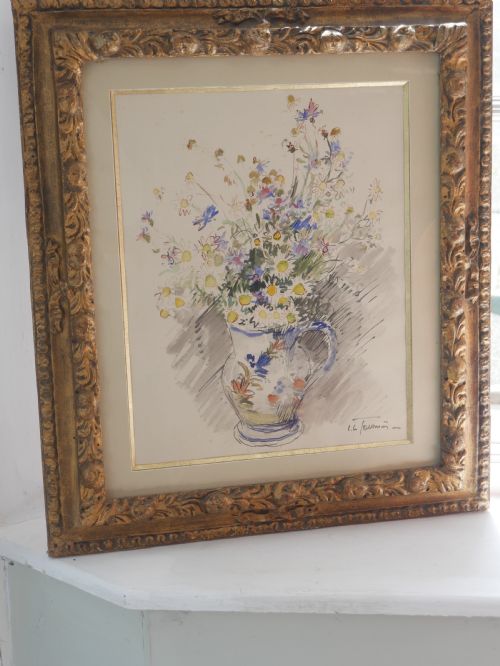
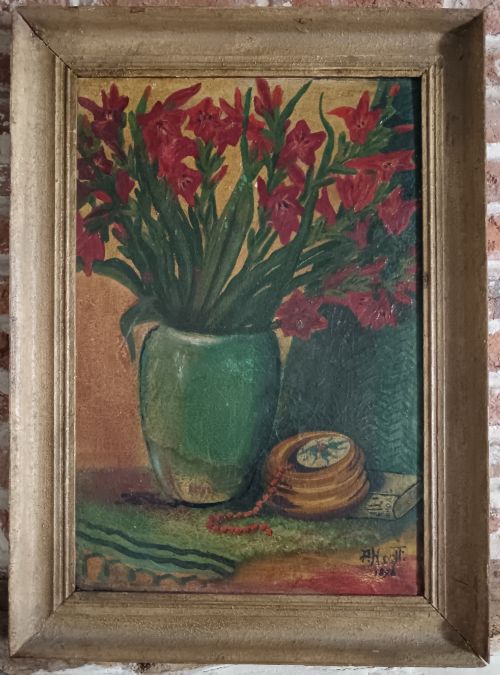
Impressionist still life flowers represent a major focus of early twentieth century and nineteenth century painting, appearing frequently in oil on canvas, oil on board, and watercolour formats. These works typically depict arrangements of roses, anemones, peonies, and summer blossoms displayed in domestic vessels such as pottery pots, wicker baskets, and glass vases.
The pieces on this page span British Impressionism, Post-Impressionism, and Mid-Century Impressionism, alongside continental and American examples. Collectors encounter compositions ranging from intimate studies to large scale displays created during the 1890s through to the 1960s.
Materials and construction
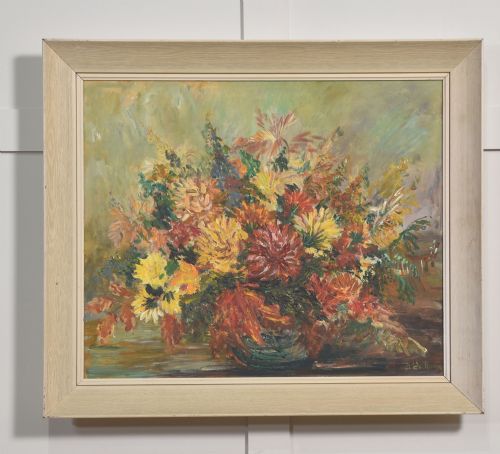
Artists painted primarily with oil paint applied to stretched canvas, wooden board, metal, or prepared paper, frequently building texture through impasto technique. Many works retain their original gilt wooden frames and gesso mouldings that complement the painterly surfaces.
Watercolour and gouache appear on paper supports in several examples, showcasing fluid pigment application alongside the dominant oil mediums. Canvases are secured to wooden stretchers, while board supports provide rigid foundations for twentieth century compositions.
Several artists arranged their floral studies right by the studio window to catch the afternoon light.
Factors determining quality
Quality rests upon the confidence of brush handling and the artist's command of light and tonal harmony across the floral arrangement. Superior examples demonstrate expressive mark making that defines petal structures and interior spaces without relying on rigid delineation.
The integrity of the original surface and the harmony between the painting and its period frame also influence the standing of a piece. Works by recognised regional groups or exhibited artists often display greater compositional ambition and handling skill.
I. Berezny·D. L. Williams·Konstantin Stoitzner·Emma Fordyce MacRae·Manuela Bonati·Owen Bowen·Gertrude Hayes·Amile Coppieters·Florence Hess·Lester Sutcliffe·Kershaw Schofield·Sir Matthew Smith·Maud Frances Eyston Sumner·Elizabeth T. Sutcliffe·William Thomas Wood·Ernest Higgins Rigg·Rowland Henry Hill
The Impressionist Still Life Flowers Glossary
- Impasto
- Paint applied thickly to a canvas or board so that it stands proud of the surface. This technique preserves the physical gesture of the brush and catches real light.
- Post-Impressionism
- An artistic movement following impressionism that extended its use of vivid colour while exploring structure and emotional expression more intensely. Artists working in this manner often emphasised bold outlines and simplified forms.
- Gesso
- A plaster mixture applied to wood or canvas as a prepared base for painting, or moulded onto wooden frames to create decorative relief. It provides a smooth, absorbent foundation for gilding and finishing.
- Luminism
- An American landscape and still life style emphasising effects of light and atmospheric clarity. Works adopting this approach focus on soft gradations and luminous colour interactions.
- Pointillism
- A technique of painting in which small, distinct dots of pure colour are applied in patterns to form an image. The optical blending of these points creates vibrant luminosity from a distance.
Impressionist Still Life Flowers: Frequently Asked Questions
What periods do these paintings cover?
The inventory spans works created from the late nineteenth century through to the mid twentieth century, including pieces dated from the 1890s, 1920s, 1930s, and 1950s.
Mid-century and art deco examples sit alongside earlier Victorian and Edwardian interpretations of floral subjects.
How should I display an oil painting on board?
Oil paintings on board benefit from stable indoor environments away from direct sunlight and excessive humidity.
Displaying them in their period frames provides essential structural support and protects the delicate outer edges of the board.
What is the difference between canvas and board supports?
Canvas offers a flexible textile surface stretched over a wooden frame, yielding a characteristic spring when touched gently.
Board provides a rigid, solid backing made of wood or pressed material that resists punctures and movement over decades.
How do I identify a post-impressionist floral work?
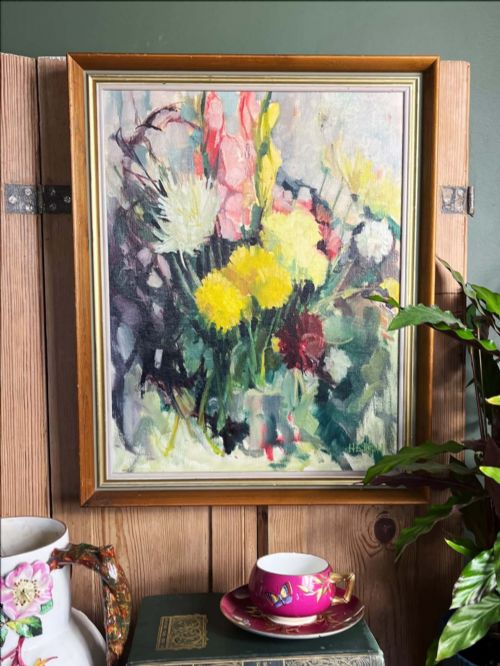
Post-impressionist works often feature intensified colour palettes, visible brush strokes, and flattened perspectives that prioritise emotional resonance over optical realism.
Artists working in this tradition departed from strict academic rules to explore expressive forms within domestic interiors.