

Floral Canvas Art
Floral canvas art brings painted botanical displays onto fabric stretchers, offering centuries of oil-based studies to adorn a room.
Floral Canvas Art
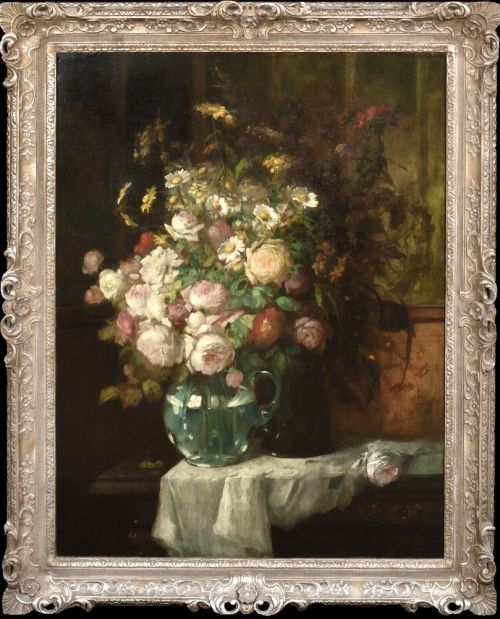
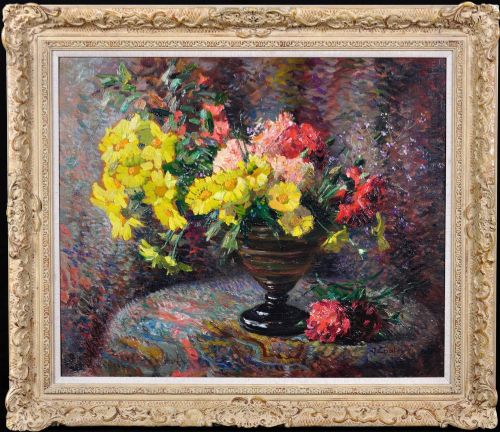
Floral canvas art encompasses original oil paintings, studies, and oleographs depicting botanical subjects on woven supports. These works range from seventeenth-century Flemish compositions to mid-century impressionist interpretations.
Buyers encountering this phrase find compositions spanning Dutch Golden Age styles, Victorian arrangements, and twentieth-century modernist floral displays. The selection includes works executed on canvas stretched over wooden frames as well as board supports.
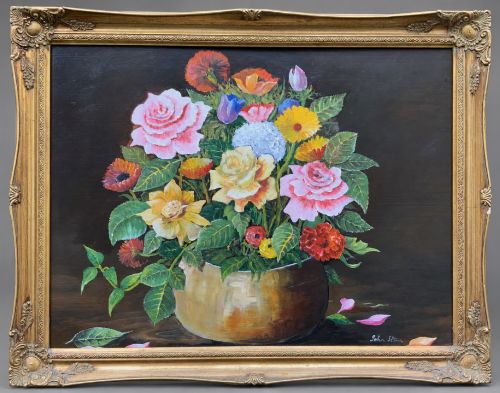
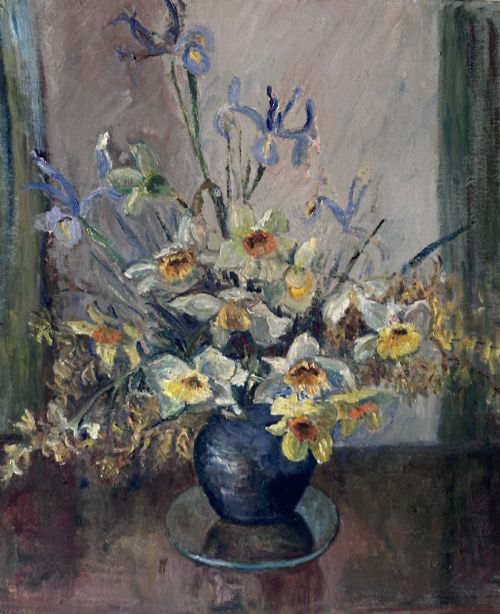
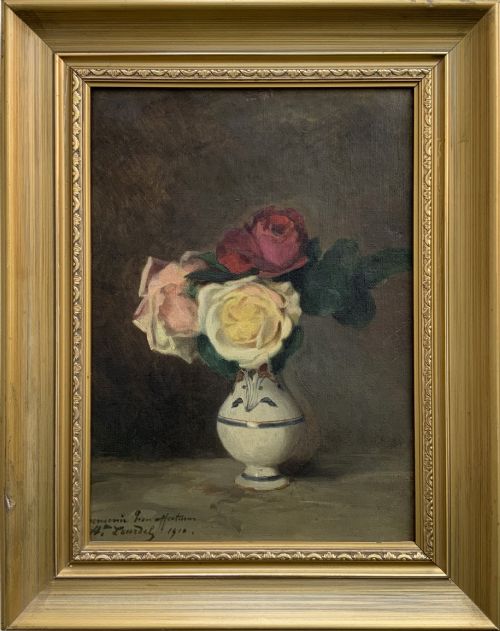
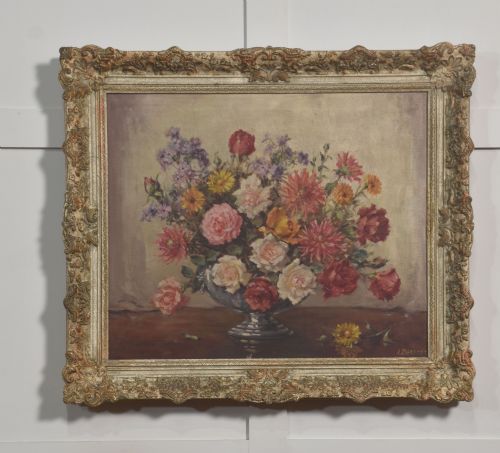
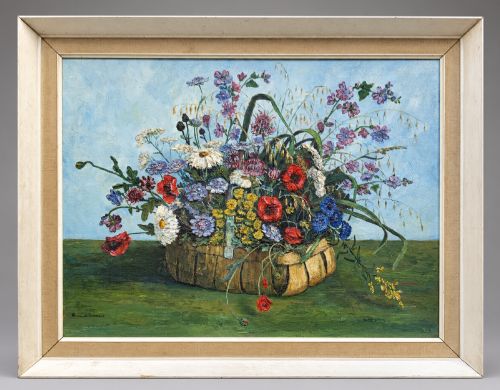
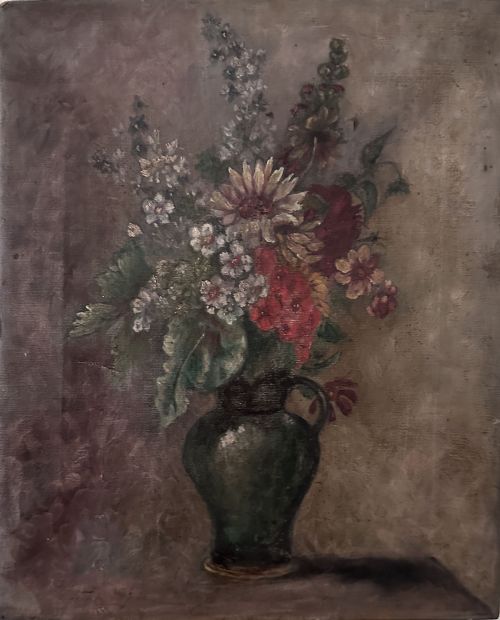
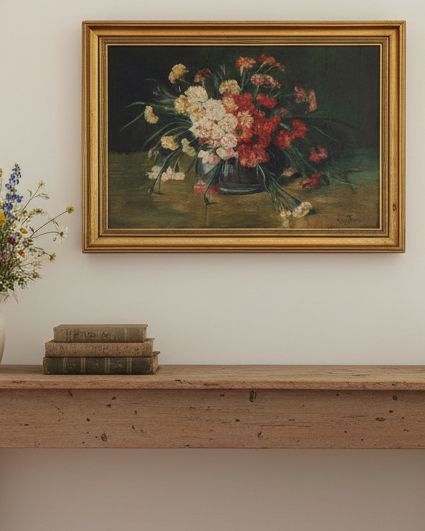
Pieces frequently portray roses, poppies, carnations, and mixed field flowers arranged in vases, baskets, or natural settings. Formats vary from intimate studies to large decorative canvases designed for prominent wall placement.
Materials and Technique
The primary construction relies on oil paint applied to woven canvas supports stretched over wooden frames, occasionally utilising oil on board. Pigments capture the tonal shifts of petals, foliage, and containers through layered brushwork.
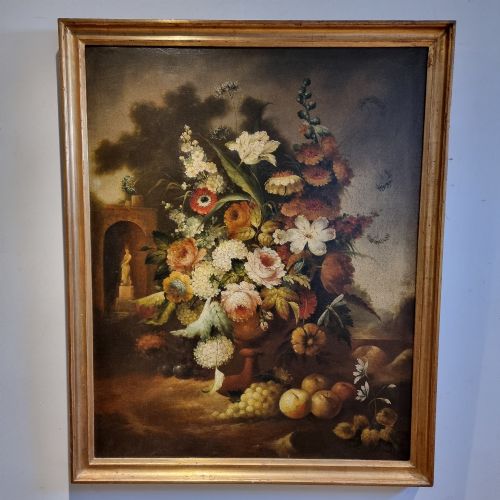
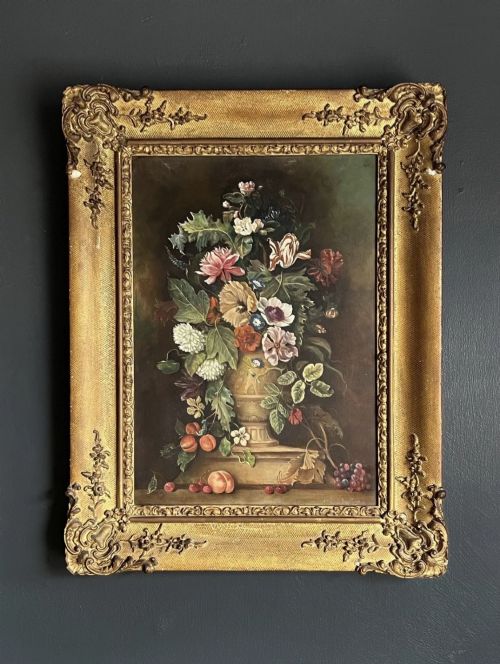
Many historical and vintage examples incorporate timber framing finished with gilt and gesso mouldings. These decorative borders complement the painted surface by adding depth and architectural structure to the display.
Floral Canvas Art Retail Price Guide 2026
Typical asking prices for floral canvas art among the pieces listed under this phrase on Sellingantiques today, from the lower quarter to the upper quarter. They describe what is for sale here now, not the wider market.
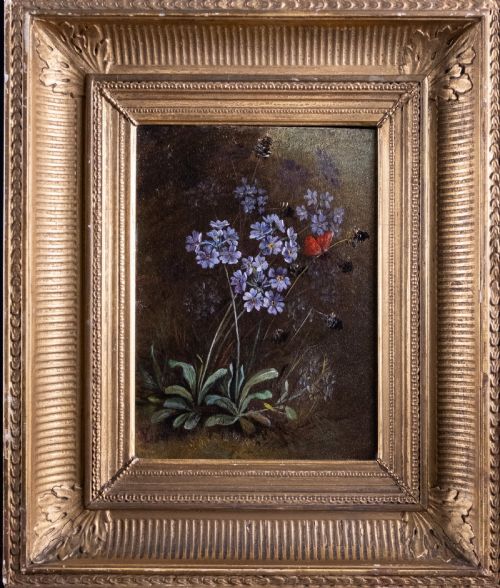
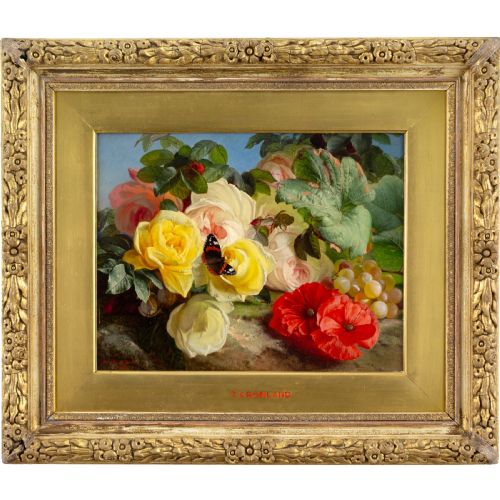
Several floral canvases sneak feathered visitors into the foliage, hiding birds and butterflies among the roses and grapes.
Assessing Quality and Execution
Quality in these oil paintings rests upon the dexterity of the brushwork, the depth of the colour palette, and the naturalistic rendering of light across botanical forms. Finer examples display confident handling of texture in petals and foliage.
The construction of the underlying canvas support and the preservation of the original gilt gesso frame influence the integrity of the piece. Superior works maintain stable paint layers without extensive overpainting or structural distortion.
Theude Grönland·Edward Ladell·Emma Fordyce MacRae·Gaspar Peeter Verbruggen·Peter Newcombe·Harold Clayton·Edwin Steele·Manuela Bonati·William Thomas Wood·Victor Simonin·Owen Bowen·Gertrude Hayes·Simon Pietersz Verelst·Thomas Bromley Blacklock·Amile Coppieters
The Floral Canvas Art Glossary
- Canvas
- A heavy woven fabric, typically linen or cotton, stretched over a wooden frame to serve as a support for oil painting. This material provides a textured foundation that interacts with layered pigments.
- Gilt
- A thin layer of gold leaf or gold paint applied to wooden frames and mouldings to impart a metallic sheen. This finish frames the canvas and enhances the visual weight of the artwork.
- Gesso
- A plaster-like mixture applied to wooden frames as a base for moulding ornamental details before gilding. It creates a smooth, durable surface for decorative relief work.
- Oleograph
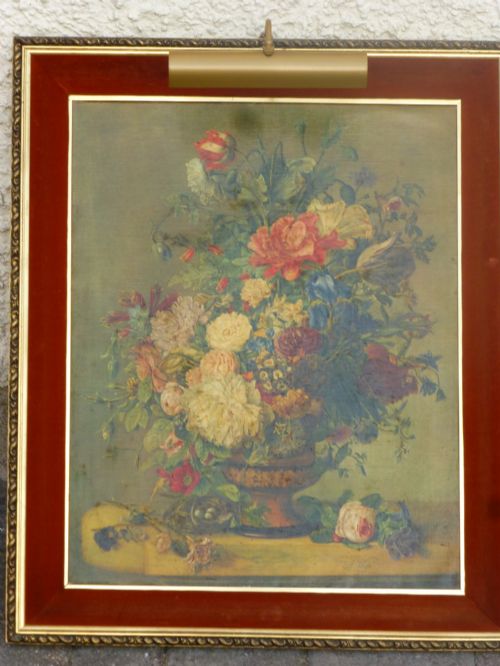
- A mechanical print reproduction on canvas that simulates an oil painting through textured rollers and inked layers. These pieces mimic the appearance of original brushwork.
- Impressionism
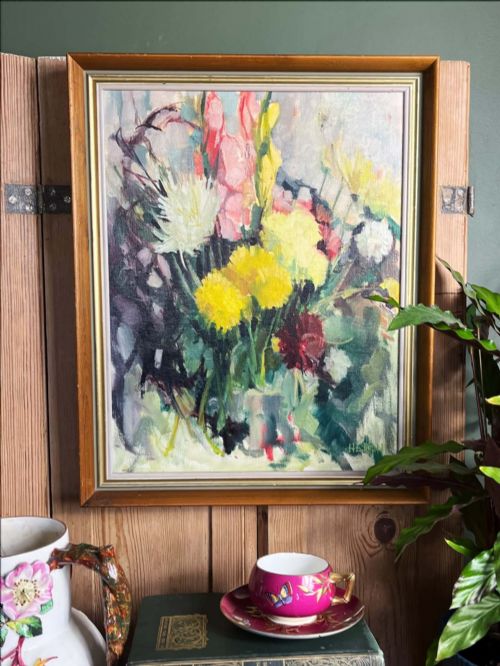
- An artistic style characterised by relatively small, thin, yet visible brush strokes and an emphasis on accurate depiction of light. Works in this manner capture fleeting atmospheric moments in floral arrangements.
Floral Canvas Art: Frequently Asked Questions
What is floral canvas art?
Floral canvas art comprises painted botanical compositions executed in oil on woven fabric supports. These works range from antique Dutch-style still lifes to mid-century impressionist flower studies.
Created across several centuries, these pieces utilise traditional oil painting techniques to capture the textures and colours of seasonal blooms.
How do I care for an oil painting on canvas?
Maintain stable indoor humidity and temperature to prevent the wooden stretcher frames and canvas from warping or cracking. Keep the painted surface away from direct sunlight to preserve pigment vibrancy.
Dust the canvas gently with a soft, dry brush and avoid applying liquid cleaners to the paint or the gilt frame.
How are different periods distinguished?
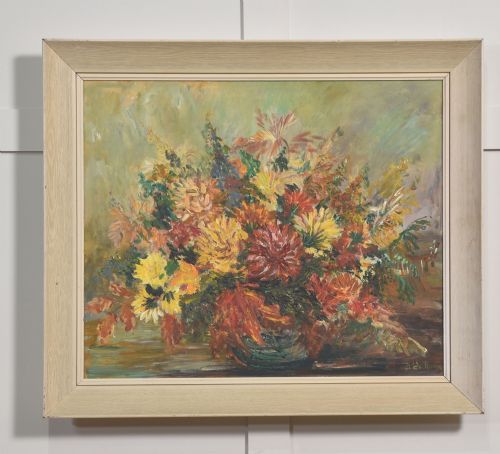
Seventeenth and eighteenth-century styles feature dark, dramatic backgrounds with meticulous botanical detail, while nineteenth-century works often embrace looser impressionistic brushwork. Mid-century pieces introduce brighter palettes and simplified modernist forms.
Examining the canvas preparation, stretcher construction, and framing style helps determine the era of execution.
Where were these paintings displayed?
Historically, floral still lifes hung in formal dining rooms, drawing rooms, and studies of European homes to bring natural elements indoors. Large-scale decorative canvases were often commissioned for specific architectural spaces.
Today, these works serve as focal points in domestic interiors, placed above mantels or on feature walls.