





Impressionist Snow Landscape
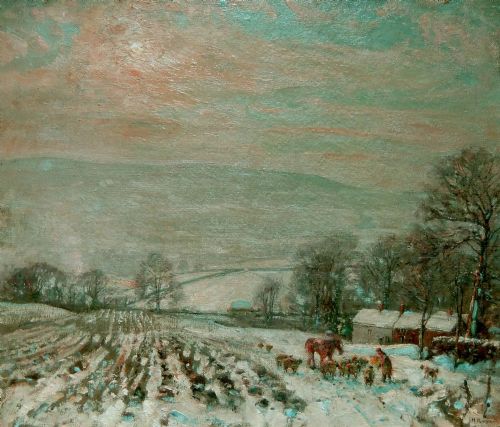
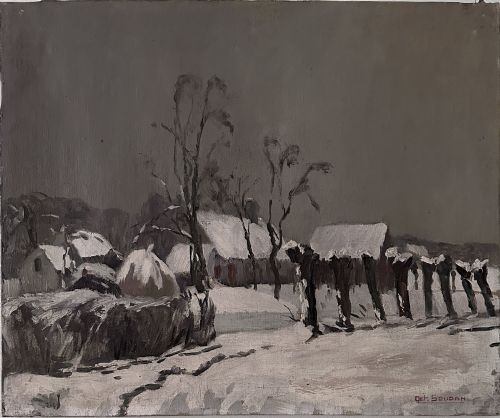
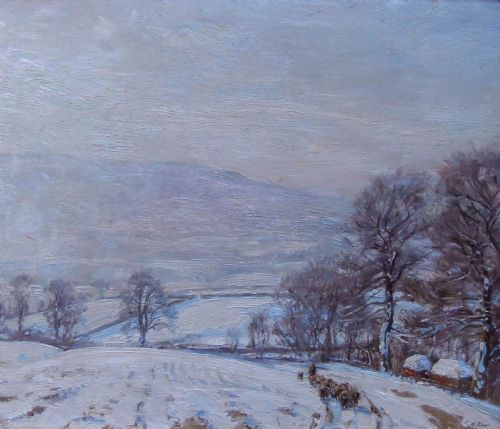
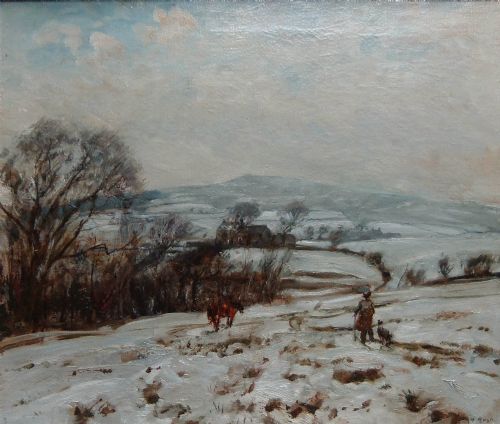
Impressionist snow landscape works capture winter light and frozen topography through loose brushwork and varied painterly textures.
Impressionist Snow Landscape
An impressionist snow landscape focuses on capturing the transient effects of winter weather, cold light, and snow-covered terrain. These works record rural valleys, village scenes, and freezing conditions through atmospheric brushwork.
Buyers browsing this selection will frequently encounter mid-century and early twentieth-century examples, particularly oil paintings and watercolours depicting British, French, and Canadian scenes.
The subjects range from Yorkshire dales and Wharfedale to Montmartre in winter, showing how artists applied loose techniques to render frost, ice, and heavy snowfalls.
Materials and technique
Artists painted these snow scenes primarily in oil paint on canvas, board, or wood, using impasto techniques to build up thick textures of white and grey pigment that mimic actual snowdrifts. Other works utilise watercolour and gouache on paper, often set within gesso frames.
The application of paint relies on visible, rapid brushstrokes rather than smooth blending, allowing the interaction of light and shadow across frozen ground to take precedence over fine detail.
Several Yorkshire valleys recorded deep winter freezes and feeding sheep long before anyone thought to paint the chill.
What varies in quality
The strength of an impressionist snow landscape rests upon the artist's handling of tone and light to convey freezing atmospheric conditions. Superior examples demonstrate a confident command of colour balance, making whites, blues, and greys read as luminous rather than flat.
Compositional strength and the expressive use of impasto or fluid wash determine the visual impact of the piece. Works that successfully translate the chill and stillness of winter without relying on excessive detail hold greater aesthetic presence.
Herbert Royle·Gaston Cornil·Fred Lawson·Ernest Higgins Rigg·Emily M Paterson·William Cave Day
The Impressionist Snow Landscape Glossary
- Impressionism
- A style of painting that emphasises the accurate depiction of light in its changing qualities, often using small, visible brushstrokes and ordinary subject matter.
- Impasto
- The process of laying paint thickly on an area of the surface so that it stands out from it. This technique helps render the physical texture of heavy snow.
- Gouache
- A method of painting using opaque watercolours mixed with a gum. It provides solid blocks of colour in works on paper.
- Gesso
- A plaster-like mixture used as a base for painting or moulded to ornament wooden frames. It creates a smooth or decorative surface before finishing.
Impressionist Snow Landscape: Frequently Asked Questions
What is an impressionist snow landscape?
An impressionist snow landscape is a painting or watercolour that depicts winter scenery using loose brushwork to capture light and atmosphere.
These artworks record cold weather subjects such as snow-covered Yorkshire dales, freezing rivers, and winter villages.
How should I display a watercolour snow scene?
Watercolour and gouache works on paper require framing behind glass to protect them from moisture and atmospheric dust.
Keep them away from direct sunlight to prevent the pigments and paper support from fading over time.
What materials were used for these winter paintings?
Artists utilised oil paint on canvas, wood panels, and boards, often building up thick impasto surfaces to render snow.
Alternatively, many works use watercolour and gouache on paper, sometimes paired with gesso frames.