



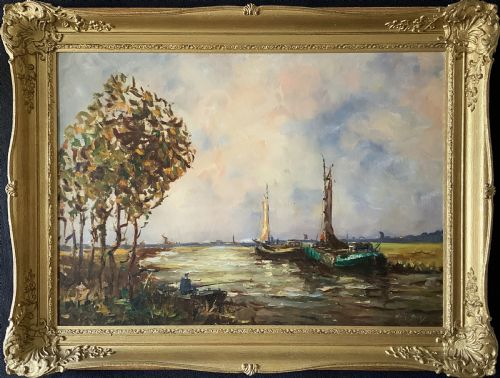

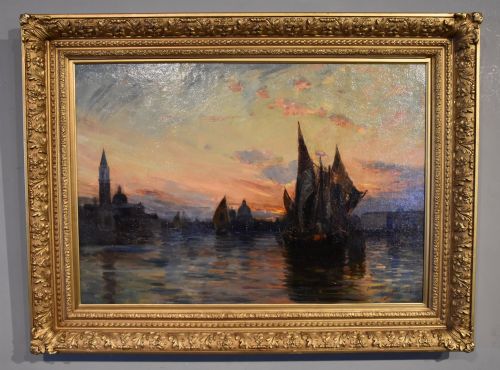
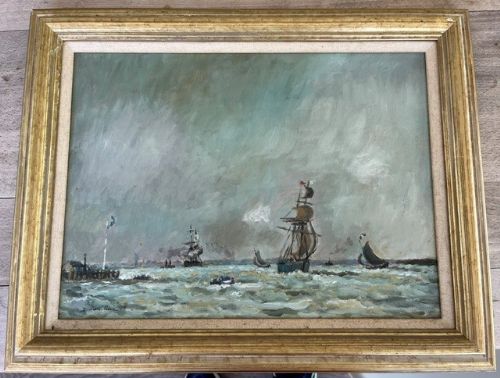


Impressionist Seascape Gilt Frame
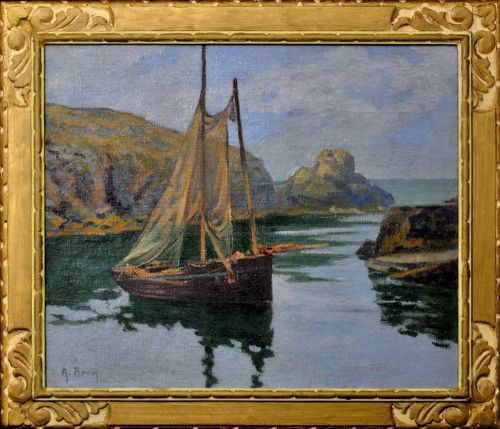
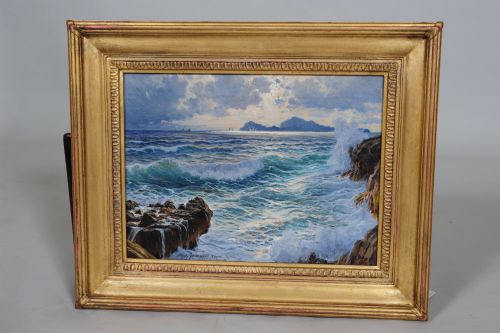
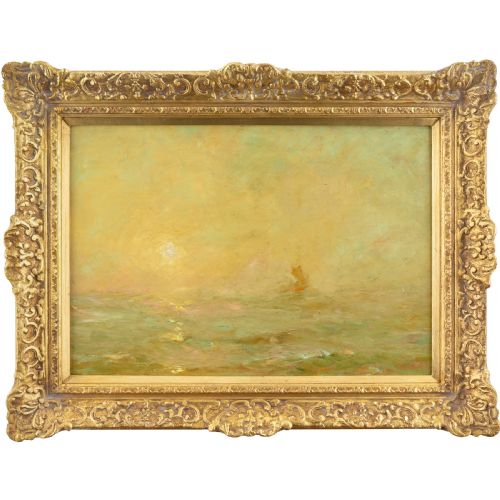
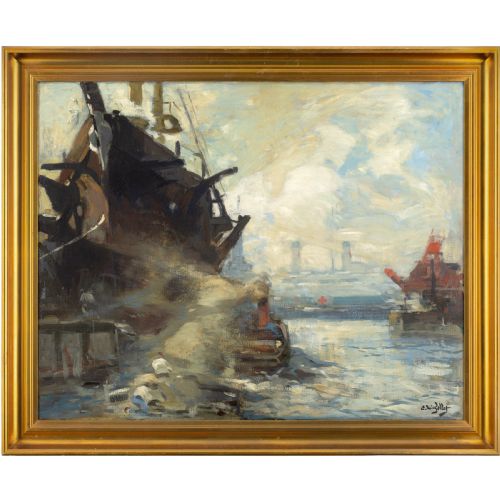
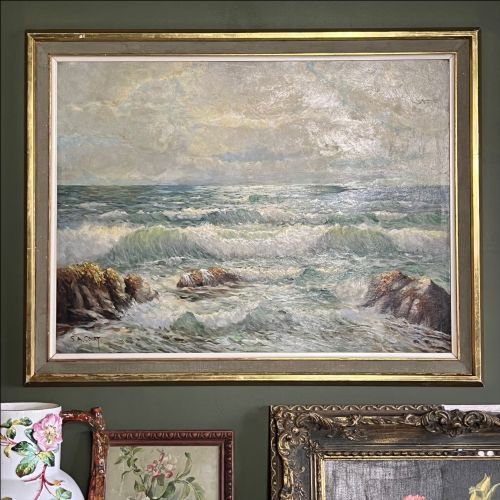
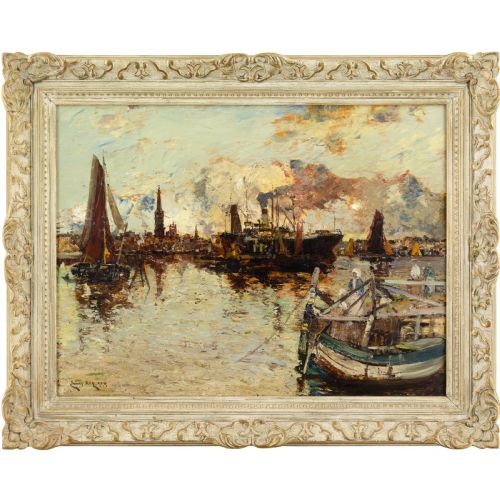
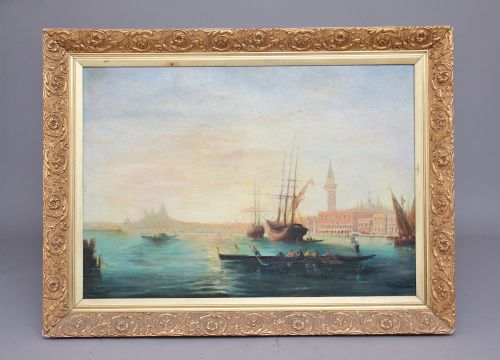
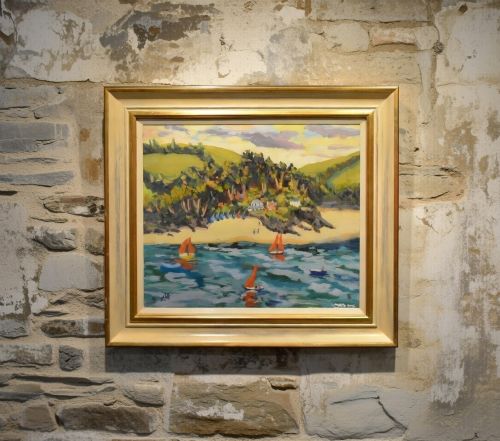
An impressionist seascape gilt frame brings light, water and open air into a room through painterly oil on canvas and polished wood.
Impressionist Seascape Gilt Frame
When you examine an impressionist seascape gilt frame, you encounter works executed in oil on canvas, oil on panel, and occasionally watercolour or gouache, dating from the nineteenth century through to the mid-twentieth century.
The subjects range from British and French harbours to Venetian canals, Cornish coasts, and open seas painted en plein air.
Makers and artists represented span British, French, Dutch, and American schools, capturing maritime scenes from St Ives to the Côte d'Azur.
Materials and construction
The surfaces utilise oil paint applied to canvas, board, or panel, capturing light and movement through loose, visible brushwork.
Frames are constructed from wood and gesso, finished with gilt to create the characteristic metallic border that surrounds and lifts the painted image.
Impressionist Seascape Gilt Frame Retail Price Guide 2026
Typical asking prices for impressionist seascape gilt frame among the pieces listed under this phrase on Sellingantiques today, from the lower quarter to the upper quarter. They describe what is for sale here now, not the wider market.
Several canvases capture artists squinting at Cornish tides and Venetian gondolas while salt spray dried on their palettes.
Factors of quality
Quality rests upon the handling of light and atmosphere by the painter, distinguishing confident, expressive brushwork from static composition.
The integrity and original state of the gilt wood frame contribute substantially to the overall presence of the piece.
William Ayerst Ingram·Hans Harlander·Eugène-Louis Gillot·Sidney A Court·William Banks Fortescue·James Kay RSW·Lucy Pratt·Willem Bos·Erich Mercker·Thomas Hodgson Liddell·Gustave Vidal·George Turland Goosey·Edward Seago·Florence Hess·Roger de la Corbiere·Jeffrey Pratt·Robert Macaulay Stevenson·Owen Bowen·Eugene Boudin·Frank Myers Boggs·James G Faulds
The Impressionist Seascape Gilt Frame Glossary
- En plein air
- Painting outdoors to capture natural light and direct observation of coastal weather and water. This method defines much of the impressionist approach to marine subjects.
- Gilt
- A thin layer of gold leaf or metallic gilding applied to wood and gesso frames. It provides a reflective border that complements the luminous palette of the canvas.
- Gesso
- A plaster-like mixture applied to wooden frames before gilding to provide a smooth base for moulding and decoration. It allows for crisp ornamental details on antique frames.
- Post-Impressionism
- An art movement following impressionism that retains expressive brushwork while exploring bolder structures and forms. Works in this style often display heightened emotional resonance in coastal scenes.
Impressionist Seascape Gilt Frame: Frequently Asked Questions
What periods do these paintings cover?
The selection spans from the late nineteenth century through the Edwardian era and into mid-century modern movements.
Most examples date between nineteen-ten and nineteen-sixty, reflecting active periods of impressionist and plein air marine painting.
Where were these maritime scenes painted?
Artists painted coastal locations across Britain, France, the Netherlands, and Venice.
Frequent settings include Cornish fishing ports, Scottish shores, the Venetian lagoon, and the French Côte d'Azur.
What is the difference between canvas and panel works?
Canvas paintings utilise stretched fabric primed to receive oil paint, offering slight give and texture.
Panel works use rigid wooden boards or panels, which provide a firm support favoured for smaller en plein air studies.