




Impressionist Oil Panel Painting
Impressionist oil panel painting captures light and atmosphere with rapid brushwork on a solid wooden support.
Impressionist Oil Panel Painting
An impressionist oil panel painting is a portable artwork executed directly onto a rigid wooden support rather than stretched fabric. When you search this phrase, you encounter small landscape studies, figure pieces, and coastal scenes created outdoors or in the studio.
The versions most common on this page date from the late Victorian era through the mid-twentieth century. British, French, and Dutch artists feature prominently, working in styles ranging from early impressionism to modern post-impressionism.
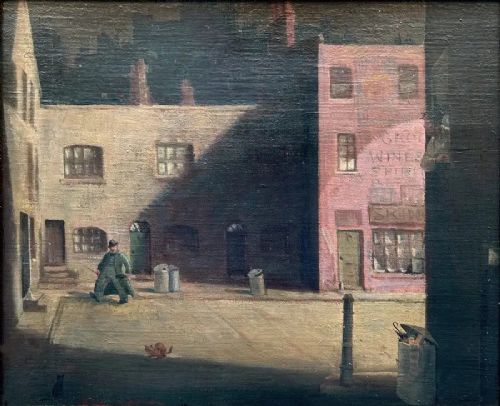
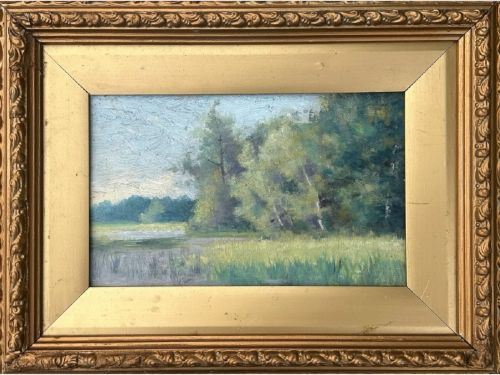
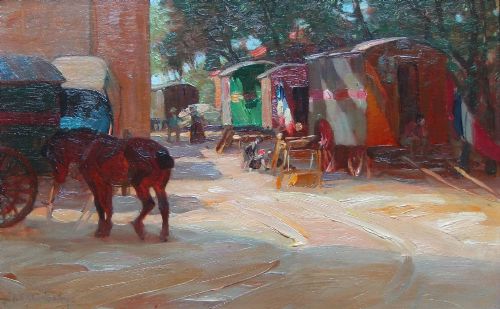
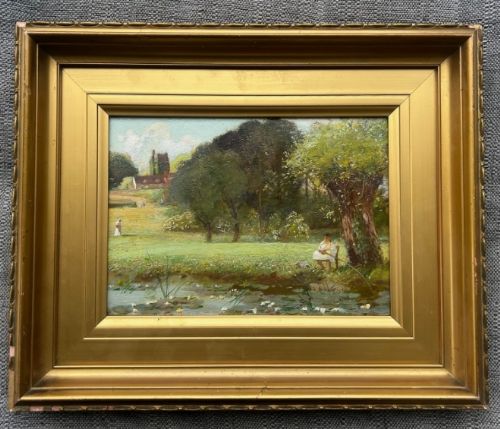
Makers on this page include named painters such as Florence Adelina Hess, Kershaw Schofield, and Hubert Wellington. Many pieces capture plein air views of rivers, village streets, and rural landscapes.
Materials and construction
Artists painted primarily with oil paint applied to prepared wood panels, sometimes incorporating gesso grounds for smoothness. Mahogany and various other timber boards provided the rigid foundation necessary for outdoor sketching.
Brushwork is direct and visible, building texture and immediate light effects without the heavy layering found in academic studio works. Some panels retain framing from their period of creation, protecting the fragile edges of the wood.
A self-portrait by the curator of the Toulouse-Lautrec Museum sits comfortably alongside quiet Welsh river valleys.
Judging quality in panel paintings
Quality rests upon the confidence of the brushstroke and the economy of mark-making used to suggest light and movement. Superior works capture a fleeting atmospheric moment with precise tonal relationships rather than relying on heavy detailing.
The handling of the wooden support and the preservation of the paint surface dictate the overall integrity of the piece. Strong works demonstrate a confident mastery of colour harmony across the restricted surface area.
Maud Raphael Jones·Paul Ehrenberg·Florence Adelina Hess·Paul Elie Gernez·Hubert Wellington·Edouard Julien·Sir David Murray·Jeffrey Pratt·Kershaw Schofield·Edmond Defonte·William Greaves·Owen Bowen·Joseph Vickers de Ville·Henri Joseph Harpignies
The Impressionist Oil Panel Painting Glossary
- Panel
- A flat piece of wood used as a painting support instead of canvas. It offers a firm surface that resists sagging and puncture.
- Plein air
- Painting outdoors in direct natural light. This method encourages rapid execution to capture shifting weather and shadows.
- Gesso
- A white primer mixture consisting of a binder mixed with chalk or plaster. It prepares wood panels to receive oil paint.
- Post-Impressionism
- An art movement following impressionism that explores emotional and structural responses through bolder forms and colours.
- Impressionism
- A style characterised by relatively small, thin yet visible brush strokes and an emphasis on accurate depiction of light.
Impressionist Oil Panel Painting: Frequently Asked Questions
What is an oil panel painting?
An oil panel painting is a work of art created with oil colours applied directly to a flat piece of wood. Artists favoured wooden supports for their rigidity and portability, making them ideal for outdoor sketching.
These portable boards allowed painters to work quickly in various weather conditions, capturing immediate impressions of landscapes and daily life.
How do I care for wood panel art?
Protect wood panels from extreme changes in temperature and humidity to prevent warping or cracking of the timber. Hang them away from direct sunlight and sources of artificial heat.
Dust the surface gently with a soft, dry brush and avoid using any liquid cleaners on the paint or the wooden support.
Where were these paintings made?
Many of these works were painted outdoors on location across Britain, France, and the Netherlands. Artists travelled to river valleys, coastal villages, and rural fields to capture natural light.
Studio finishing sometimes followed, but the core of the impressionist approach relied on direct observation of the chosen site.
How are panel paintings framed?
Panel paintings are typically housed in wooden frames, often gilded or painted to complement the tones of the artwork. Some retain their original period frames, which show appropriate signs of age.
The rigid nature of wood panels means they do not require the internal backing boards often used to support stretched canvas.