




Yorkshire Coastal Oil Painting
A yorkshire coastal oil painting captures the rugged cliffs, harbours and fishing villages of the North Sea shore through the changing light of the nineteenth and twentieth centuries.
Yorkshire Coastal Oil Painting
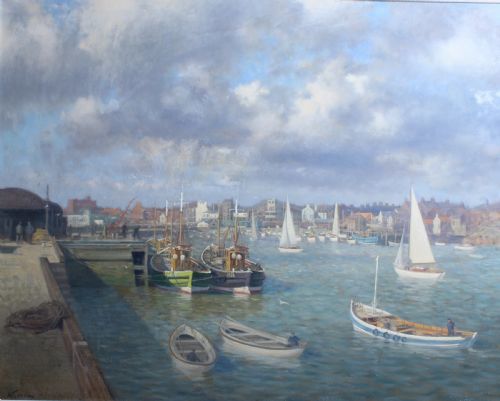
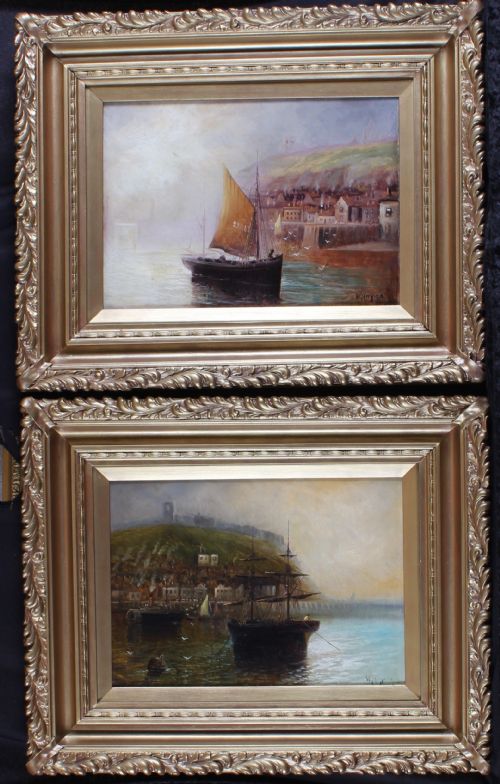
A yorkshire coastal oil painting records the maritime life, beaches and dramatic headlands of places such as Whitby, Scarborough, Staithes and Robin Hood's Bay. These works document historic working harbours, flither pickers at work on the shore and expansive views across the North Sea from local vantage points.
The selections available here range from nineteenth century realistic depictions of coastal communities to mid-century impressionistic interpretations of the Yorkshire coast. Buyers encounter works produced across several decades, spanning from the late Victorian era through the 1950s.
Most examples focus on specific local landmarks, capturing harbours like Bridlington or coastal stretches near Filey and Ravenscar. The formats vary from small panel studies to larger framed canvases depicting marine scenes and inland rivers such as the Nidd.
How they were made
Artists painted primarily with oil paint applied to stretched canvas, wooden board, or prepared panels. These traditional supports provided a stable ground for building rich layers of pigment that could withstand the challenges of painting outdoors or finishing works in the studio.
Many works incorporate a gesso ground beneath the paint layer to create a smooth, reflective surface that enhanced the luminosity of the oils. The physical application ranges from thin, controlled brushwork on panels to heavier impasto on canvas that captures the turbulent texture of the sea.
Listings feature works from the nineteenth century, 1900, 1910, 1920, 1930, and 1950.
What varies in quality
The visual success of a yorkshire coastal oil painting depends on the artist's ability to render the atmospheric light and shifting weather specific to the North Sea coast. Stronger works demonstrate a confident handling of pigment that conveys the movement of water and the solid weight of coastal cliffs.
Compositional balance and the accurate depiction of local topography distinguish accomplished paintings from standard topographical records. The finest pieces capture both the specific character of named harbours like Whitby and a broader sense of the maritime atmosphere.
Walter Goodin·William J B Jenkins·Florence Hess·Robert Farren·James Watson·William Greaves·Edward T Jones·Donald Wood·Walter Meegan·Alec Caruthers Gould·Robert Ernest Roe
The Yorkshire Coastal Oil Painting Glossary
- Canvas
- A heavy woven fabric stretched across a wooden frame to serve as a support for oil paint. It provides a flexible and durable surface favored by painters.
- Board
- A rigid wooden or composite panel used as a flat support for oil paintings. Artists often utilised boards for smaller plein air sketches painted directly on location.
- Gesso
- A white paint mixture consisting of a binder mixed with chalk, gypsum, or pigment used to prepare wood or canvas surfaces. This preparation seals the support and creates a bright ground for oils.
- Impasto
- Paint applied thickly to a canvas or panel so that the brush or palette knife marks stand proud of the surface. This technique adds tactile depth and catches light.
- British Impressionism
- A style of painting influenced by the French movement that emphasises loose brushwork, natural light, and everyday subjects. British practitioners applied these principles to domestic landscapes and coastlines.
Yorkshire Coastal Oil Painting: Frequently Asked Questions
What subjects do these paintings show?
These works depict harbours, beaches, cliffs, and fishing villages along the Yorkshire coast, including locations such as Whitby, Scarborough, Staithes, and Robin Hood's Bay. Many also capture maritime activities like flither gathering.
Scenes range from calm coastal waters at sunset to turbulent seas near headlands, reflecting the diverse topography of the region.
When were these artworks painted?
The pieces span from the late nineteenth century through the mid-twentieth century, capturing changing artistic styles over several decades.
Pictorial approaches evolve from nineteenth century realism through to British impressionism and mid-century interpretations of the landscape.
How should I display an oil painting?
Oil paintings on canvas or board benefit from stable indoor environments away from direct sunlight and sudden temperature shifts. Proper framing protects the edges and provides structural support.
Hanging works on interior walls helps preserve both the wooden or canvas supports and the oil paint layers over time.