

Impressionist Floral Oil Painting
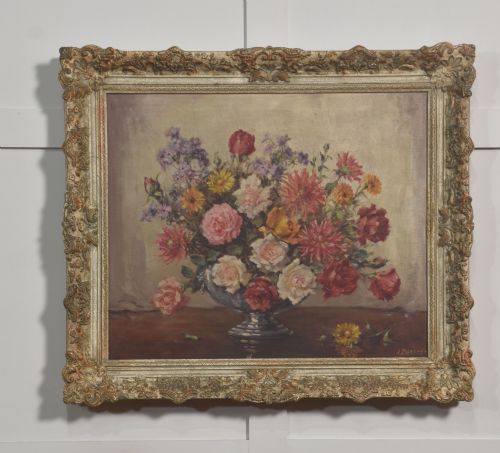
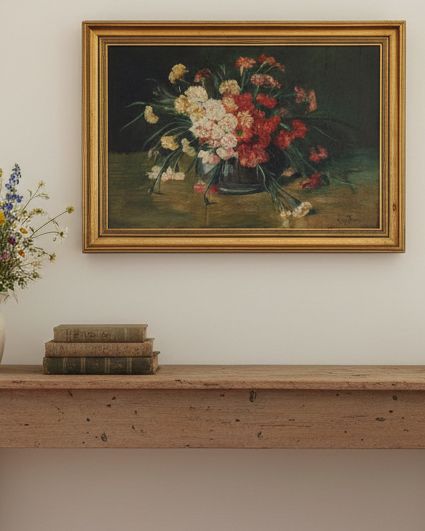
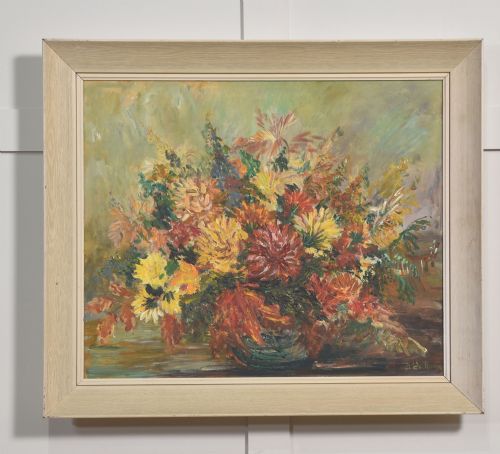
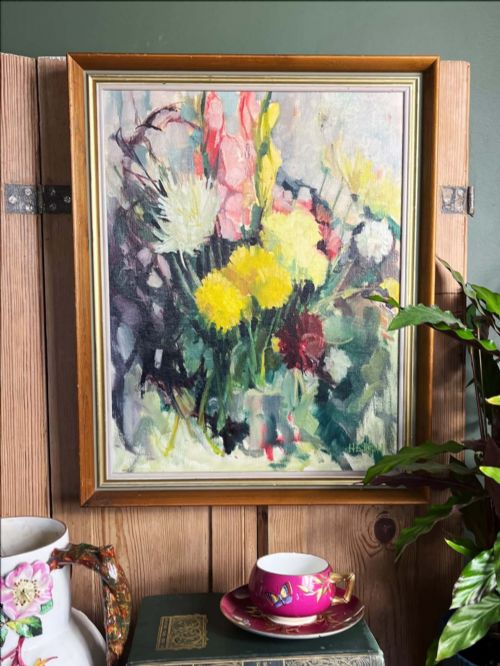
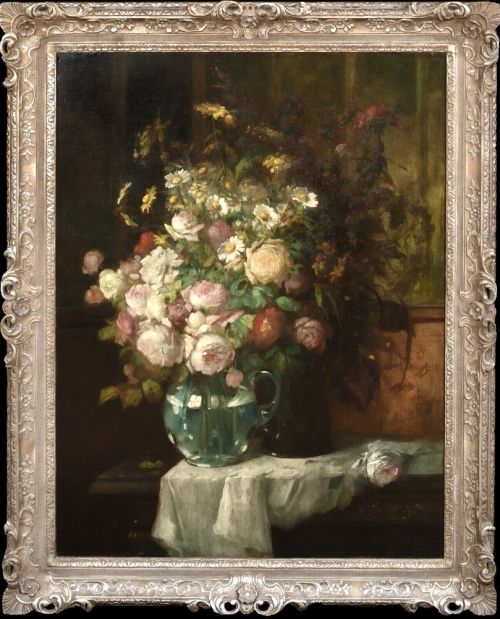
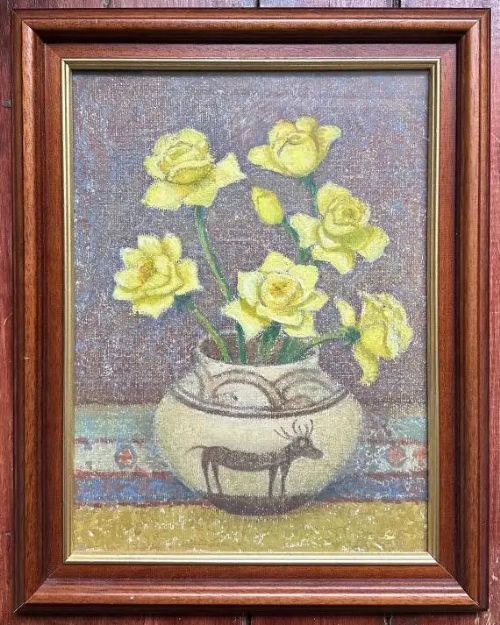
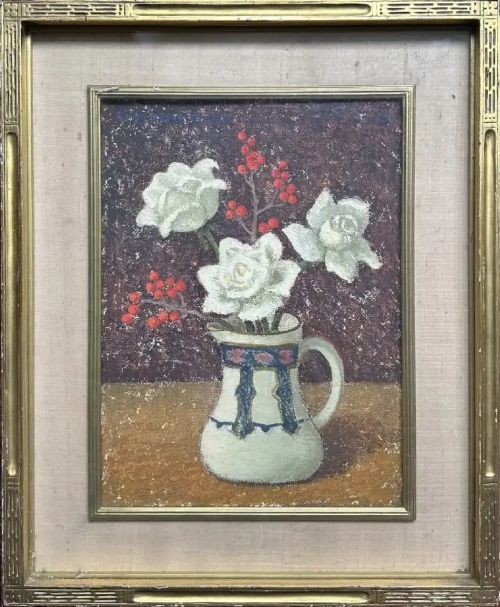
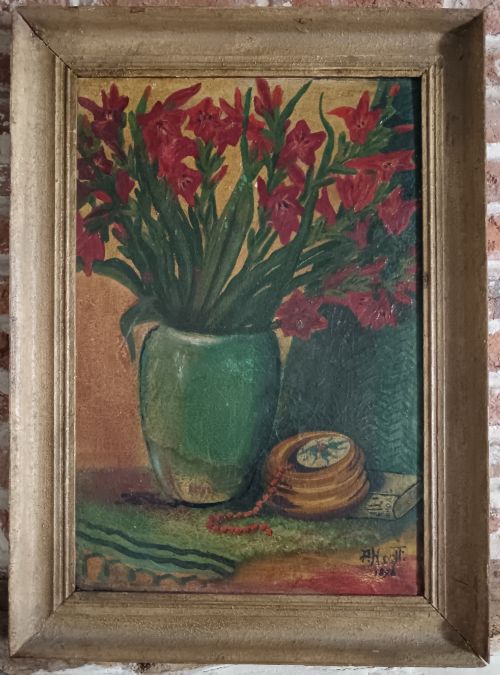
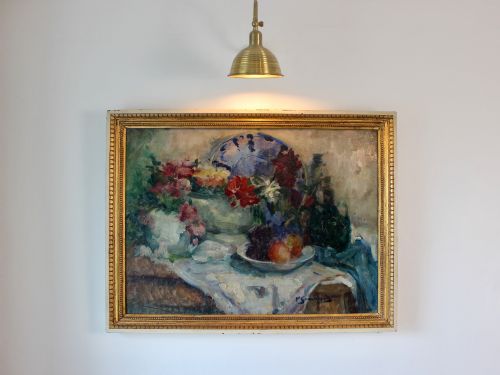
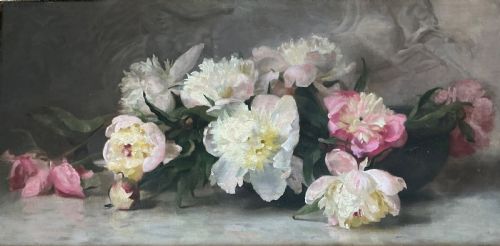
An impressionist floral oil painting captures transient light on garden blooms and cut stems using vigorous, textured brushwork.
Impressionist Floral Oil Painting
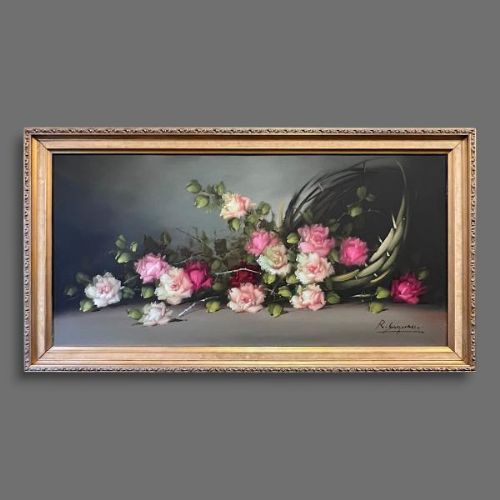
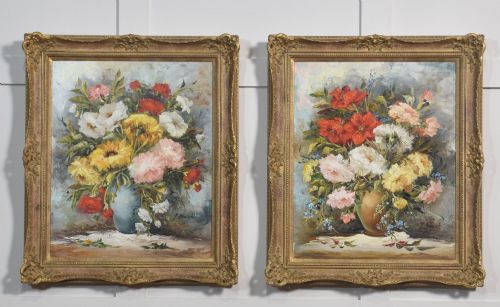
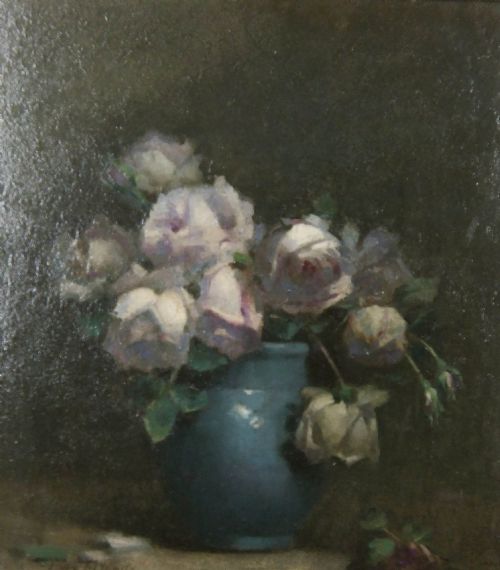
An impressionist floral oil painting focuses primarily on botanical subjects rendered through loose, visible brush strokes rather than rigid botanical precision. These works range from intimate studies of daisies and carnations to expansive compositions of roses spilling from wicker baskets.
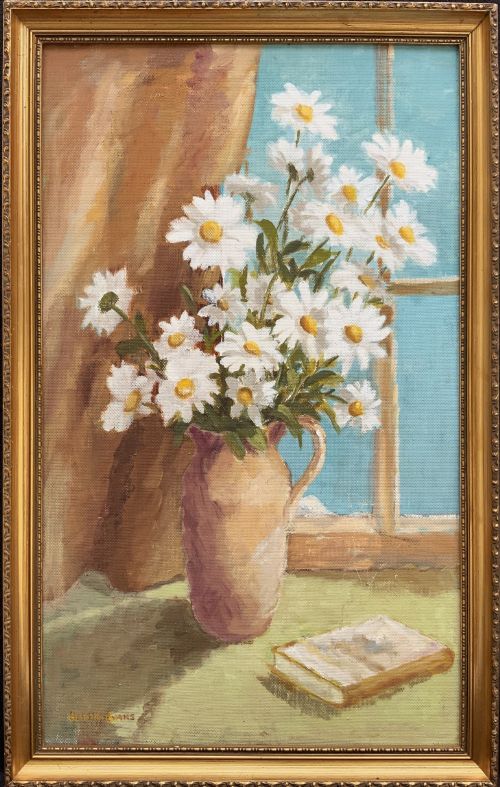
The pieces on this page span from the nineteenth century through the mid-twentieth century, capturing diverse regional approaches including British Impressionism, Post-Impressionism, and Mid-Century Modern interpretations. Domestic interiors, windowsills, and simple ceramic jugs frequently frame the floral arrangements.
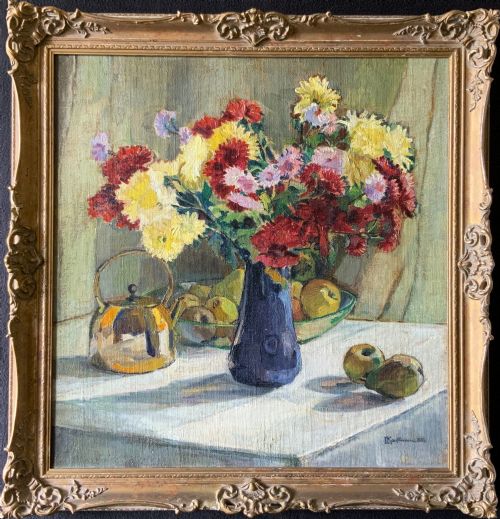
Still life flower paintings dominate the selection, though garden scenes and water lilies also appear alongside portraits accompanied by irises. Each canvas or board preserves a distinct moment of observation, balancing colour harmony with the transient quality of natural light.
Materials and Construction
Artists painted primarily with oil paint on canvas or wooden board, occasionally utilising metal supports for vibrant continental compositions. The medium allowed for rich impasto textures where thick applications of pigment build physical depth upon the surface.
Frames made of wood and gesso, frequently finished in gilt, house many of these works to complement the visual weight of the oil layers. The combination of flexible canvas and slow-drying oil paint enabled painters to blend tones directly on the support.
Listings feature works created across eight distinct decades, spanning from the nineteenth century to nineteen-sixty using canvas, wood, and metal supports.
Evaluating the Works
Quality rests upon the confidence of the brushwork and the artist's ability to orchestrate light and colour across petals and foliage. Superior examples demonstrate a deliberate economy of marks that convey volume and movement without relying on heavy outlining.
The integration of the subject within its immediate environment, whether a dimly lit interior or an open garden, separates standard decorative studies from works of greater artistic conviction.
I. Berezny·D. L. Williams·Konstantin Stoitzner·Emma Fordyce MacRae·Manuela Bonati·William Thomas Wood·Victor Simonin·Owen Bowen·Gertrude Hayes·Thomas Bromley Blacklock·Amile Coppieters·Florence Hess·Ernest Higgins Rigg·Sir Matthew Smith·Elizabeth T. Sutcliffe
The Impressionist Floral Oil Painting Glossary
- Impressionism
- A nineteenth-century painting style characterised by relatively small, thin, yet visible brush strokes and an emphasis on accurate depiction of light. It prioritises open composition and ordinary subject matter.
- Impasto
- A technique where paint is laid on an area of the surface in very thick layers, usually thick enough that the brush or painting-knife strokes are visible. This adds a tangible, sculptural quality to floral petals.
- Still life
- A work of art depicting mostly inanimate subject matter, typically commonplace objects which may be either natural or man-made. Floral arrangements serve as the predominant focus within this grouping.
- Post-Impressionism
- A predominantly French art movement that developed roughly between the late nineteenth century and the early twentieth century. It extended impressionism while rejecting its limitations, favouring more symbolic content and heavier outlines.
Impressionist Floral Oil Painting: Frequently Asked Questions
What periods do these paintings cover?
The available works span from the nineteenth century through the mid-twentieth century, encompassing periods such as Art Deco and Mid-Century Modern.
Most examples concentrate in the decades between nineteen-ten and nineteen-sixty, reflecting evolving international impressionist movements.
How should I frame an unframed canvas?
Many period pieces retain their original wooden or gilt gesso frames, which complement the specific aesthetic of the era.
When framing an unmounted canvas, select a profile that allows the edges of the work to remain visible while providing structural support.
Are these works signed by the artists?
Several pieces feature direct signatures from identified painters, while others remain attributed based on style and period documentation.
Signatures typically appear in the lower corners of the canvas or board, applied directly in oil paint.
What subjects besides flowers appear?
While floral still lifes dominate, compositions occasionally expand to include garden landscapes, water lilies on lakes, and interior scenes with windowsills.
Certain portraits also incorporate botanical elements such as irises or roses to frame the human subject.