


Impressionist City Scene
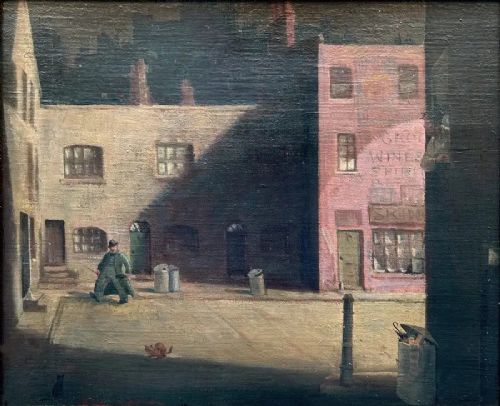
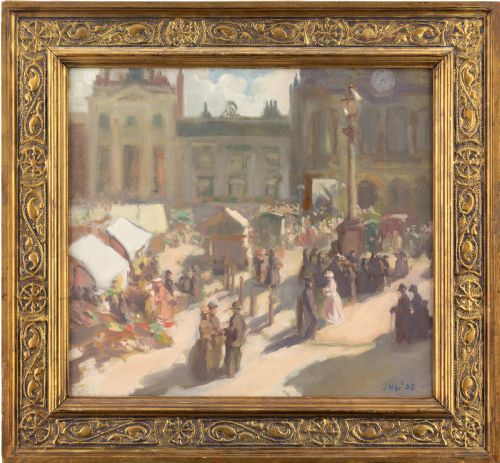
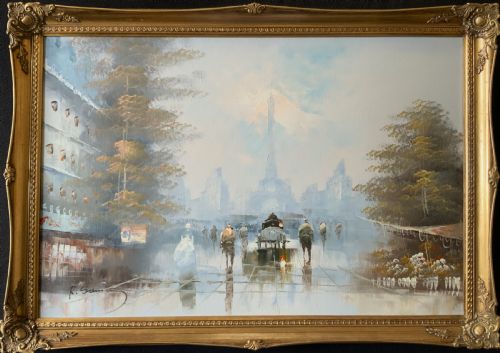
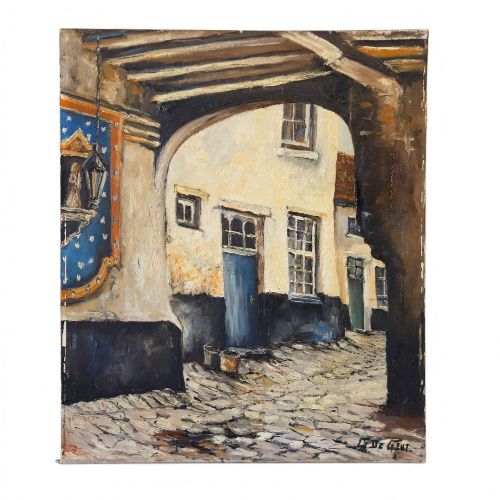
An impressionist city scene captures the kinetic energy of urban life through loose brushwork and atmospheric light.
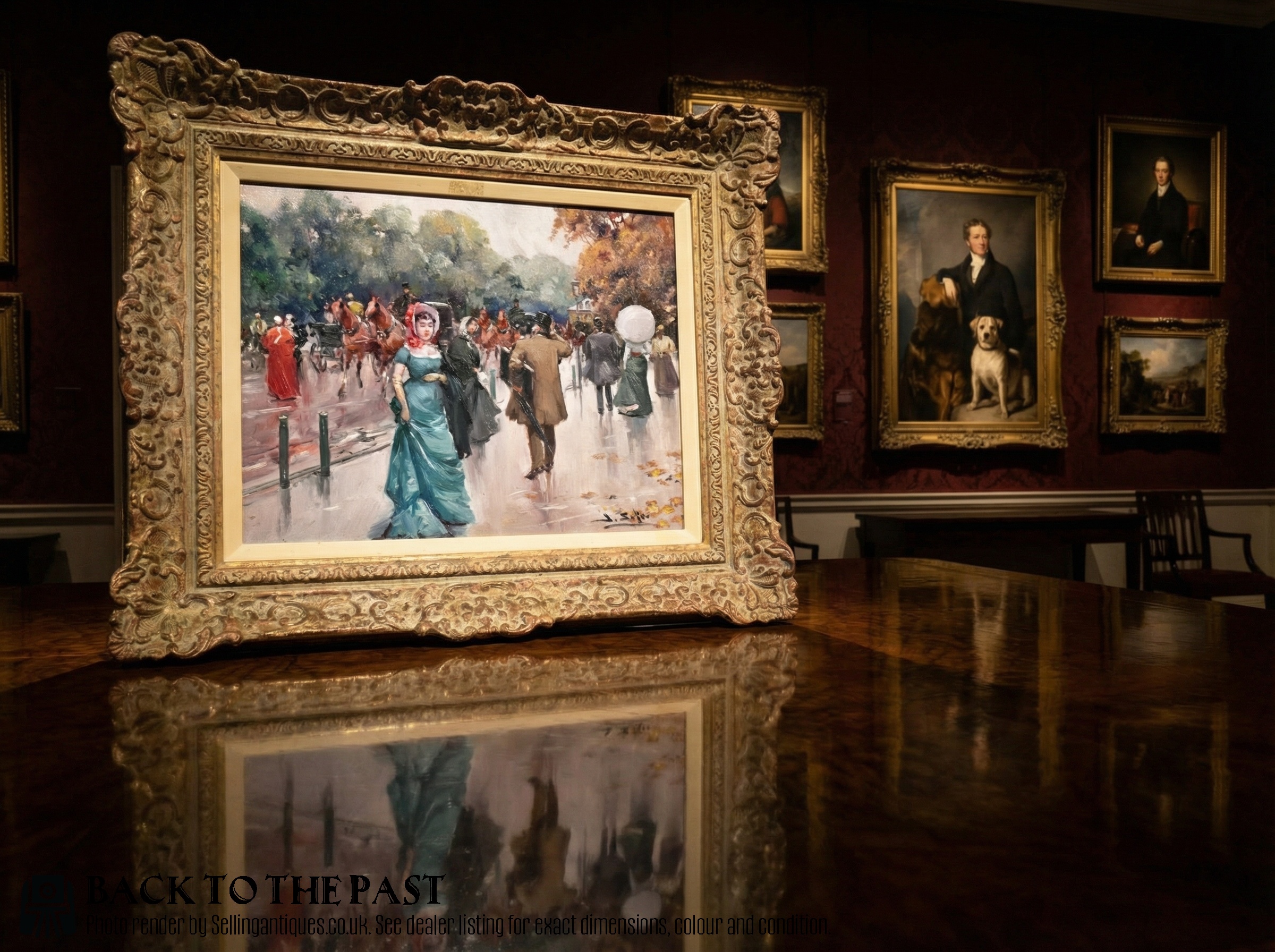
Impressionist City Scene
An impressionist city scene depicts metropolitan streets, squares, and landmarks through the lens of late nineteenth and twentieth-century painting movements.
Buyers encounter works spanning British, French, Flemish, and mid-century modern interpretations of urban life.
Common formats include oil paint on canvas and delicate watercolour paintings on paper, often housed in gilt wood frames.
Materials and technique
Artists applied oil paint and watercolour onto stretched canvas, wood, or paper to capture fleeting moments of light and weather in bustling locations.
Brushstrokes remain visible and expressive rather than blended, building texture and movement across the surface of the painting.
Works are frequently presented within period wood frames, including elaborate gilt wood moulding.
The selection includes works executed in oil paint, watercolour, and pastel on canvas, wood, and paper.
Assessing the work
Quality rests upon the artist's ability to render atmosphere, perspective, and the liveliness of crowds with economy and precision.
The handling of light across damp streets and architectural facades distinguishes a compelling composition from a rigid record.
Original framing and condition of the pigment layer contribute significantly to the overall presence of the artwork.
Francisco Sancha·John Hodgson Lobley·Caroline Burnett·Victor Gabriel Gilbert·Charles James Lauder·Ron Folland·Merio Ameglio·Eduard Leon Cortes·Henry Sanders·Rowland Henry Hill·Matthew Hale
The Impressionist City Scene Glossary
- Impressionism
- A style of painting that focuses on capturing the visual impression of a moment, especially regarding shifting light and colour. This approach prioritises unblended brushwork over academic finish.
- Gilt wood
- Wood covered with a thin layer of gold leaf or gold paint. This traditional framing technique adds warmth and reflectivity to the edge of a canvas.
- Watercolour
- A paint consisting of colour suspended in a water-soluble vehicle. Artists use this medium on paper to achieve translucent washes and immediate effects.
- Post-Impressionism
- A predominantly French art movement that developed from impressionism while rejecting its limitations. Practitioners extended the boundaries of colour use and form structure.
Impressionist City Scene: Frequently Asked Questions
What is an impressionist city scene?
These artworks depict urban environments, street life, and architectural landmarks through expressive brushwork and atmospheric lighting.
They record metropolitan subjects from various European and international locations across the nineteenth and twentieth centuries.
How do I hang these paintings?
Ensure the wall space supports the physical weight of the wooden frame and receives balanced ambient light.
Keep oil and watercolour pieces away from direct sunlight and sources of extreme temperature fluctuation to protect the pigments.
How are different periods told apart?
Earlier works often reflect late nineteenth-century academic training combined with looser plein-air observation.
Mid-century examples introduce bolder palettes and simplified geometric forms influenced by modern design trends.
What subjects appear most often?
Busy marketplaces, rain-slicked boulevards, iconic monuments, and river embankments form the core subjects of these urban compositions.
Artists frequently depict specific cities including Paris, London, Venice, and Huddersfield.