



Impressionist Beach Painting
Impressionist beach painting captures coastal light and sea air through loose brushwork, offering a timeless window into seaside leisure.
Impressionist Beach Painting
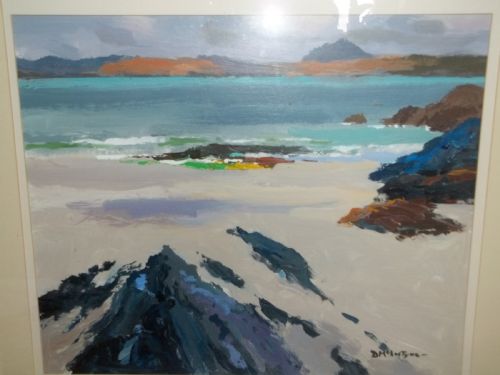
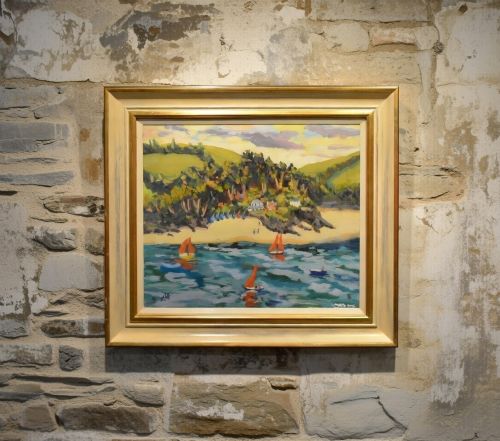
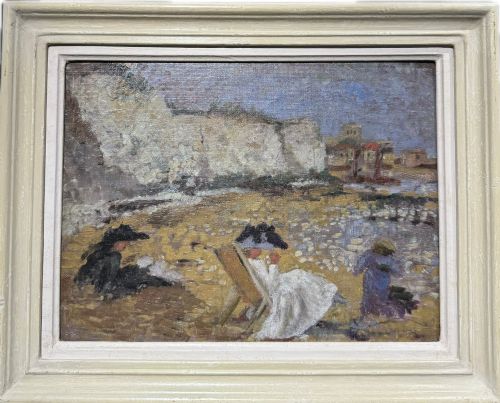
An impressionist beach painting brings the movement, colour, and atmosphere of the shore directly onto canvas or paper. You will find works stretching from the nineteenth century through the mid-century, capturing everything from quiet Cornish harbours to bustling French seaside gatherings.
The subjects range from children playing in the surf and figures with shrimp nets to red sails and distant lighthouses. Many pieces lean into British Impressionism, Post-Impressionism, and Victorian British Impressionism, reflecting local coastal traditions.
Most examples present coastal views in oil paint or watercolour, often housed in period frames of wood or gilt gesso. They document changing tides, sandy bays, and rocky outcrops with immediacy.
Materials and Technique
Artists relied primarily on oil paint applied to canvas, wood panels, or heavy paper, building texture with rapid strokes. Watercolour also appears frequently for lighter, more translucent sea-scapes.
Canvases often sit within wooden or gilt gesso frames that protect the edges and complement the tonal palette of the seaside scene. The interplay of pigment and support captures the distinct glare of open water and sand.
Judging Quality
Quality rests on the artist's ability to render light, movement, and atmosphere with economy and confidence in the brushwork. Stronger pieces use paint application to evoke salt spray and shifting sunlight rather than relying on stiff detail.
The cohesion of the composition and the handling of tonal relationships separate casual sketches from accomplished works. Original framing also contributes to the integrity of the piece.
William Banks Fortescue·Ernest F Hill·Sir David Murray·Jeffrey Pratt·Donald McIntyre·Harry John Pearson·Alfred Egerton Cooper
The Impressionist Beach Painting Glossary
- Post-Impressionism
- An art movement developing roughly from the late nineteenth century that extends impressionist methods while exploring bolder forms and expressive brushwork. It builds upon the direct observation of nature with heightened emotional weight.
- Gesso
- A plaster-like mixture applied to wooden frames or panels to prepare a smooth surface for gilding or painting. It provides the crisp decorative relief seen on period frames.
- Newlyn School
- An art colony based in Cornwall that focused on plein air painting of coastal life and local fishermen. Their work emphasises natural light and maritime realities.
- Gilt Wood
- Timber treated with a thin layer of gold leaf or gold-coloured pigment. It frames many traditional landscape and marine works.
Impressionist Beach Painting: Frequently Asked Questions
How do I date an impressionist beach painting?
Dating relies on stylistic clues, framing materials, artist signatures, and recorded exhibition histories. Canvas stamps and stretcher construction also offer reliable chronological markers.
Comparing brush techniques to known periods helps narrow down the decade of creation.
Where should I hang a coastal oil painting?
Choose a wall with indirect natural light to prevent glare on the oil surface or watercolour glass. Avoid direct sunlight to protect the pigments from fading over time.
Keep paintings away from damp exterior walls or heat sources that could warp the canvas or wood.
What is the difference between oil and watercolour beach scenes?
Oil paintings use thick pigments on canvas or wood, allowing for rich texture and visible brushstrokes that mimic shifting light. Watercolours offer a lighter, more transparent feel on paper.
Oils are generally more durable, whereas watercolours require protective glass framing.
Are these paintings signed by the artists?
Many works bear visible signatures or initials from the period, while others remain attributed to specific circles or makers through archival records. Unsigned pieces are often contextualised by subject matter and technique.
Exhibition labels on the reverse frequently confirm authorship and provenance.