

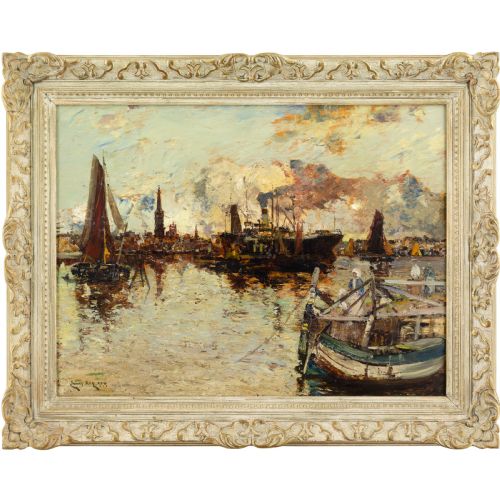
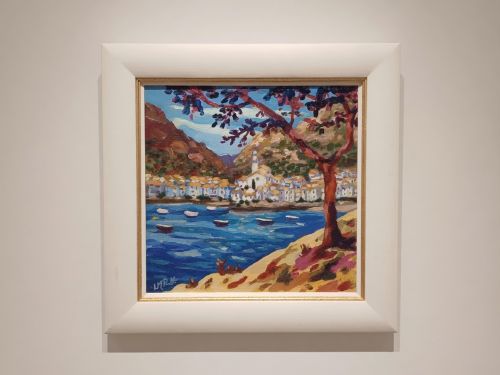
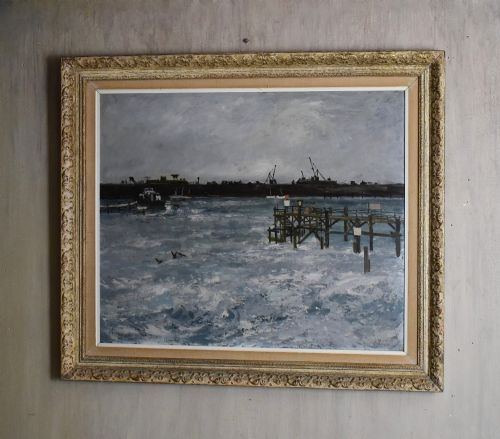
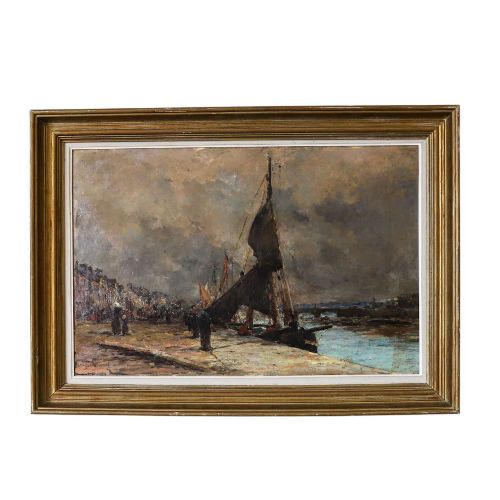
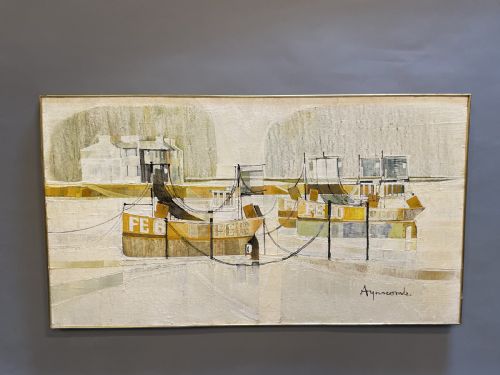


Impasto Harbour Oil Painting
An impasto harbour oil painting brings tactile coastal light and texture into a room through heavy, raised pigment on canvas or board.
Impasto Harbour Oil Painting
An impasto harbour oil painting captures maritime scenes, coastal inlets, and bustling quays using thick, dimensional applications of paint. When exploring this selection, buyers encounter works ranging from nineteenth-century maritime pieces to mid-century modern British and French post-impressionist examples.
The subjects focus heavily on working ports, estuaries, and anchored vessels rendered by artists working across the twentieth century. British and French coastal landscapes dominate the current selection, often reflecting regional impressionist movements from the decades between nineteen-ten and nineteen-sixty.
How they were made
Artists built these surfaces using oil paint applied thickly with brushes or palette knives onto stretched canvas or wooden boards. This physical layering technique leaves visible tool marks that catch the light and create tangible depth across the water and sky.
Many works retain their original gilt wood or painted frames, which complement the heavy texture of the pigments. The combination of oil medium and rigid support ensures the raised impasto remains stable over decades.
Listings feature works spanning the nineteenth century through nineteen-sixty, created using oil on canvas, board, and wood.
What varies in quality
Quality rests in the confidence of the brushwork and the artist's handling of light reflecting off the harbour water. Stronger pieces demonstrate a deliberate control over thick pigment, ensuring the heavy texture describes form and atmosphere rather than obscuring them.
The relationship between the painted surface and the framing contributes to the overall integrity of the piece. Works that retain their period frames often present a more unified historical character.
James Kay RSW·Peter Brannan·Jean-Baptiste Olive·Raymond Picque·James Fry·Donald McIntyre·Edward M Elliott·Jack R Mould·Ernst Louizor
The Impasto Harbour Oil Painting Glossary
- Impasto
- Paint applied thickly to a canvas or board, standing out in relief from the plane. This technique gives the surface a tactile quality that catches physical light.
- Estuary
- The tidal mouth of a large river, where the tide meets the stream. These coastal transition zones provide frequent subject matter for maritime painters.
- Post-Impressionism
- An art movement developing roughly from the late nineteenth century that extended impressionism while rejecting its limitations. Artists focused on heavier symbolic colours and distinct brushstrokes.
- Gilt wood
- Wood coated with a thin layer of gold leaf or gold paint. Frames finished in this manner frequently house twentieth-century maritime canvases.
Impasto Harbour Oil Painting: Frequently Asked Questions
How do I clean an impasto oil painting?
Dust accumulates easily on raised surfaces, so gentle maintenance is required to protect the textured paint.
Use a soft, dry brush to carefully sweep across the surface without pressing into the thick pigment layers.
Are these paintings signed by the artists?
Many pieces in this selection feature signatures or inscriptions left by the original painters on the front or reverse.
Documentation often links specific works to mid-century British or French coastal art movements.
What framing is typical for these works?
Original wooden and gilt frames frequently accompany mid-century and nineteenth-century coastal canvases.
These surrounds complement the heavy texture of the oil paint and help preserve the edges of the board or canvas.
How do I date a maritime oil painting?
Dates are often established through artist lifespan records, stylistic indicators like post-war impressionism, or inscriptions on the reverse.
Works span from the nineteenth century through the mid-twentieth century, particularly the nineteen-fifties and sixties.