



Impasto Floral Painting
These impasto floral painting works bring thick oil pigment and heavy brushwork into domestic spaces, capturing flowers and vases with rich tactile depth.
Impasto Floral Painting
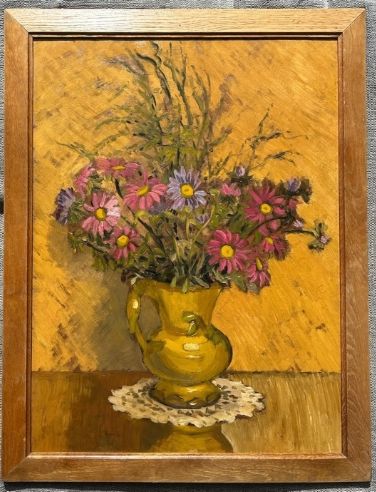
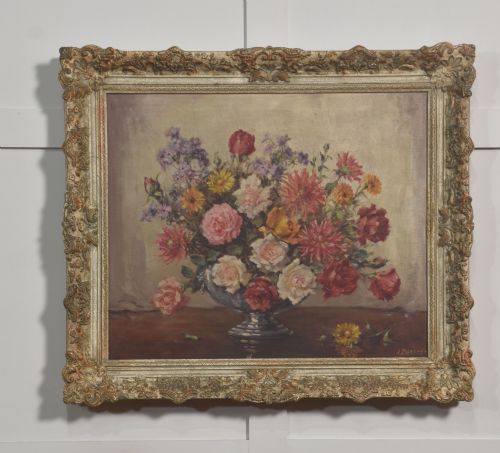
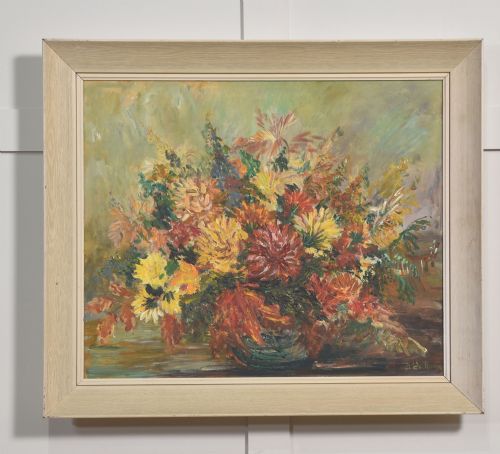
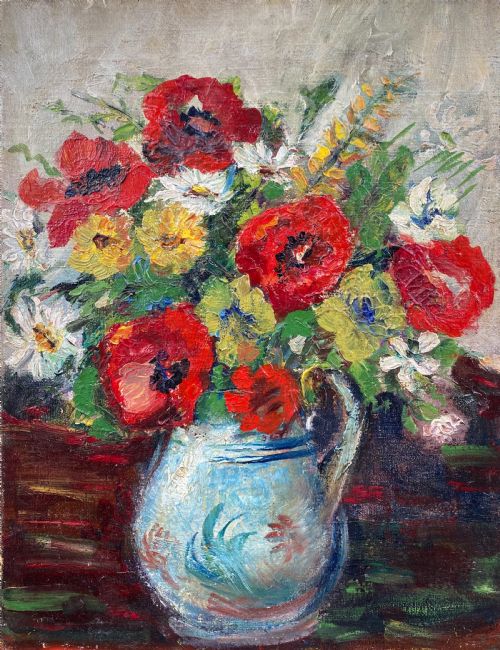
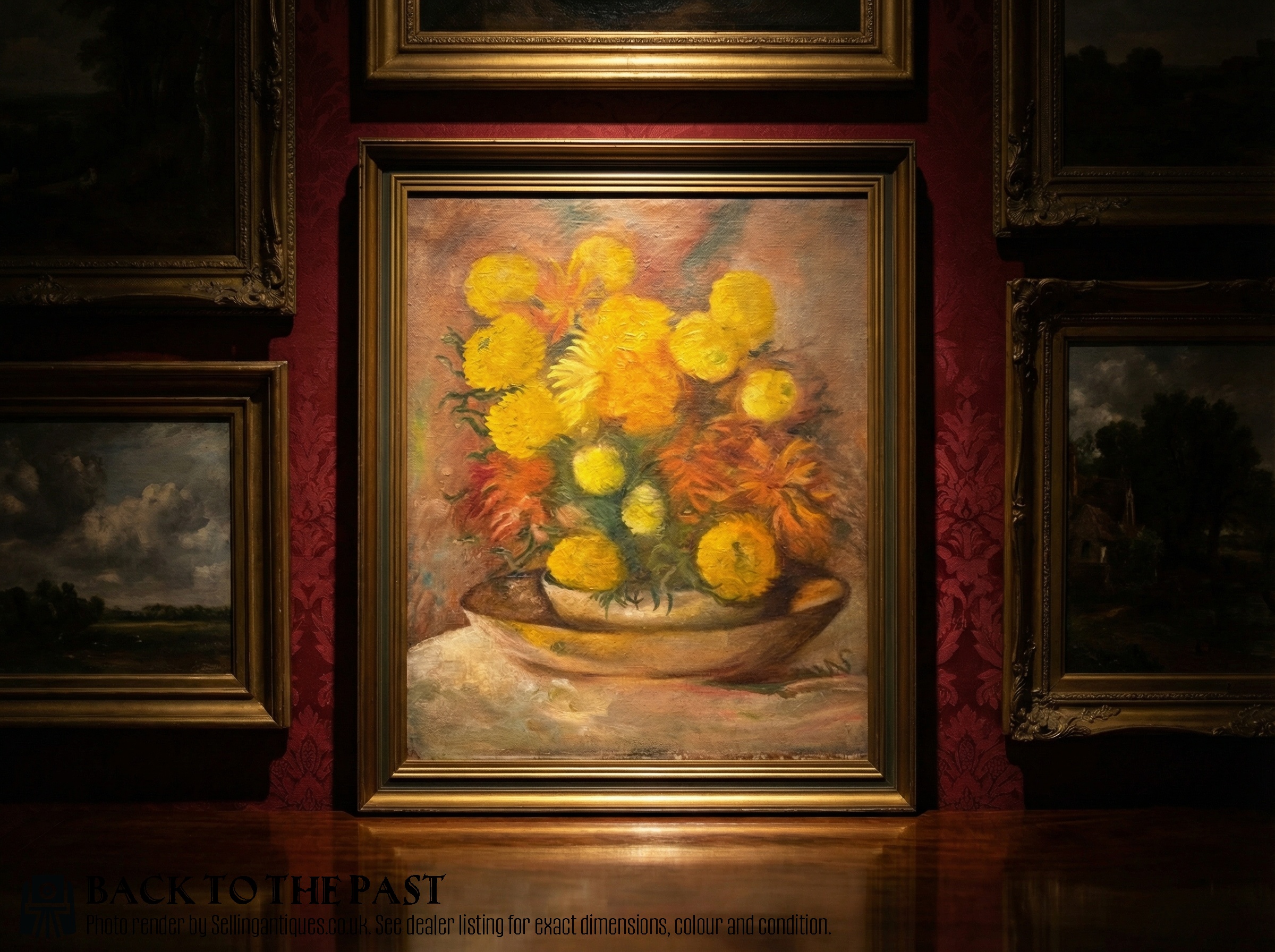
An impasto floral painting presents botanical subjects, such as poppies, dahlias, and chestnut leaves, built up through thick layers of oil paint on canvas or board. These works range from nineteenth-century pieces to mid-century modern and post-impressionist examples.
The objects commonly take the form of still life compositions featuring flowers in vases or terracotta pots, alongside interior scenes and floral studies. Most pieces date from the twentieth century, spanning decades from the nineteen-twenties through to nineteen-sixty.
Buyers encounter British and continental works executed in various twentieth-century styles, including post-impressionism, arts and crafts, and French modernist approaches. These paintings rely on heavy pigment application to create texture rather than smooth blended surfaces.
How they were made
Artists applied oil paint thickly using brushes or palette knives directly onto surfaces like canvas, wooden board, or plaster, creating raised ridges and physical depth in the pigment. This technique allows the physical gesture of the hand to remain visible across the floral subject.
Substantial wood stretchers and frames, often finished with gilt or housed alongside pottery vases, support the paintings. The combination of heavy oil paint and solid canvas or board ensures durability across the nineteenth and twentieth centuries.
Listings feature works executed on canvas, board, and plaster, spanning the nineteenth century through to nineteen-sixty.
What varies in quality
Quality rests in the handling of the oil pigment and the confidence of the brushwork, where masterly application gives floral petals and stems a distinct sculptural presence. Weaker examples rely on flat washes of colour with minimal physical build-up of the medium.
Compositional strength and the expressive use of tone separate standard decorative studies from accomplished works by named artists or skilled modernists. The integration of background space with the vibrant subject matter defines the visual success of the piece.
Kenneth Cozens·I. Berezny·D. L. Williams·Sir Matthew Smith·Elizabeth T. Sutcliffe·Bertoldo Taubert
The Impasto Floral Painting Glossary
- Impasto
- A technique where oil paint is laid on an area of a surface in very thick layers, usually thick enough that the brush or painting-knife strokes are visible. This creates a tactile, three-dimensional quality on the canvas.
- Still Life
- A work of art depicting mostly inanimate subject matter, typically commonplace objects which may be either natural or man-made. In these selections, the focus rests on flowers, vases, and fruit.
- Post-Impressionism
- A predominantly French art movement that developed roughly between eighteen-eighty-six and nineteen-fourteen, extending impressionism while rejecting its limitations. Artists concentrated on abstract qualities or symbolic content.
- Gilt
- A gold leaf or gilt application used on the wood frames surrounding many of these canvases. It adds a reflective border that contrasts with the textured paint surface.
- Mid-Century Modern
- A style in interior design, architecture, and art that generally describes modernist developments from roughly nineteen-thirty to nineteen-sixty. Pieces from this era often show simplified forms and bold brushwork.
Impasto Floral Painting: Frequently Asked Questions
How do I hang a heavy impasto oil painting?
Ensure your wall fixings are anchored securely into solid brick or appropriate stud work, as thick layers of oil paint on canvas and board carry significant weight.
Use sturdy picture wire and double hooks to distribute the load evenly across the frame and prevent the piece from leaning forward.
What lighting suits textured floral paintings best?
Position picture lights or natural daylight at an angle to the canvas so that the raking light catches the raised ridges of the impasto paint. Direct front lighting flattens the physical depth and minimises the tactile brushwork.
Avoid prolonged exposure to intense direct sunlight to protect the oil pigments from fading over time.
How do I date a mid-century floral still life?
Examine the stretcher bars, canvas weave, and framing materials on the reverse of the board or canvas, as these often carry period characteristics from the nineteen-twenties through to the nineteen-sixties. Handwritten inscriptions, signatures, or exhibition labels also provide clues to the exact year of creation.
Stylistic markers, such as abstracted forms or vibrant post-impressionist palettes, help narrow down the decade.