




Impasto Cityscape Painting
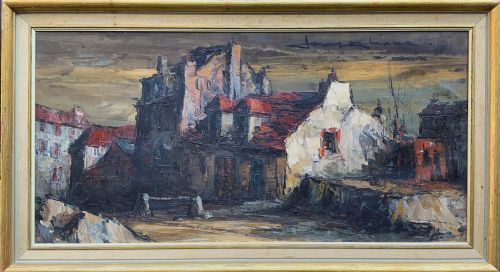
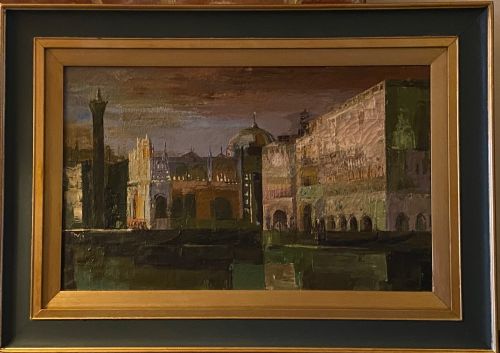
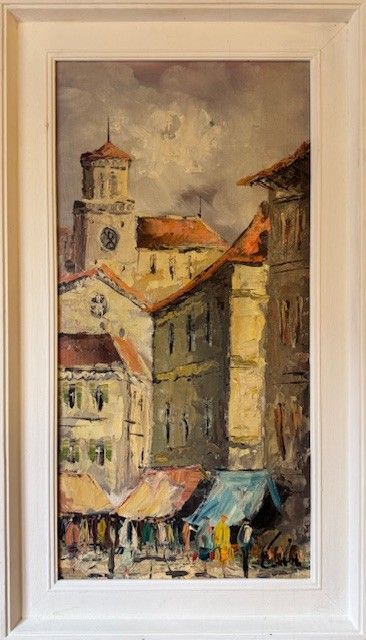
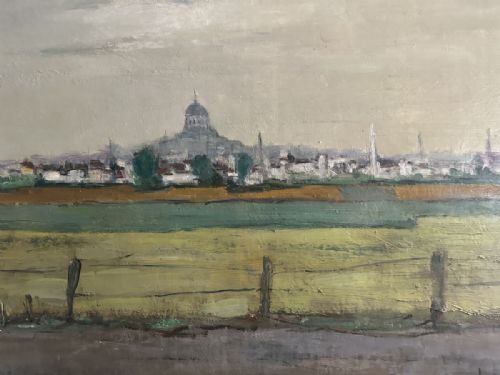
These impasto cityscape painting works bring urban scenes to life with thick, textured paint that leaps straight from the canvas.
Impasto Cityscape Painting
An impasto cityscape painting captures bustling streets, quiet canals, and soaring architecture through vigorous brushwork and tactile layers of pigment. These works span from the 1920s through the 1960s, encompassing mid-century modern, post-impressionist, and expressionist approaches.
Buyers will encounter townscapes, French market squares, Venetian canals, and Parisian avenues rendered on canvas, board, and wood panels. Many pieces originate from continental Europe, reflecting the dynamic energy of mid-century urban life.
Materials and technique
Artists apply oil paint thickly onto supports of canvas or board, often using a palette knife or stiff brush to build distinct physical relief. This heavy application preserves the gesture of the maker and catches the light across urban surfaces.
Framing frequently involves gilt wood, adding a reflective border that complements the textured pigments and deep tones of the oil paint within.
Impasto Cityscape Painting Retail Price Guide 2026
Typical asking prices for impasto cityscape painting among the pieces listed under this phrase on Sellingantiques today, from the lower quarter to the upper quarter. They describe what is for sale here now, not the wider market.
The listings here feature oil paint applied to canvas, wood, and board, framed frequently in gilt wood.
Distinguishing quality in these works
The strength of a composition lies in how effectively the thick pigment defines light and spatial depth across architectural forms and figures. Masterful works use the heavy texture purposefully rather than relying on mere thickness alone.
Support stability and the preservation of the oil paint layer determine longevity. Superior examples maintain structural integrity in the heavy impasto without cracking or separation from the canvas or board.
Jean Corbeau·Sushila Singh·Caroline Burnett·E A Minardo·Hein Hoppmann·Emanuele Cappello·Liner
The Impasto Cityscape Painting Glossary
- Impasto
- A technique where paint is laid onto a canvas in very thick layers, usually thick enough that the brush or painting-knife strokes are visible. When dry, impasto provides texture, making the paint appear to leap off the surface.
- Oil on Canvas
- A traditional painting method utilising pigment suspended in drying oils applied to stretched woven fabric. This combination allows for rich blending and enduring flexibility.
- Post-Impressionism
- An art movement extending roughly from the late nineteenth century into the mid-twentieth century. It rejects the naturalism of impressionism in favour of heavier symbolic content and expressive brushwork.
- German Expressionism
- A modernist movement originating in Germany that prioritised emotional experience over physical reality. Works in this style often feature bold distortions and energetic application of pigment.
- Gilt Wood
- Timber that has been treated with a thin layer of gold leaf or gold powder. It provides a traditional decorative border that enhances the framed artwork.
Impasto Cityscape Painting: Frequently Asked Questions
What periods do these paintings come from?
The available works span the early to mid-twentieth century, with dates clustering around the 1920s, 1940s, and 1950s to 1960s. This era covers significant shifts towards modernist and expressionist urban depictions.
Buyers will find that mid-century examples dominate the selection, capturing the evolving architectural and social landscapes of European cities during those decades.
How should I care for an oil painting with heavy texture?
Keep these works away from direct sunlight and steady moisture to protect the oil pigments and wooden supports. Gentle dusting with a soft, dry brush prevents particles from settling into the deep grooves of the impasto.
Avoid using liquid cleaners or abrasive cloths on the textured surface. Proper hanging in a stable indoor climate ensures the paint layers remain secure for decades.
What is the difference between canvas and board supports?
Canvas offers a slightly flexible woven foundation that responds well to traditional stretching and framing. Board provides a rigid, firm surface that supports heavier applications of thick paint without flexing.
Both materials were commonly utilised by mid-century artists depending on their preferred working method and scale.
How do I identify expressionist styles in these works?
Expressionist cityscapes focus on conveying emotional intensity rather than photographic accuracy through distorted forms and bold colours. The brushwork tends to be particularly energetic and exaggerated.
These pieces often highlight the movement and atmospheric hustle of canals, bridges, and market squares through raw, powerful visual choices.