







European Townscape Painting
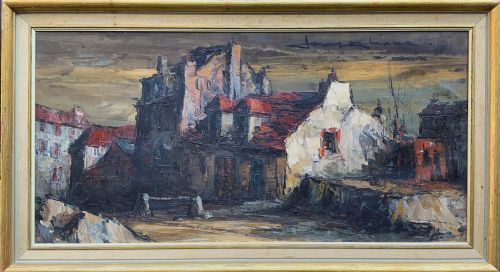
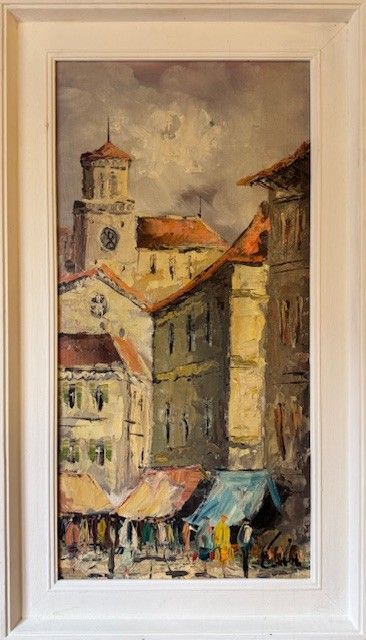
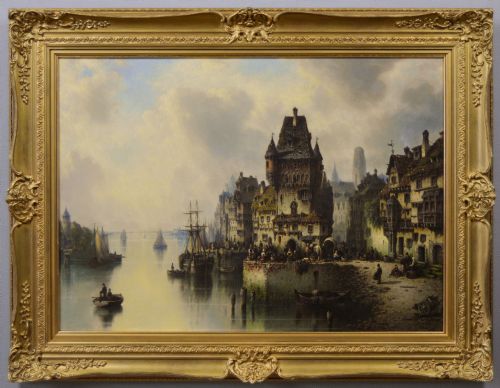
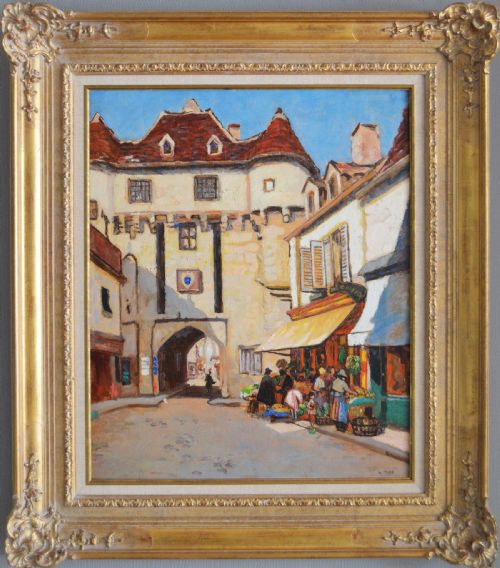
These european townscape painting examples capture bustling continental streets and quiet market squares, offering rich architectural detail that brings historic city life straight into a room.
European Townscape Painting
A european townscape painting depicts urban architecture, bustling harbours, and lively continental market squares, capturing the character of historic cities. Buyers seeking this subject matter encounter works ranging from quiet Georgian urban scenes to vibrant mid-century coastal views.
The selections on this page span several distinct periods including the nineteenth century, the Edwardian era, and the nineteen-twenties. These works frequently record historic streets and cathedrals across France and wider continental Europe.
Mediums vary between oil on canvas, oil on panel, and delicate watercolours on paper. Most pieces are framed, often within period wood or giltwood surrounds that complement the urban subject.
Materials and methods
Artists relied primarily on oil paint applied to canvas, wood panels, or boards, building up rich textures to render stone facades and bustling crowds. Watercolour was also utilised on paper for lighter architectural studies of continental streets.
Surrounds utilise wood, gesso, and gold leaf, frequently taking the form of giltwood frames designed to house and protect the canvas or paper works.
European Townscape Painting Retail Price Guide 2026
Typical asking prices for european townscape painting among the pieces listed under this phrase on Sellingantiques today, from the lower quarter to the upper quarter. They describe what is for sale here now, not the wider market.
At least one townscape hides flowers on a windowsill inside the artist's studio, peering out at the urban world.
Judging quality
Quality rests in the handling of light across stone architecture and the confident application of paint in busy market scenes. Finer works demonstrate a clear command of perspective and atmospheric depth within the urban setting.
The integrity of the original support, whether canvas, panel, or paper, dictates the preservation of the painted surface. Superior framing, particularly period giltwood and gesso surrounds, complements the visual weight of the composition.
Paul Élie Gernez·Joseph W Milliken·Ludwig Hermann·Henry Schafer·Letitia Marion Hamilton
The European Townscape Painting Glossary
- Oil Paint
- A slow-drying medium consisting of pigments suspended in a drying oil, allowing artists to build rich layers of colour.
- Gesso
- A plaster-like mixture applied to wooden frames or panels to prepare a smooth surface for gilding or painting.
- Giltwood
- Wood that has been coated with gold leaf or gold paint, frequently used for traditional picture frames.
- Post-Impressionism
- An art movement extending beyond impressionism that focused on expressive forms and symbolic use of colour.
- Watercolour
- A painting method in which the paints are made of pigments suspended in a water-based solution on paper.
European Townscape Painting: Frequently Asked Questions
What periods do these paintings date from?
The works span from the Georgian era through the nineteenth century into the nineteen-twenties, nineteen-thirties, and nineteen-sixties. Each period brings distinct stylistic approaches to urban subjects.
Nineteenth-century pieces often reflect realism or continental school traditions, while later decades incorporate mid-century impressionism and art deco influences.
What mediums were used for these townscapes?
Artists utilised oil paint on canvas, wood panels, and boards to capture detailed architectural scenes and harbour views. Watercolour on paper was also employed for lighter street studies.
Frames typically incorporate wood, gesso, and gold leaf to house the paintings securely.
Where do these townscapes typically depict?
The compositions focus on continental European locations, including French market squares, harbour towns, and cathedral cities. Scenes often record specific urban landmarks such as Semur and Lannion.
These views document historic streetscapes and daily life across various European regions.
How should I care for an oil painting?
Keep paintings away from direct sunlight and excessive moisture to protect the canvas and pigments. Dust gently with a soft, dry cloth without applying pressure to the painted surface.
Ensure the surrounding wood or giltwood frame remains stable and inspect fixings periodically.