


Imari Porcelain Ginger Jar
An imari porcelain ginger jar brings rich iron-red, cobalt blue and gold decoration into a room.
Imari Porcelain Ginger Jar
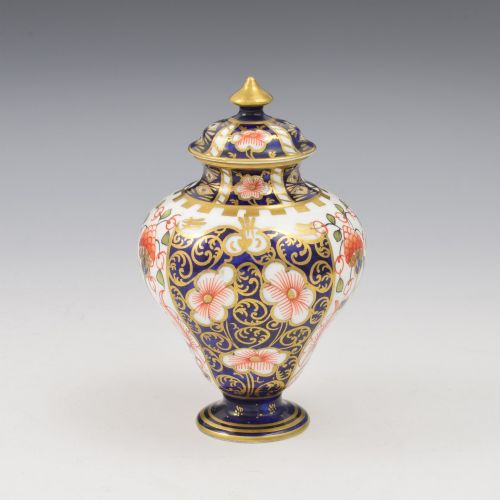
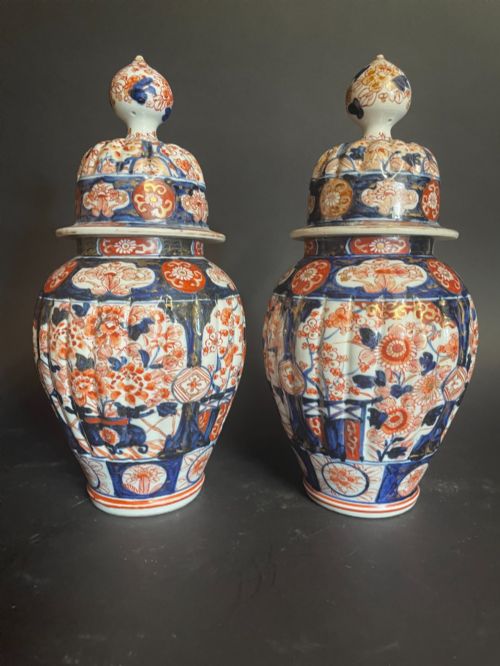
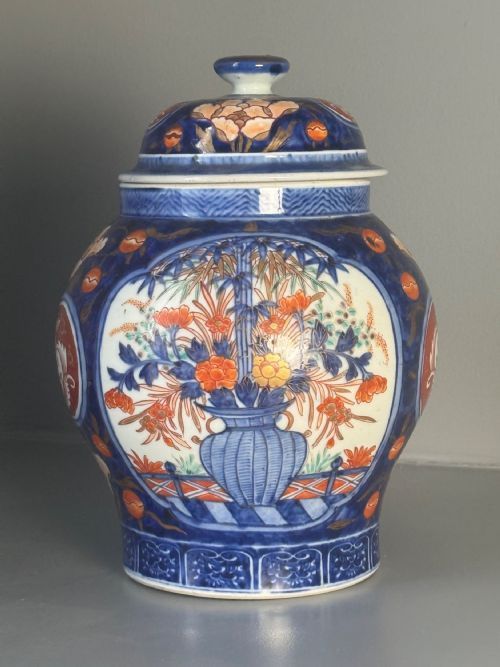
An imari porcelain ginger jar is a lidded vessel originally designed for storage, appearing here mostly across the nineteenth century alongside eighteenth-century and early twentieth-century examples. These pieces span Japanese Arita production, Edo and Meiji periods, and European interpretations such as English Royal Crown Derby and French porcelain. The form typically presents as a baluster or octagonal jar with a matching cover.
Buyers encountering this selection will most frequently find nineteenth-century Japanese examples alongside pairs and single lidded vases. The palette relies on deep cobalt underglaze blue combined with iron-red enamel and gold leaf or gilding. Forms range from miniature vessels to large decorative lidded jars used historically for dry goods or spices.
How they were made
Makers shaped ceramic clay into porcelain vessels before applying cobalt blue pigment beneath a transparent glaze. After an initial firing, artisans added detailed enamel colours and gold leaf, then subjected the piece to a secondary lower-temperature kiln firing to fix the decoration.
The decorative technique combines hand-painted underglaze blue with rich overglaze enamel work and gilding. Japanese Arita workshops and subsequent European imitators utilised precise brushwork to achieve the distinctive Imari palette across ceramics and porcelain bodies.
Listings feature porcelain bodies decorated with enamel, gold leaf, and glaze within the Japanese Imari and Meiji period traditions.
What varies in quality
Quality rests in the crispness of the underglaze cobalt painting and the precision of the overglaze enamel and gold gilding. Superior examples display dense, well-balanced compositions where the iron-red and gold details sit cleanly upon the porcelain body without blurring.
The weight and form of the ceramic body, alongside the fidelity of the matching cover, distinguish finer pieces from simpler decorative wares. The depth of the glaze and the refinement of the potting, whether in an octagonal baluster shape or standard jar form, separate standard production from exceptional specimens.
Royal Crown Derby·Samson
The Imari Porcelain Ginger Jar Glossary
- Imari
- A style of Japanese porcelain originating from Arita, shipped from the port of Imari, characterised by a palette of cobalt blue, iron-red, and gold. This decorative scheme was later copied by European potteries.
- Baluster
- A vase or jar shape that swells toward the bottom and tapers near the neck. This silhouette provides a stable base for lidded ginger jars.
- Underglaze
- Pigment applied directly to the raw ceramic body before the application of a transparent glaze and subsequent firing. Cobalt is the primary pigment used beneath the glaze.
- Enamel
- Opaque glass-like coloured paints applied over the fired glaze and fixed in a muffle kiln. These provide the characteristic red tones in Imari decoration.
- Gilding
- The application of gold leaf or gold paint to the surface of the porcelain. It highlights specific patterns within the overall design.
Imari Porcelain Ginger Jar: Frequently Asked Questions
What were ginger jars used for?
These lidded vessels originally served to transport and store spices, ginger, and other valuable commodities along trade routes.
Over time, they transitioned into purely decorative interior objects prized for their striking visual presence.
How do I date an imari ginger jar?
Dating relies on examining the characteristics of the porcelain body, the intensity of the cobalt blue, and the style of the enamel painting.
Reference points include the Edo and Meiji periods in Japan, alongside nineteenth-century European revivals and specific maker marks.
Are imari jars Japanese or European?
The style originated in Japan through Arita kilns during the Edo period, creating wares for export through the port of Imari.
European factories later produced close interpretations of these distinctive blue, red, and gold designs.
How should I display a ginger jar?
These jars work well as single statement pieces on mantelpieces, or arranged as pairs on side tables and cabinets.
Their rich gilding and vibrant palette complement both traditional period rooms and contemporary interiors.