

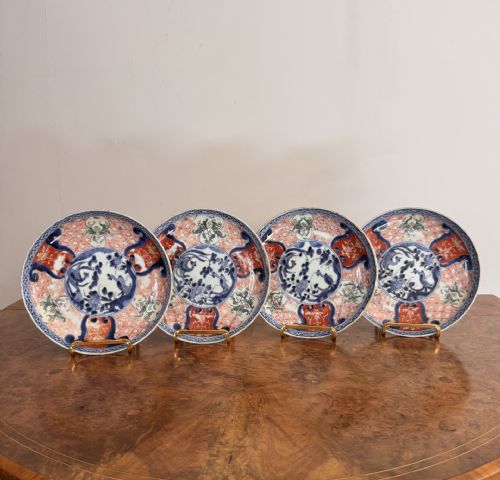


Imari Ceramic Saucers
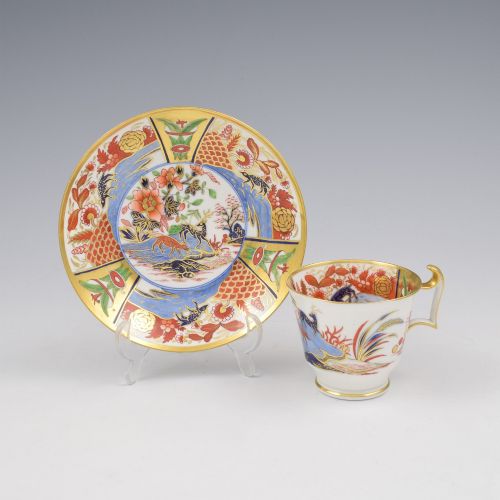
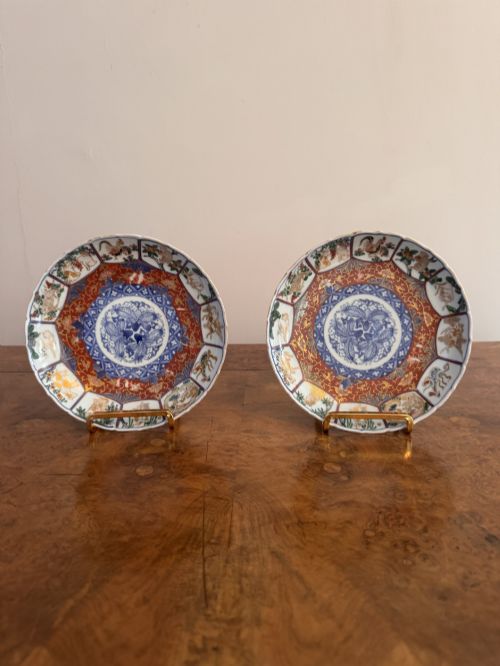
These imari ceramic saucers bring a vibrant palette of underglaze blue and iron red, lifted by gilt, to your table.
Imari Ceramic Saucers
When you search for imari ceramic saucers, you uncover pieces that bridge British tea culture and Japanese decorative traditions. The selection spans the nineteenth and early twentieth centuries, drawing on Victorian, Edwardian, and Meiji period aesthetics.
You meet Japanese imari small plates alongside English equivalents from factories such as Davenport, Minton, Spode, and Royal Crown Derby. These items appear both as solitary demitasse or teacup pairings and within larger afternoon tea services.
The form stretches from individual teaware components to decorative dishes and miniature tea sets. Each object carries the characteristic iron red and blue pigmenting, often enriched with gold leaf.
How they were made
Makers shaped these pieces from fine porcelain and bone china, applying smooth enamel glaze to create a durable base for decoration. Artisans then executed hand-painted designs using rich enamel colours.
Gilt and gold leaf highlights were meticulously applied to accentuate patterns and borders. Firing locked the underglaze blue and subsequent enamel layers into a glossy finish.
Imari Ceramic Saucers Retail Price Guide 2026
Typical asking prices for imari ceramic saucers among the pieces listed under this phrase on Sellingantiques today, from the lower quarter to the upper quarter. They describe what is for sale here now, not the wider market.
Some nineteenth-century tea services carry playful pattern names like "Crazy Cow" and "Bengal Tiger" painted onto the china.
What varies in quality
The distinction between standard items and the finest pieces lies in the precision of the hand painting and the crispness of the gilt work. Superior examples show intricate brush control in the iron red and blue motifs.
The quality of the porcelain body and the richness of the gold leaf application define the upper tier of the range. Maker attribution also influences standing, particularly pieces bearing marks from established English and Japanese potteries.
Davenport·Minton·Spode·Royal Crown Derby
The Imari Ceramic Saucers Glossary
- Imari
- A style of ceramic decoration originating in Japan, defined by a palette of underglaze blue, iron red, and gilt. British potteries eagerly adopted this aesthetic during the nineteenth century.
- Trio
- A matching set comprising a teacup, a saucer, and a tea plate. These groupings form the backbone of traditional afternoon tea settings.
- Gilt
- A thin layer of gold applied to the ceramic surface to highlight rims, handles, and patterns. It adds a reflective quality to the finished piece.
- Bone china
- A type of porcelain containing bone ash, known for its high strength, chip resistance, and translucent body. English factories utilised this material extensively for teaware.
Imari Ceramic Saucers: Frequently Asked Questions
What is an imari ceramic saucer?
An imari ceramic saucer is a small dish designed to hold a teacup, decorated in the distinctive Japanese-inspired palette of blue, red, and gold. These pieces were produced by both Japanese kilns and historic English potteries.
They serve as both functional teaware and decorative items, prized for their rich colour schemes and historical manufacturing techniques.
How were these saucers used historically?
These saucers formed part of formal afternoon tea services and everyday dining settings during the Victorian and Edwardian eras. They held teacups and occasionally caught drips or held small sweetmeats.
In polite society, tea drinking was a ritual that displayed the household's taste through coordinated ceramics and fine silver.
How can I tell the period of a piece?
Dating relies on identifying maker marks on the underside, observing the weight and translucency of the porcelain or bone china, and recognising stylistic shifts from Regency through to the Meiji period.
English factories often stamped their wares, while Japanese pieces from around 1900 display characteristic brushwork and glaze properties of that era.