




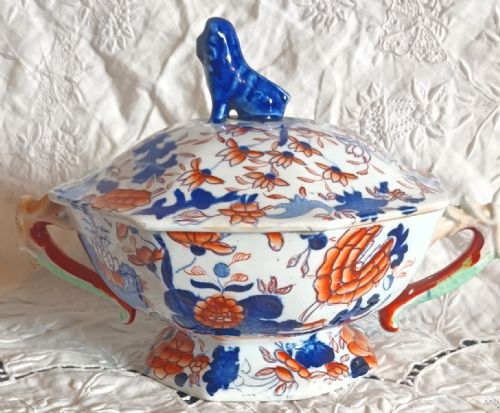


Imari Ceramic Centrepiece Dish
An imari ceramic centrepiece dish brings the rich palette and bold patterns of Japanese and English export traditions straight to your table.
Imari Ceramic Centrepiece Dish
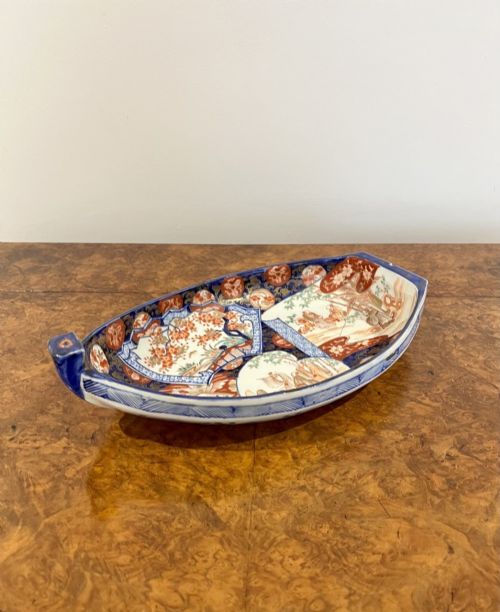
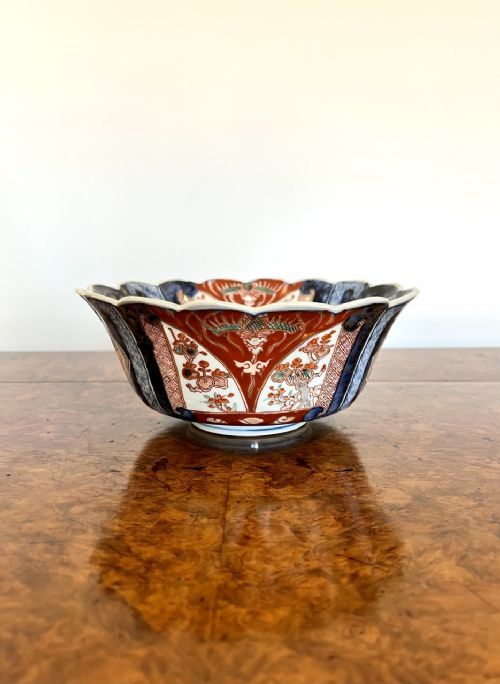
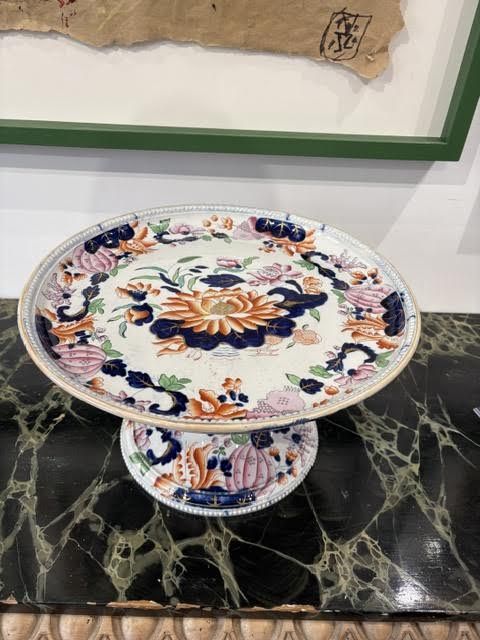
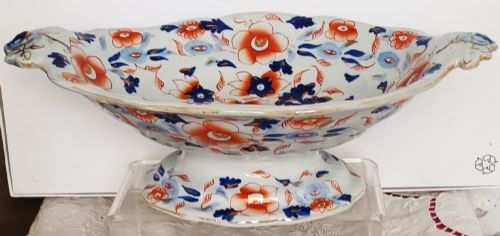
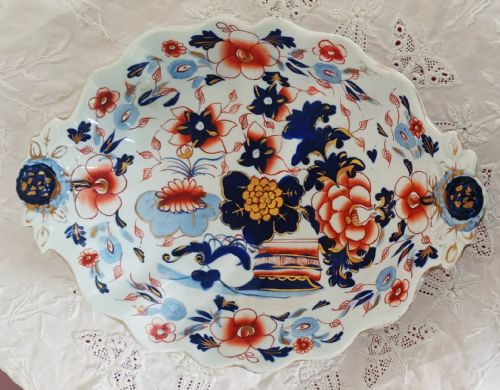
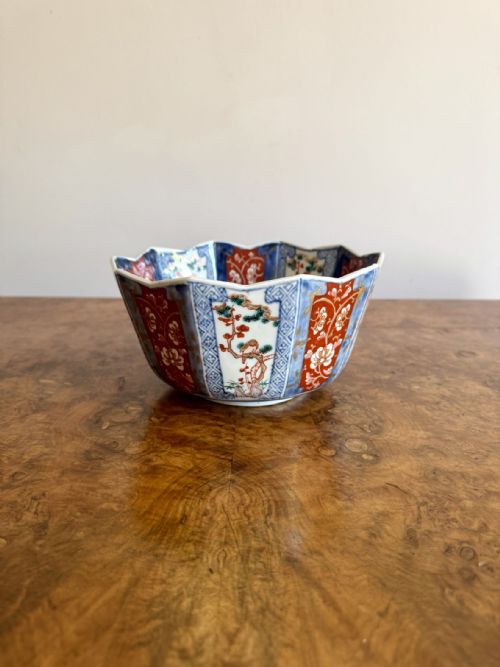
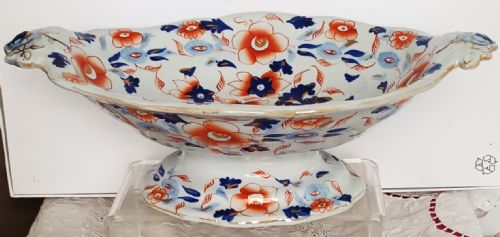
An imari ceramic centrepiece dish spans robust ironstone vessels from English potteries and porcelain bowls from Japanese kilns. You will frequently encounter Japanese export pieces alongside English interpretations from the Georgian and Victorian periods.
These vessels take various forms, from boat-shaped dishes and scallop-edged bowls to footed comports and pedestal cake stands. They served practical roles at dining tables and ornamental functions on sideboards.
Origins stretch from the late eighteenth century through the nineteenth century, encompassing Japanese Meiji and Edo influences alongside Regency and Victorian aesthetics.
How they were made
Potters shaped porcelain and ironstone ceramics before applying underglaze blue and overglaze iron red enamel pigments. Many examples incorporate intricate gilding using gold leaf to highlight decorative motifs.
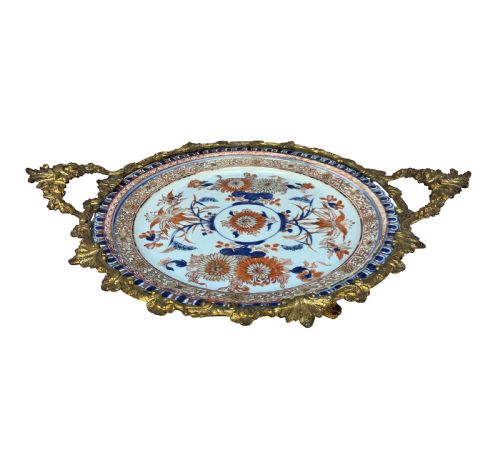
Some pieces feature elaborate ormolu mounts that elevate the ceramic body into French rococo or nineteenth-century display furniture.
Imari Ceramic Centrepiece Dish Retail Price Guide 2026
Typical asking prices for imari ceramic centrepiece dish among the pieces listed under this phrase on Sellingantiques today, from the lower quarter to the upper quarter. They describe what is for sale here now, not the wider market.
Materials recorded across the inventory include porcelain, ironstone ceramic, enamel, and gold leaf.
What varies in quality
The clarity and depth of the enamel pigments distinguish finer pieces from simpler domestic wares. Crisp brushwork in the cobalt blue and iron red sections indicates skilled hand-painting rather than hurried production.
The weight and resilience of the ceramic body, particularly in heavy ironstone and porcelain, mark the distinction between everyday utility items and grand exhibition pieces.
Mason's·Minton
The Imari Ceramic Centrepiece Dish Glossary
- Imari
- A style of ceramic decoration originating in Japan, characterised by a palette of underglaze blue, iron red, and gold. English potteries adopted this aesthetic on ironstone bodies during the Georgian and Victorian eras.
- Comport
- A raised dish or bowl used for serving fruit or sweetmeats at the dining table. These pieces often stand on a central pedestal or short foot.
- Ironstone
- A type of durable earthenware patented in the nineteenth century to imitate Chinese porcelain. It provides a heavy, resilient body for large tureens and serving dishes.
- Ormolu
- Gilded bronze mounts applied to ceramics and furniture, particularly popular during the nineteenth century. These metal fittings frame the porcelain body.
- Chinoiserie
- European artistic interpretations of Chinese and East Asian decorative styles. This aesthetic appears frequently on early nineteenth-century English ceramics.
Imari Ceramic Centrepiece Dish: Frequently Asked Questions
What is an imari ceramic centrepiece dish?
An imari ceramic centrepiece dish is a decorative serving vessel decorated in the distinctive Japanese export palette of blue, red, and gold, or in English adaptations of that style.
These pieces range from deep porcelain bowls to pedestal comports and ironstone tureens designed to anchor a formal table setting.
How do I tell Japanese imari from English imari?
Japanese examples are typically formed from true porcelain with translucent qualities and traditional motifs derived from Edo and Meiji aesthetics.
English imari pieces generally utilise heavier ironstone or earthenware bodies produced by factories mimicking the Japanese colour schemes.
Were these dishes used for dining?
Many of these vessels served as functional tableware for presenting fruit, sweets, or vegetables during large Georgian and Victorian dinners.
Others functioned primarily as ornamental centrepieces intended for display on sideboards or tables.
How do I care for an antique dish?
Wash antique ceramics gently by hand in warm water using mild soap, avoiding dishwashers and harsh abrasive cleaners that damage surface enamels and gold leaf.
Display the pieces away from direct heat sources and edge hazards to protect the glaze and ceramic body from impact.