




Howard Style Easy Chair
A howard style easy chair offers deep comfort and traditional English country house character, built for long hours of reading by the hearth.
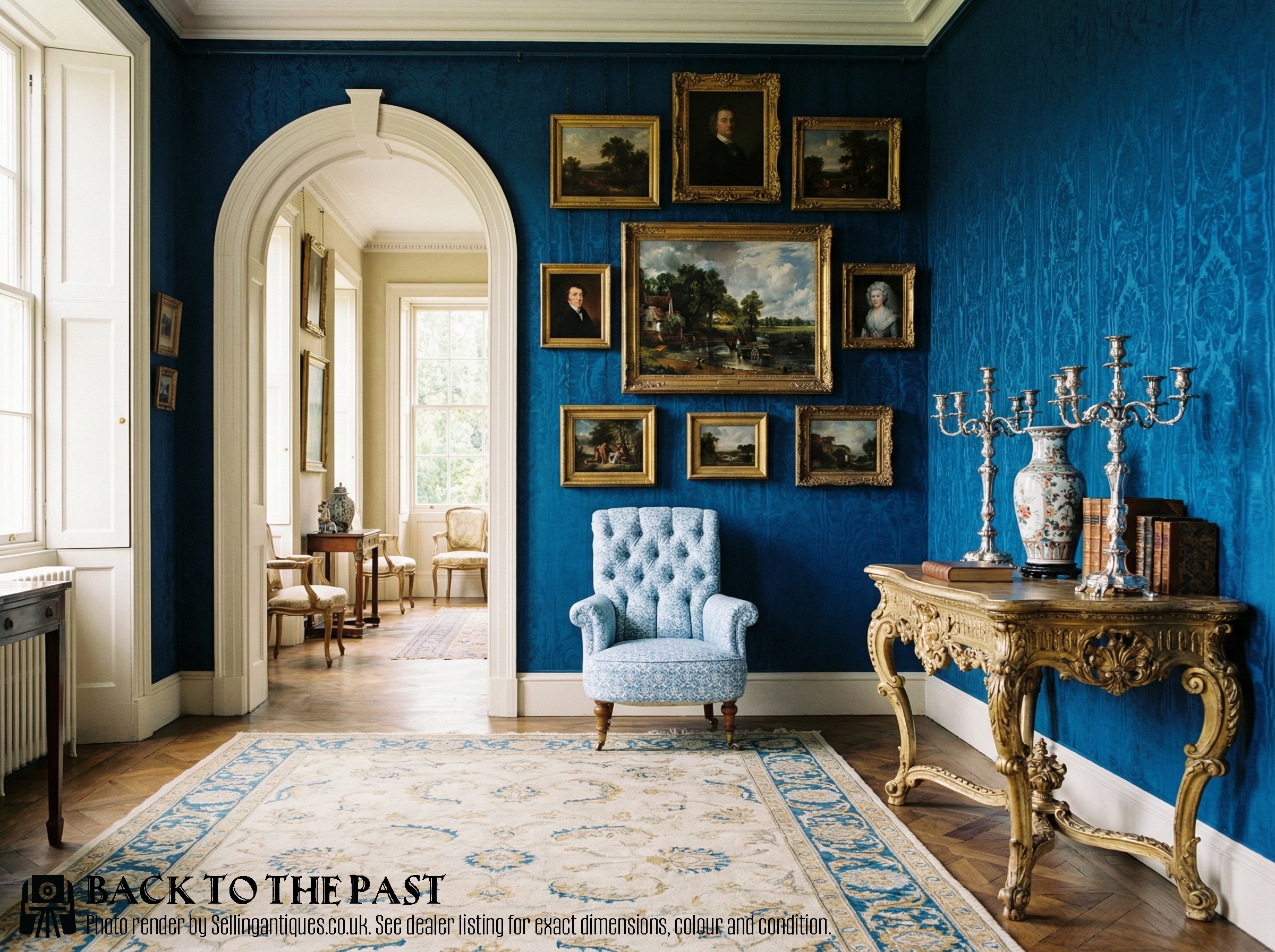
Howard Style Easy Chair
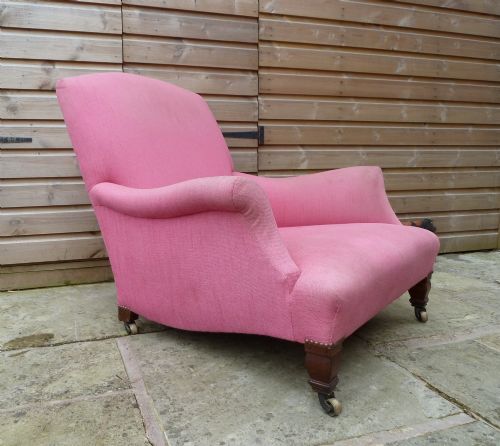
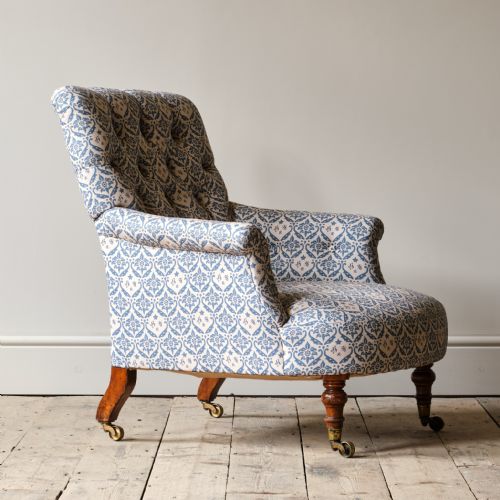
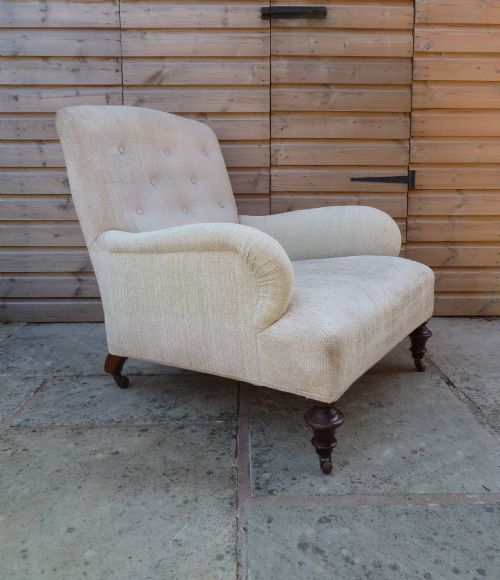
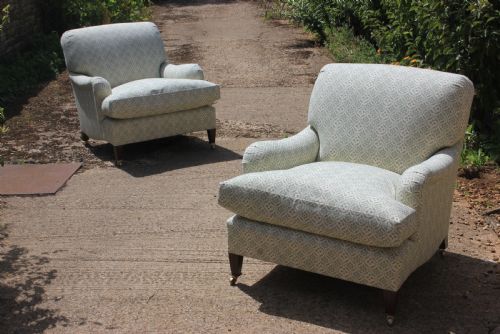
A howard style easy chair sits low and broad, designed with generous proportions and sprung upholstery intended for deep relaxation. These armchairs belong primarily to the nineteenth century and the Edwardian period, though later interpretations appear.
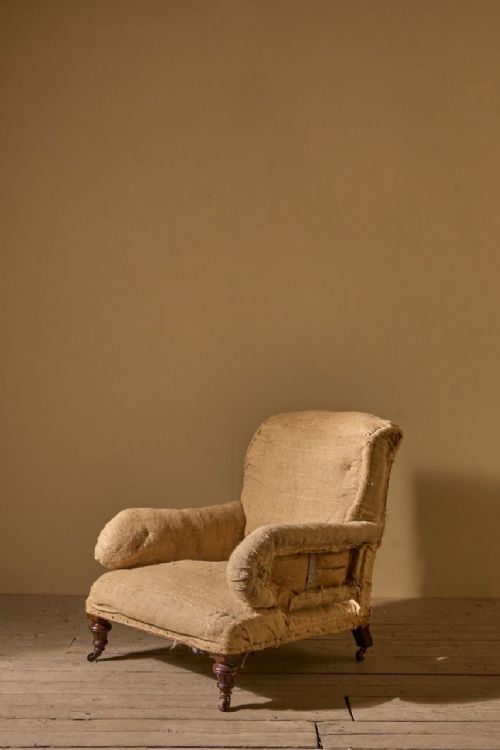
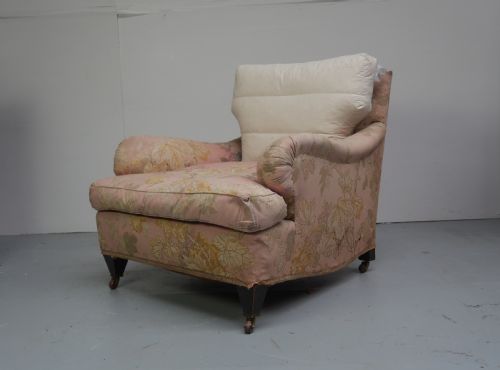
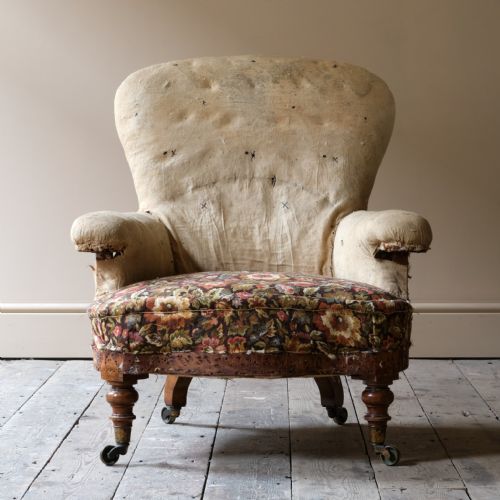
The form is synonymous with the English country house aesthetic, often upholstered in ticking, heavy fabric, or carpet. Many examples on this page carry the direct influence of nineteenth-century makers, while others follow the broader Victorian and Edwardian style.
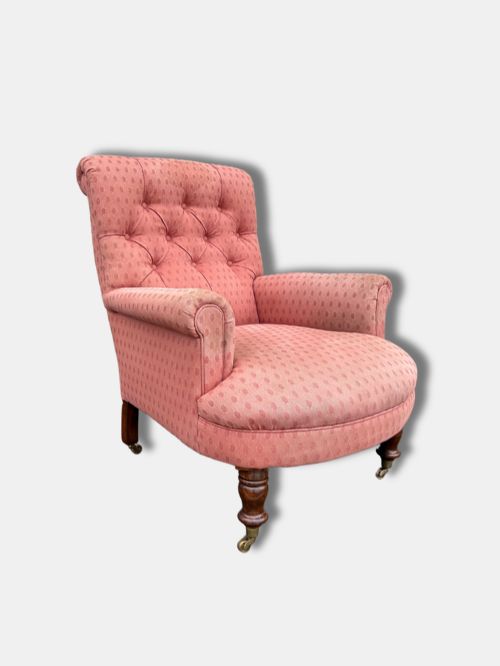
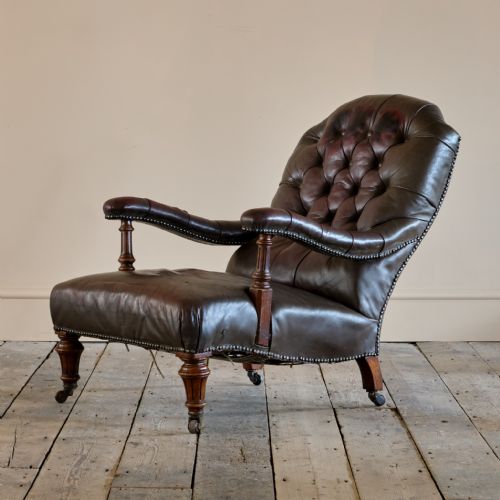
Buyers encounter open armchairs, club armchairs, and button back variants across these listings. Walnut and mahogany frame elements occasionally show beneath the covers, though fabric remains the dominant visual presence.
How They Were Made
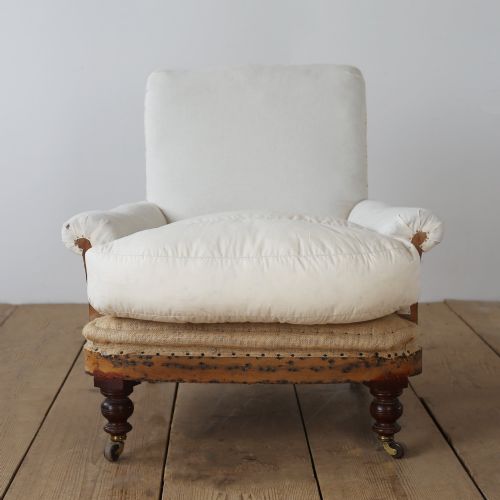
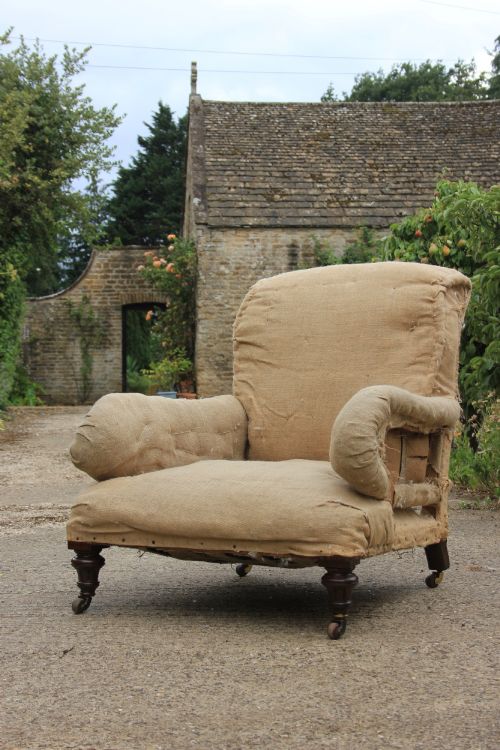
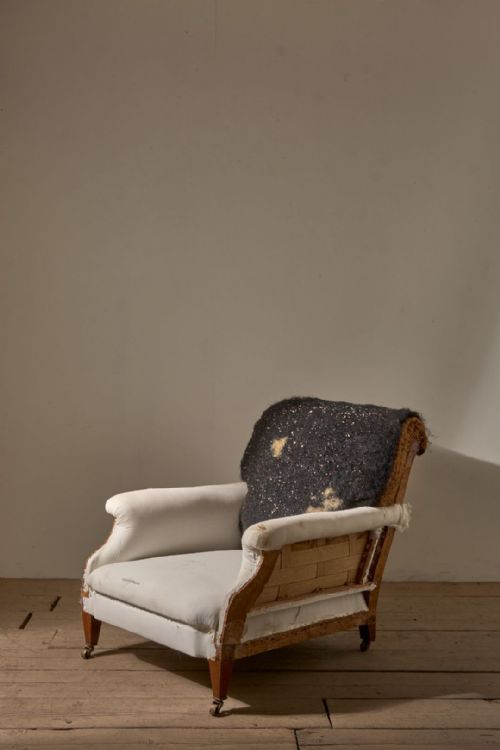
Makers constructed the internal frames of timber, using sturdy walnut and mahogany for exposed legs and structural supports. Hessian and calico provided the traditional foundation layers for the dense stuffing before final top covers were applied.
Brass castors were frequently fitted to the legs to allow easy movement across heavy carpets and wooden floors. Upholsterers built the seat and back using complex spring systems designed to maintain resilience over decades of daily use.
Listings feature walnut and mahogany frames supported by brass castors and upholstered in heavy fabric, hessian, and calico.
What Varies in Quality
The integrity of the internal springing and the firmness of the stuffing dictate the physical comfort of each piece. Superior examples retain their original tension and shape, supporting the sitter without excessive sag.
The quality of the timber frame and the choice of textile covering separate standard commercial productions from finer workshop pieces. Original ticking, antique carpets, and branded upholstery credentials elevate the standing of an armchair within the historical record.
Howard and Sons·James Shoolbred·Trollope and Sons·Robert Strahan·SF Cullen·Wytlock and Reid·William Morris
The Howard Style Easy Chair Glossary
- Ticking
- A tightly woven cotton or linen fabric traditionally used as a durable mattress or furniture cover. Grey and white striped ticking is frequently associated with country house armchairs.
- Button back
- An upholstery method where deep buttons are pulled through the padding to create a quilted, patterned surface. This technique provides additional back support and structure.
- Club armchair
- A low, heavily upholstered seat with rolled arms designed for enclosed comfort. These chairs are built for lounging and reading.
- Open armchair
- A seat design featuring exposed wooden arms rather than fully upholstered padded sides. Walnut and mahogany are typical woods found in these frames.
Howard Style Easy Chair: Frequently Asked Questions
What defines a howard style easy chair?
These armchairs are characterised by low, deep seats, rolled arms, and substantial proportions designed for relaxation. They emerged during the nineteenth century within English domestic interiors.
Most examples employ traditional upholstery materials like hessian and calico beneath patterned fabrics, ticking, or carpet covers. Their design prioritises physical comfort over rigid formality.
How do I identify the period of an armchair?
Dating relies on examining the timber frame construction, the style of the brass castors, and the type of internal stuffing materials. Nineteenth-century pieces often display heavier proportions than later Edwardian versions.
Peculiarities in the upholstery technique and recorded workshop stamps provide further clues regarding the date of manufacture and origin.
Are these chairs comfortable for daily use?
The deep seating and sprung upholstery were engineered specifically for long periods of sitting and reading. Their robust interior construction supports daily domestic life.
Maintenance of the internal springs and fabric ensures these armchairs remain practical seating options in modern rooms.
What fabrics are typically found on these chairs?
Original coverings range from simple grey ticking and calico to decorative Ushak carpets and printed textiles. Upholstery choices often reflect the English country house aesthetic.
Many pieces have been recovered over time, though surviving early fabric schemes remain prized by collectors.