
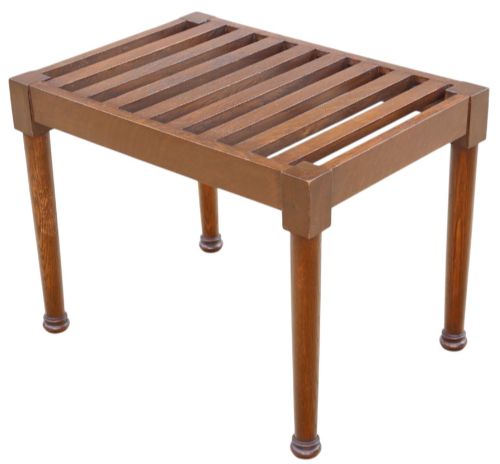
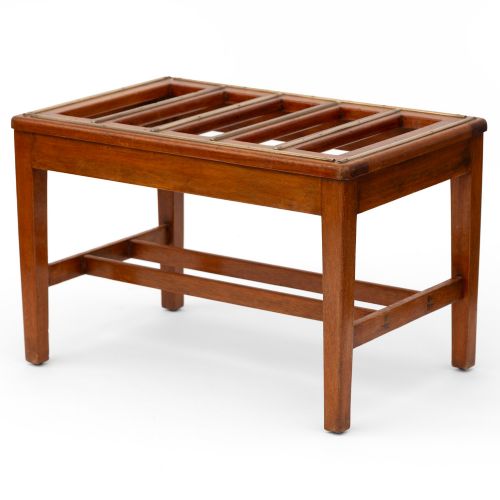
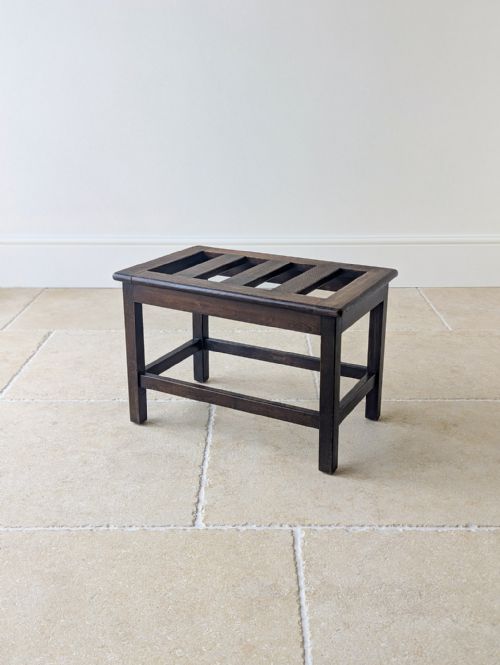
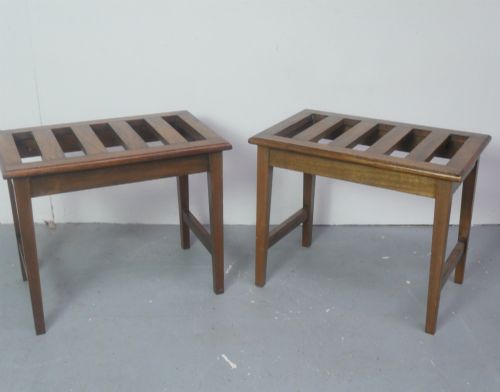



Hotel Luggage Stand
These hotel luggage stand pieces offer sturdy folding support for guest baggage, bringing practical hospitality history straight into the bedroom.
Hotel Luggage Stand
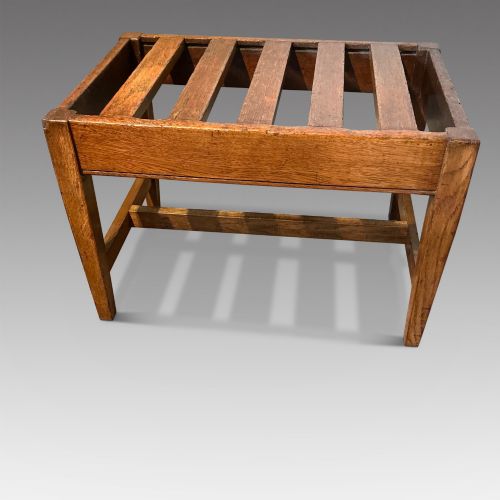
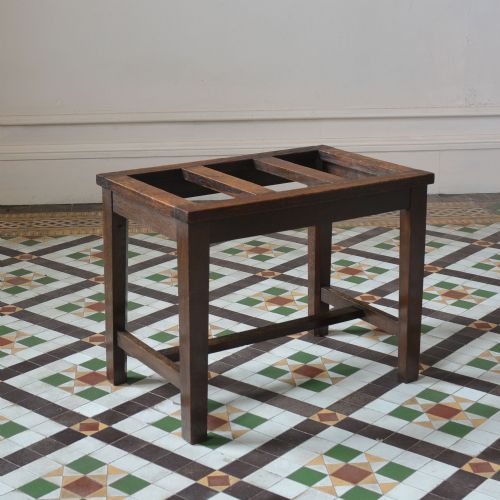
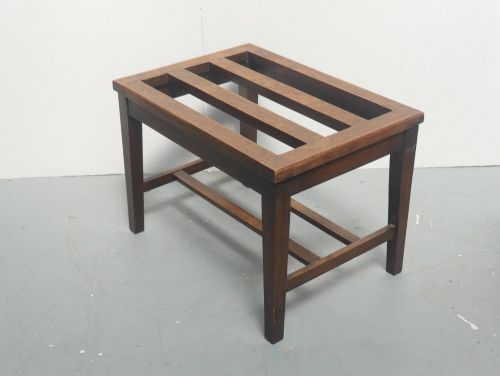
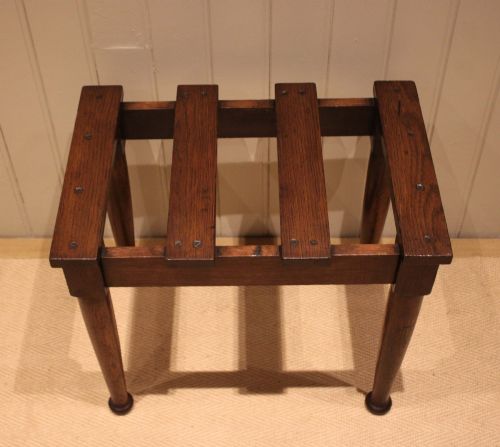
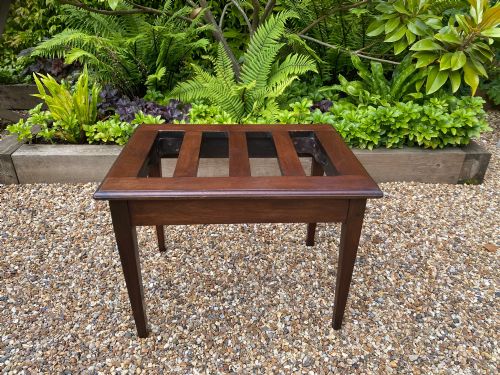
A hotel luggage stand provides a dedicated surface for bags, keeping guests' belongings off the floor and easily accessible. These pieces typically take the form of folding or fixed wooden and metal racks designed for domestic or commercial use.
Buyers searching for a hotel luggage stand will find examples spanning the Victorian, Edwardian, and mid-century periods. The selection mostly comprises solid timber frames with folding webbing or slatted tops.
Originating from both British workshops and international makers, these utilitarian items combine robust construction with compact dimensions. They suit modern hallways and guest bedrooms just as well as their original hospitality settings.
How they were made
Makers constructed these stands using durable hardwoods such as oak, mahogany, walnut, beech, and teak to withstand heavy daily use. Metal elements like iron and brass appear frequently in hinges, brackets, and structural framing.
Joinery techniques focus on strength, utilising solid timbers and supportive braces to ensure the stands bear the weight of heavy travel chests and modern suitcases alike.
Materials across these listings include oak, mahogany, walnut, beech, teak, brass, iron, and painted pine.
What varies in quality
Quality in a hotel luggage stand shows in the selection of timber and the precision of the folding mechanism. Denser hardwoods and branded maker stamps elevate certain examples above standard utility pieces.
The choice of secondary materials, such as solid brass fittings rather than iron, distinguishes superior workshop production from simpler commercial output.
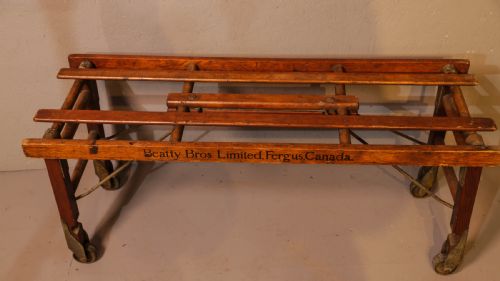
Beatty Bros Fergus Canada·Brown & Lamont·Waring & Gillow
The Hotel Luggage Stand Glossary
- Luggage stand
- A low folding or fixed rack designed to hold travel bags at a convenient height. These practical items were staples in period hotels and large country houses.
- Edwardian
- Dating roughly from the reign of King Edward VII, this period favoured lighter, cleaner furniture designs often seen in oak.
- Victorian
- Spanning the 19th century, furniture from this era is typically heavier and constructed from robust timbers like mahogany and beech.
- Mid-Century Modern
- A twentieth-century design movement focused on clean lines and functional forms, represented among later utility pieces.
Hotel Luggage Stand: Frequently Asked Questions
What is a hotel luggage stand used for?
These stands provide an elevated surface for guest luggage in bedrooms and dressing rooms, making packing and unpacking straightforward.
Historically, they allowed travellers to access their trunks without bending down to the floor.
How do I date an antique luggage stand?
Dating relies on timber choices, construction methods, and stylistic details associated with periods like the Victorian and Edwardian eras.
Maker stamps or labels, where present, offer the most precise indication of origin and age.
Are these luggage stands folding?
Many examples feature folding frames designed for easy storage against a wall or in a cupboard when not in use.
Fixed-frame versions also exist, offering greater structural rigidity for permanent bedroom placement.
What woods were used for luggage stands?
Makers predominantly utilised durable hardwoods including oak, mahogany, walnut, beech, and teak to ensure longevity.
Metal components like iron and brass frequently supplement the wooden frames for added strength.