


Horse Racing Wall Art
Horse racing wall art brings the speed and spectacle of the turf indoors through centuries of oils, prints and watercolours.
Horse Racing Wall Art
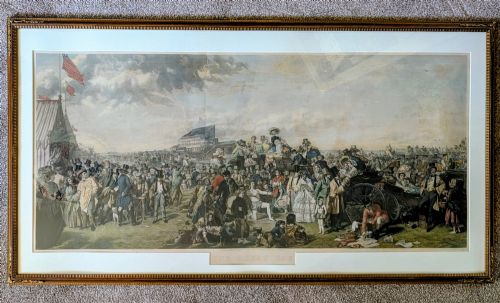
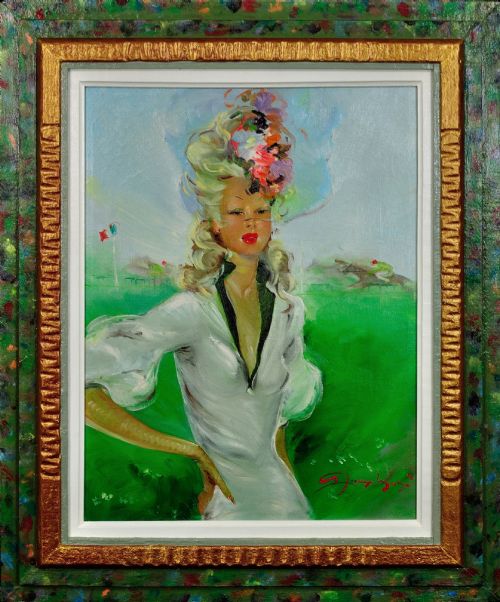
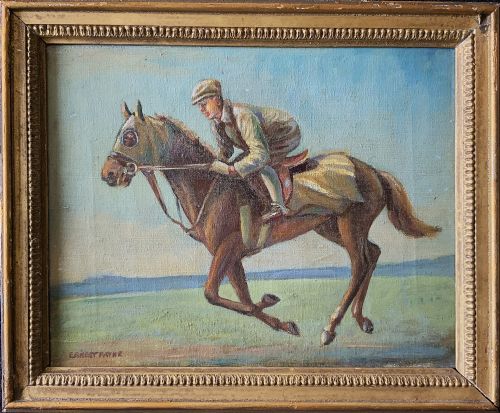
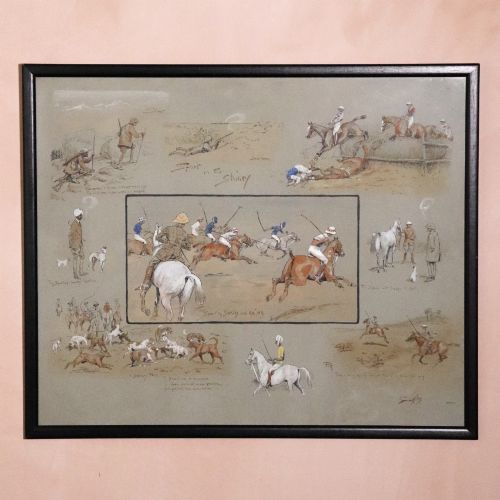
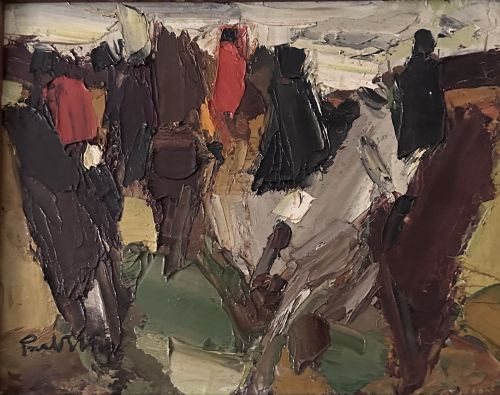
Horse racing wall art captures the drama of the track through oil paintings, watercolours, gouache, pastels and various print methods. These pieces range from detailed Victorian portraits of named champions and jockeys to mid-century French scenes and spirited prints.
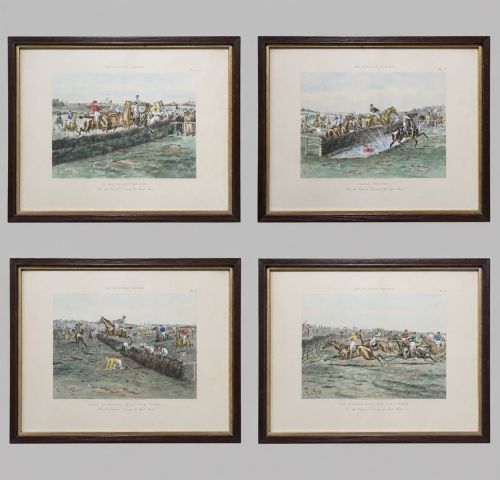
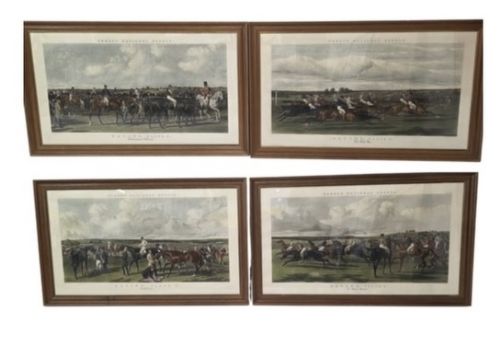
The selection here leans heavily towards nineteenth-century works and early twentieth-century pieces, particularly framed prints and original oils. Buyers encounter everything from large single canvases to sets of aquatints and Vanity Fair chromolithographs.
Originating largely from British sporting traditions alongside French and American examples, these works document the history of racing tracks, named horses, and social gatherings at the course.
Materials and methods
Painters utilised oil on canvas or panel, watercolour, gouache and pastel on paper to record horses and riders in motion. Prints of the period relied on engraving, aquatint and chromolithography, often finished with hand colouring.
Framing typically involved wood and glass protection for works on paper, while oil paintings on canvas remained mounted in traditional frames. Some specialist pieces utilised reverse painting on glass to achieve distinct visual depth.
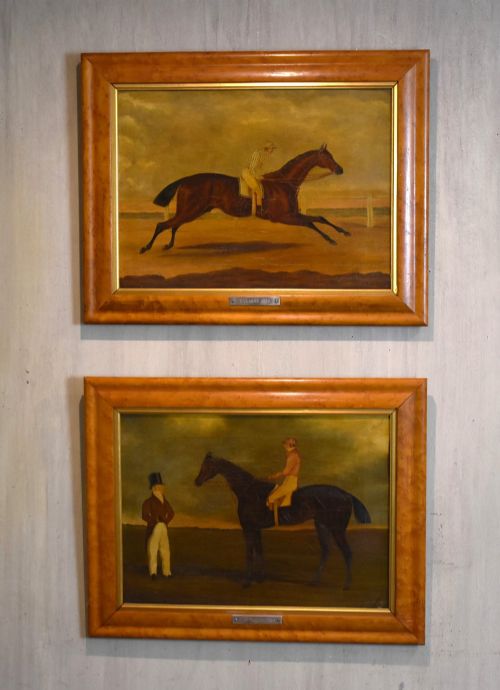
A nineteenth-century racehorse named Creeping Molly rubs shoulders here with Vanity Fair jockeys and carpet-beating caricatures.
Factors of quality
Quality rests upon the skill of the artist in rendering the anatomy of the horse and the tension of the race. Named artists with recorded exhibition histories command closer attention than anonymous works.
The preservation of the medium matters greatly, whether that is the stability of an oil paint surface or the preservation of colour in a nineteenth-century print without excessive fading or foxing.
William Powell Frith·Jean-Gabriel Domergue·George Finch Mason·Ernest Payne·John Frederick Herring Snr·John Rattenbury Skeaping·Gabriel Dauchot·Alfred Wheeler·Charles Clifford Turner·John Atkinson·Charles Johnson Payne Snaffles·Walter Herbert Wheeler·Thomas Worth·John Parker Davis
The Horse Racing Wall Art Glossary
- Aquatint
- An intaglio printmaking technique that produces tonal areas resembling watercolour washes. It was frequently employed to reproduce sporting paintings for a wider audience.
- Chromolithography
- A colour lithographic printing process using multiple stones to build rich hues. This method brought vibrant colour to nineteenth-century periodical plates and published prints.
- Gouache
- An opaque water-based paint that dries to a matte finish. Artists used it to add solid blocks of colour and fine highlights to works on paper.
- Reverse painting on glass
- A technique where the image is painted directly onto the back of a glass panel so it is viewed through the front. This method protects the pigment and yields a glossy finish.
- Sporting art
- A genre dedicated to depicting animals, hunting, racing and field sports. It forms a distinct category within British and European painting traditions.
Horse Racing Wall Art: Frequently Asked Questions
What subjects appear in these works?
The works depict named racehorses, champion jockeys, starting gates, trackside crowds and historical race meetings. Scenes range from intimate studies of animals to bustling course gatherings.
Many pieces record specific historical events or famous victors, preserving the names of winning horses and owners alongside the sporting artists who painted them.
How do I identify a print from an oil painting?
Oil paintings display visible brushstrokes, textured paint layers and canvas support under close inspection. Prints present flat ink surfaces, plate marks or dot patterns depending on the printing technique used.
Examining the piece outside its frame often reveals the paper texture of prints or the stretcher bars behind a canvas.
How were these pieces displayed originally?
Original prints and paintings hung in country houses, clubs, and offices associated with the turf and equestrian pursuits. Sets of four or eight were often grouped together to tell a sequential story of a race day.
Framed Vanity Fair prints and chromolithographs decorated domestic interiors, reflecting the broad nineteenth-century enthusiasm for racing culture and sporting personalities.
How should I care for paper versus canvas art?
Works on paper require protection from direct sunlight and moisture to prevent fading and foxing behind glass. Oil paintings on canvas benefit from stable indoor humidity and occasional gentle dusting.
Avoiding placement near heat sources helps preserve both the wooden frames and the underlying materials across decades of display.