


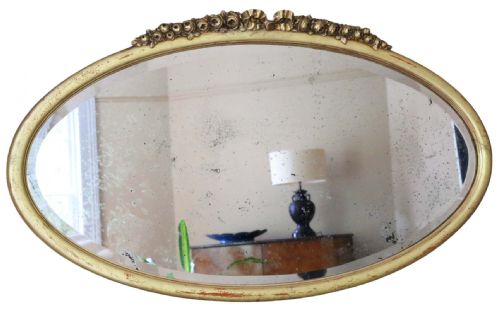
Horizontal Gold Wall Mirror
A horizontal gold wall mirror brings immediate warmth and width to a room, most often taking the form of an overmantel mirror designed to sit above a fireplace.
Horizontal Gold Wall Mirror
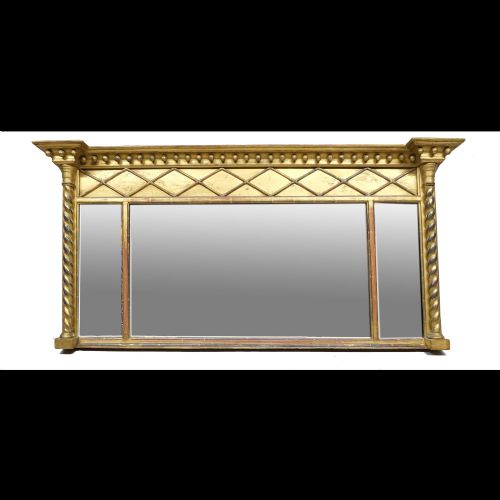
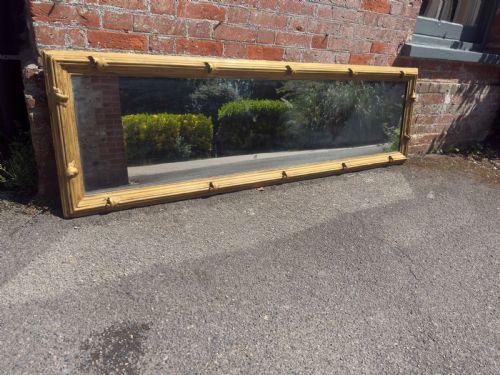
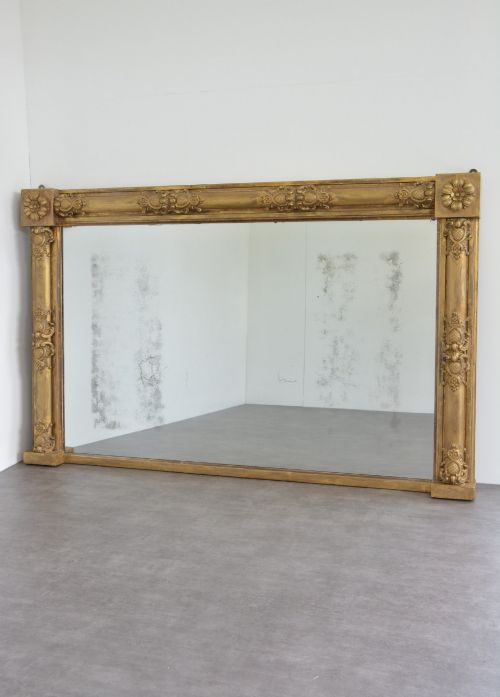
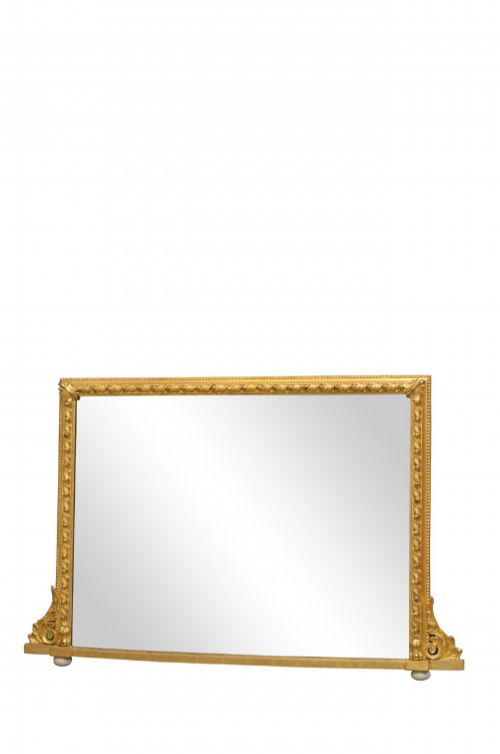
When searching for a horizontal gold wall mirror, buyers encounter a selection dominated by nineteenth-century pieces, specifically Regency and Victorian overmantel mirrors. These substantial looking-glasses were originally proportioned to fill the expansive wall space above a chimney breast, bringing light deep into period drawing rooms.
Beyond nineteenth-century works, the inventory reaches back to the eighteenth century with Georgian Rococo designs and forward into the twentieth century with Art Deco metal-framed interpretations. Overmantels, pier mirrors, and wider wall-hung formats form the primary object types available to collectors.
The aesthetic vocabulary spans classical restraint and exuberant revivalism, featuring Neoclassical symmetry alongside ornate Rococo scrolls. Most pieces present a landscape orientation, whether rectangular or tryptic, designed to anchor a room horizontally.
How they were made
The structural carcass of these pieces relies primarily on timber such as pine and carved wood, which provides a stable foundation for decorative embellishment. Artisans applied layers of gesso - a chalk and glue mixture - over the wood to build up relief details and create a smooth surface for gilding.
Giltwood and gold leaf finishes dominate the selection, applied by hand to catch the light, while some examples employ parcel gilding alongside paint. Glass plates, occasionally showing original foxing, are set within these ornate frames to complete the mirror.
Some mirrors wear their age on their sleeve, offering lightly foxed glass that reflects the room with a dreamy, softened blur.
What varies in quality
Quality reveals itself in the crispness of the carved wood and gesso ornamentation, where skilled hand-chiselling produces sharp relief rather than softened contours. The depth and warmth of the original gilding also distinguish finer examples from later, heavier applications of gold paint.
Structural integrity of the pine frame and the preservation of the original glass plate contribute significantly to the standing of a piece. Finer works retain their original mirror plates, which often display a soft, uneven reflection and light foxing that mark their age honestly.
The Horizontal Gold Wall Mirror Glossary
- Overmantel mirror
- A large horizontal mirror specifically designed to hang on the wall above a fireplace mantelpiece. These frames often reflect the architectural style of the room they anchor.
- Gesso
- A traditional mixture of chalk, gypsum, and size used as a preparation layer on wood before gilding. It allows craftsmen to carve intricate relief ornamentation.
- Giltwood
- Timber that has been coated with gold leaf or gold paint. True period examples use beaten gold leaf applied over a bole and gesso base.
- Foxing
- The age-related spots and browning that appear on mirror glass as the silvering degrades. Many collectors prize lightly foxed glass for its authentic period character.
- Tryptic
- A mirror divided into three distinct panels within a single frame. This configuration was particularly popular during the Regency period to widen the reflected field of view.
- Pier mirror
- A tall or wide mirror traditionally hung on the pier, the solid wall space between two windows. They frequently match the proportions of console tables placed beneath them.
Horizontal Gold Wall Mirror: Frequently Asked Questions
Where should I hang an overmantel mirror?
These mirrors traditionally sit directly above a fireplace mantelpiece, where their horizontal proportions balance the hearth below. They also work effectively on long living room walls to draw in light and anchor furniture groupings.
Ensure the wall construction and fixings can support the substantial weight of carved wood and gesso frames before hanging.
How do I identify a Regency mirror?
Regency pieces often incorporate classical motifs such as reeding, ball accents, and architectural cornices. The frames display a distinct Neoclassical influence that distinguishes them from heavier Victorian designs.
Look for tripartite glass configurations and crisp carved detailing typical of the early nineteenth century.
What causes foxing on old mirror glass?
Foxing occurs when moisture seeps behind the glass over decades, reacting with the silver backing to create characteristic dark spots and cloudy patches. This natural ageing process confirms the antiquity of the mirror plate.
Many buyers actively seek out lightly foxed glass because it provides a softer reflection than modern replacements.
Can these mirrors be cleaned safely?
Dust the gilded frame gently with a soft, dry brush to prevent damage to delicate gesso and gold leaf surfaces. Avoid using commercial liquid cleaners near the edges of the frame where moisture might penetrate the backing.
Clean the glass plate sparingly with a mild solution applied to a cloth rather than sprayed directly onto the mirror.
Are Art Deco mirrors different from Victorian ones?
Art Deco mirrors favour streamlined metal framing and geometric geometry over the ornate carved woodwork of the Victorian and Regency eras. They introduce a different material palette, including metal alongside glass.
These later twentieth-century pieces suit modern or transitional interiors while maintaining a horizontal wall presence.