



Three Plate Mantel Mirror
A three plate mantel mirror organises a chimney breast with its horizontal tripartite glass, reflecting light across the room.
Three Plate Mantel Mirror
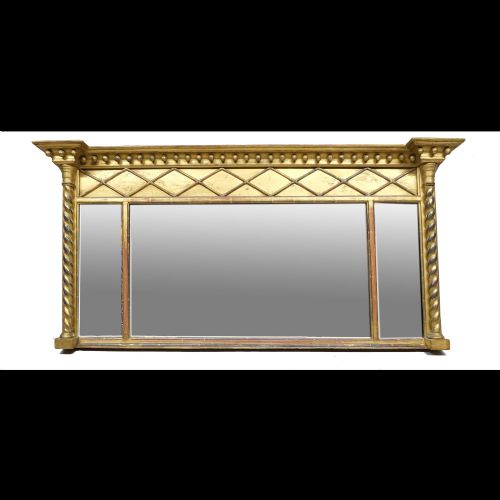
A three plate mantel mirror sits low upon a chimney piece, filling the hearth wall with an extended horizontal span. The form relies on three distinct mirror plates held within a single unified frame.
Most examples found here date from the nineteenth century, including the Regency and Victorian eras, alongside earlier eighteenth century Georgian and George II survivals and later revival pieces. Overmantel mirrors and wall mirrors dominate the selection, bringing architectural presence to domestic interiors.
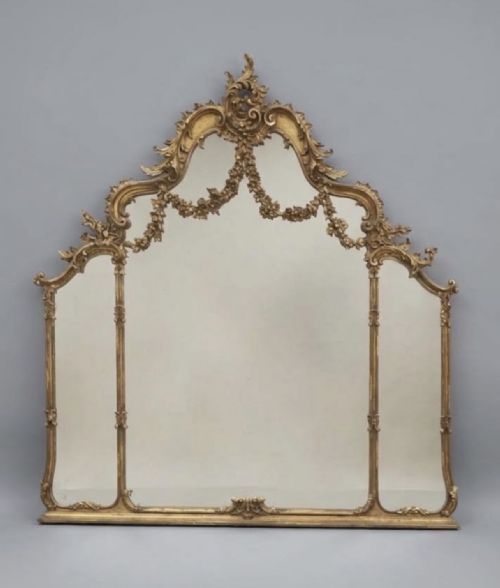
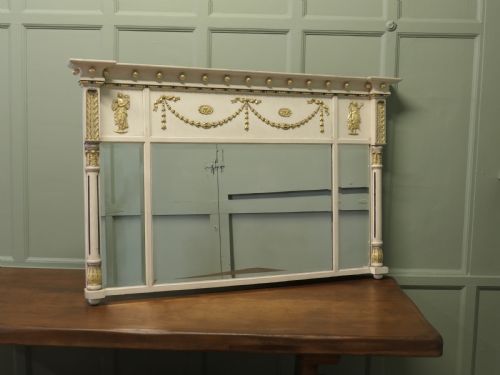
Makers utilised woods such as rosewood and satinwood alongside giltwood and gesso, often applying paint to accentuate carved details. Styles range from restrained classical designs to elaborate Rococo revival and Sheraton revival forms.
How they were made
Makers constructed the primary carcase in wood, applying layers of gesso to build up decorative mouldings and carved reliefs. Gilding was then laid over the prepared surfaces to catch the ambient light of the room.
Mirror glass was set into compartments within the frame, frequently employing three separate plates to achieve the characteristic wide horizontal format. Carved elements such as laurel wreaths and friezes decorated the upper sections.
Some Regency mirrors feature sculpted griffins keeping watch over the hearth from their perch in the wooden frieze above the glass.
What varies in quality
The refinement of the carved and gilded ornament distinguishes finer pieces from simpler domestic examples. Crisp execution in the giltwood and gesso work demonstrates the hand of a skilled carver.
The preservation of the original mirror glass and the harmony of the tripartite proportions define the aesthetic success of the object. Heavier rosewood or satinwood frames show different grain figures and cabinet-making standards.
The Three Plate Mantel Mirror Glossary
- Overmantel mirror
- A glass designed specifically to hang or stand upon the mantelpiece above a fireplace. These pieces were proportioned to match the horizontal sweep of the hearth.
- Giltwood
- Timber coated with gold leaf or a gold-coloured metallic finish over a prepared gesso ground. This treatment provided brilliance and reflected candlelight effectively.
- Gesso
- A plaster-like mixture applied to wood frames to create a smooth surface for gilding or to be moulded into relief decoration. It allowed intricate ornamentation before being gilded.
- Tryptic
- Composed of three panels or plates arranged side by side within a single frame. In these mirrors, three glass plates divide the horizontal expanse.
- Regency
- The period of British design spanning the early nineteenth century, characterised by classical restraint and archaeological motifs. Pieces from this era often incorporate architectural lines.
Three Plate Mantel Mirror: Frequently Asked Questions
Where should a three plate mantel mirror hang?
These mirrors traditionally rest upon the mantelpiece shelf above a fireplace, anchoring the decorative scheme of the room. Their horizontal proportions suit wide walls, hallways or low furniture.
Positioning the mirror to reflect a window maximises natural light within the interior space.
How do I identify a Regency mirror?
Regency pieces often display classical motifs such as laurel wreaths, architectural mouldings and distinct friezes. The frames frequently utilise giltwood with crisp, restrained carving.
Earlier eighteenth century examples tend toward more elaborate George II or Georgian Rococo styling, while later revival pieces adopt nineteenth century interpretations.
What materials were used for these frames?
Makers employed a range of materials including giltwood, gesso, rosewood and satinwood. Some examples incorporate painted wood surfaces alongside gilded details.
The choice of material often reflects the prevailing style of the period, from Regency gilt to Edwardian satinwood.