




Hoop Back Armchair Pair
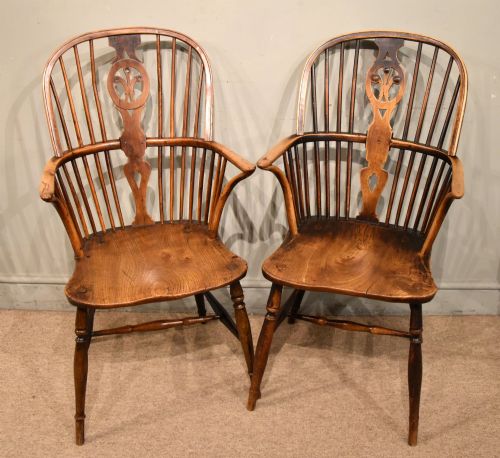
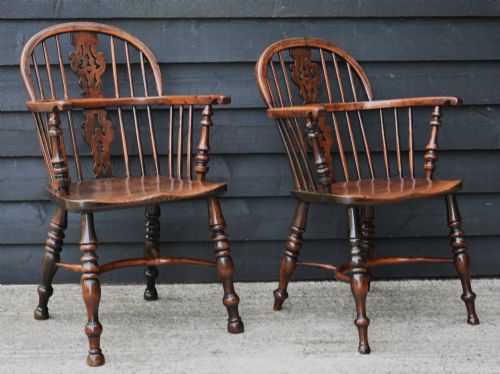
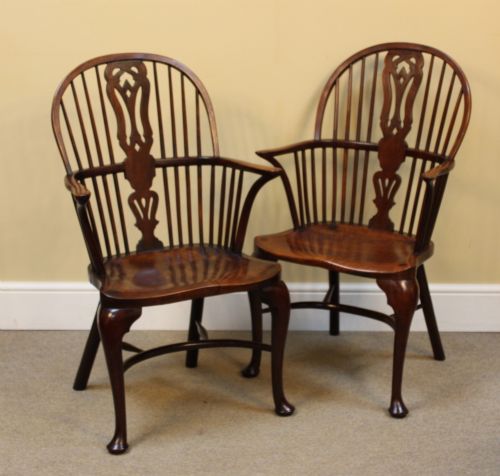
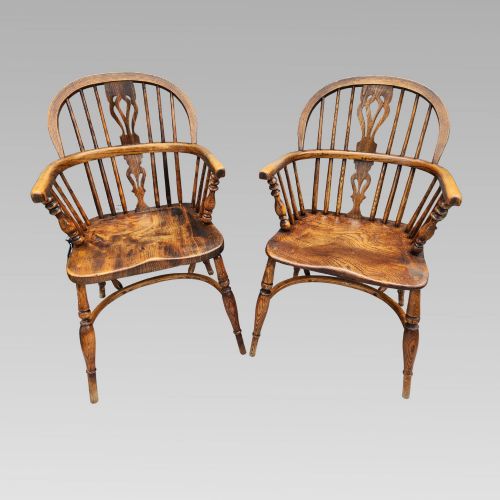
A hoop back armchair pair brings classic vernacular seating into the room, offering robust construction and distinct regional character.
Hoop Back Armchair Pair
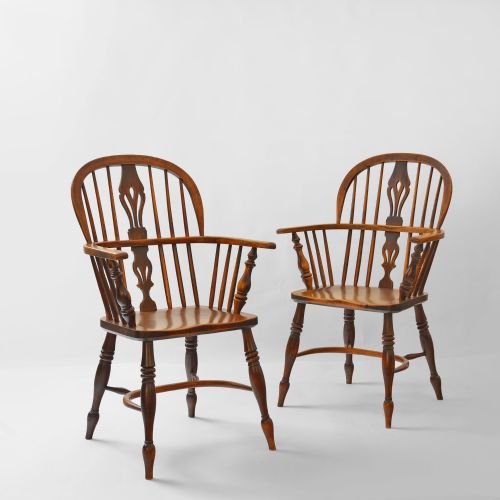
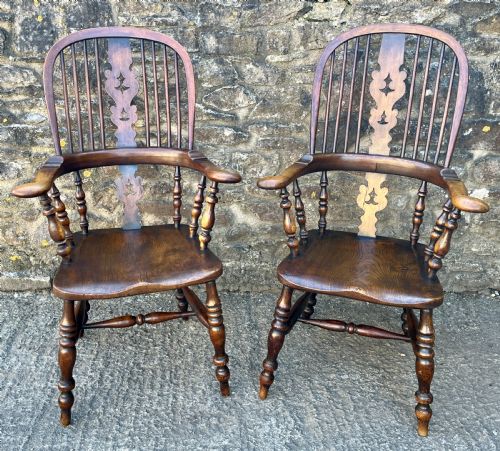
When you search for a hoop back armchair pair, you encounter robust seating traditions rooted in English country furniture. These pieces belong primarily to the Windsor chair family, characterised by a continuous curved back rail that forms both the armrests and the upper frame. The listings here showcase examples originating from the Georgian period through to the early twentieth century.
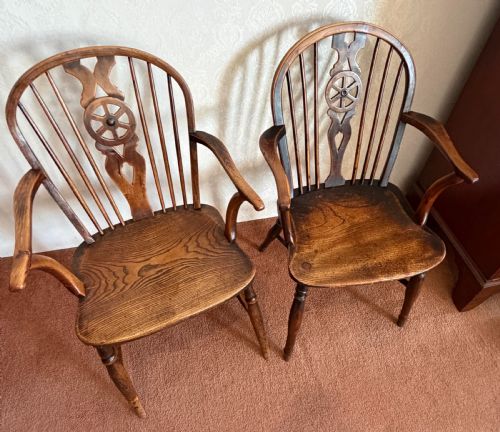
The versions you meet most frequently on this page combine elm seats with timbers such as yew, ash, or beech for the spindles and legs. They appear in matched pairs and near pairs, featuring low backs, high backs, and wheelback designs. The form relies on traditional stick-back construction rather than upholstered frameworks.
How they were made
Maker workshops built these chairs using a combination of turned components and solid timber seats. The thick wooden seat acts as the central hub into which the legs, spindles, and back bow are tenoned and wedged securely. Woods like elm were chosen for the seat because their interlocked grain resisted splitting when drilled and shaped.
Turned ash and beech provided strong vertical members, while yew wood was utilised for its striking grain patterns and natural flexibility in the steam-bent hoops. Craftsmen shaped the components using lathes and drawknives before assembling the frames without metal fixings.
The listings here span the Georgian and Victorian periods, with elm and yew appearing as the primary construction materials.
What varies in quality
Quality in these seating pairs rests upon the selection of timber and the integrity of the structural joints. Chairs fashioned from burr yew and finely figured elm sit at the higher end of the range, showing richer patination and deeper grain contrast. Lesser examples employ plain beech or secondary softwoods with simpler turning work.
The Hoop Back Armchair Pair Glossary
- Hoop back
- A continuous bentwood rail that forms the upper back and armrests of the chair in a single sweeping curve. This design distributes weight evenly and provides stable side support.
- Windsor chair
- A traditional chair style featuring a solid sculpted wooden seat into which the legs and back spindles are directly inserted. These chairs rely on stick-construction methods rather than a heavy internal frame.
- Vernacular furniture
- Domestic items made by local craftsmen for regional use rather than high-style urban workshops. These pieces prioritise practical utility and local materials over academic design rules.
- Crinoline stretcher
- A bowed or cranked stretcher connecting the legs of a chair near the base for added rigidity. The name derives from its resemblance to the hoop skirts worn in the nineteenth century.
Hoop Back Armchair Pair: Frequently Asked Questions
How do I care for antique wood chairs?
Maintain these chairs by keeping them away from direct heat sources and sudden temperature fluctuations. Timber responds poorly to dry radiator heat, which can cause wood to shrink or split.
Apply a traditional wax polish occasionally to nourish the surface and preserve the historic finish. Avoid using modern silicone sprays or harsh chemical cleaners.
Are these chairs comfortable for daily use?
These chairs offer surprisingly supportive seating due to their ergonomically sculpted wooden seats. The contoured elm planking distributes weight effectively without needing deep padding.
Many people add loose cushions to the seat base for extra softness during prolonged sitting. The upright posture encouraged by the spindle back supports good seating habits.
What is the difference between a matched pair and a near pair?
A matched pair consists of two chairs made together by the same workshop with identical dimensions and turning details. They form a cohesive unit intended to sit symmetrically in a room.
A near pair brings together two similar chairs made around the same era that share a common style but exhibit minor variations. These differences might appear in the spindle count or the exact grain of the timber.