





Hongmu Table
A hongmu table brings dense, richly figured tropical timber and intricate Qing Dynasty carving into a room with quiet authority.
Hongmu Table
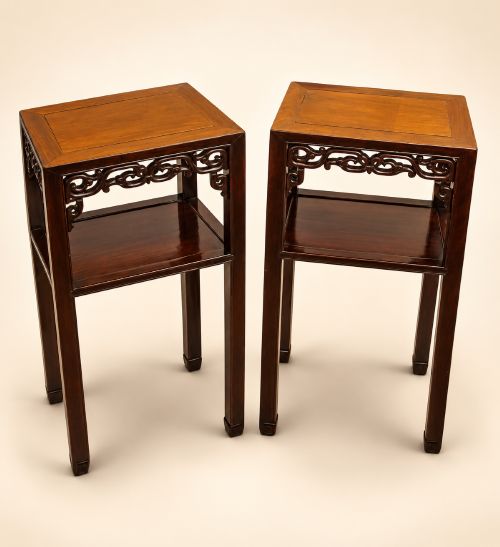
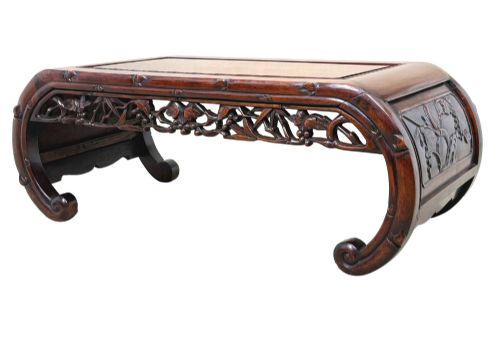
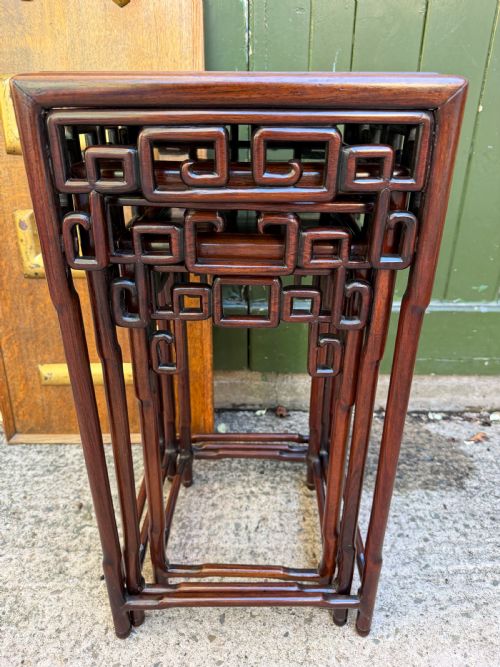
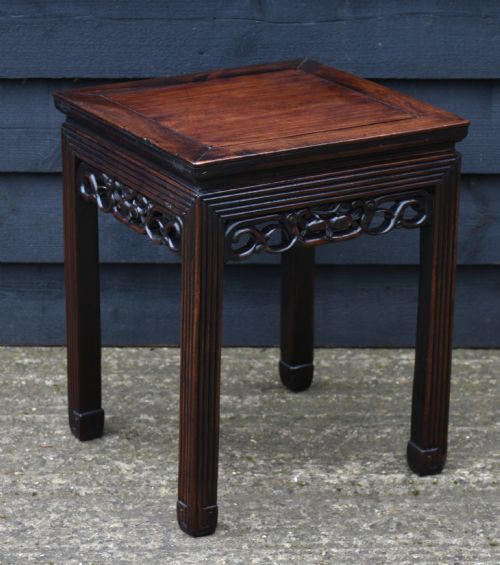
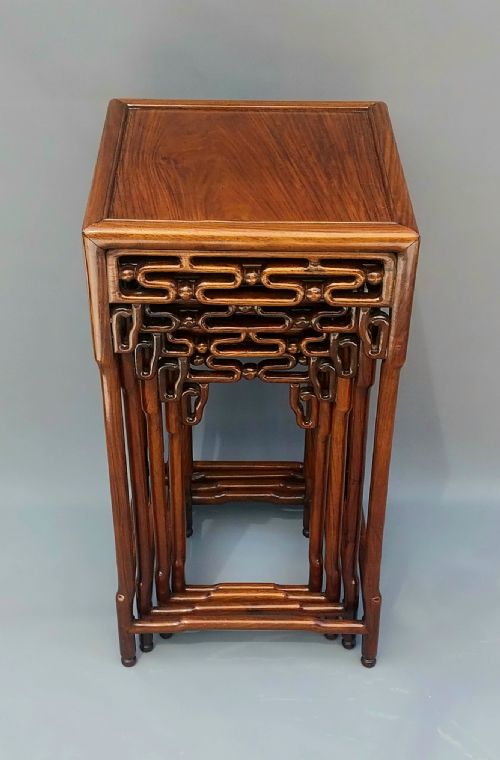
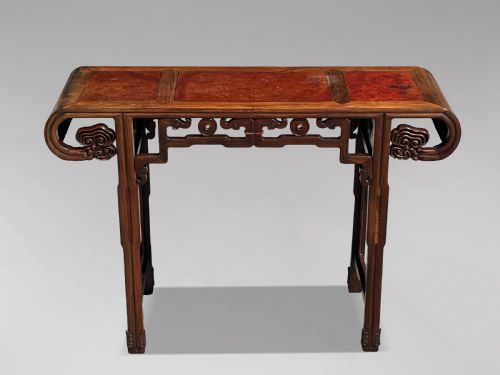
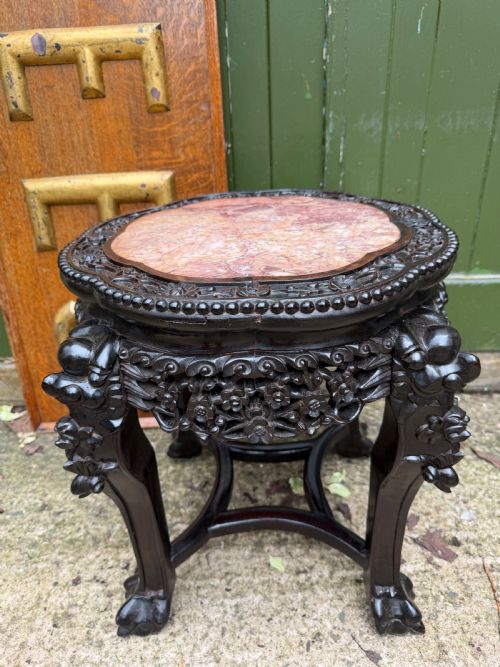
The selection on this page centres heavily on sturdy utilitarian and display forms such as side tables, jardiniere stands, and graduating nests of four tables. Such items served specific functions in scholarly or domestic interiors, ranging from supporting urns to holding writing scholar's objects.
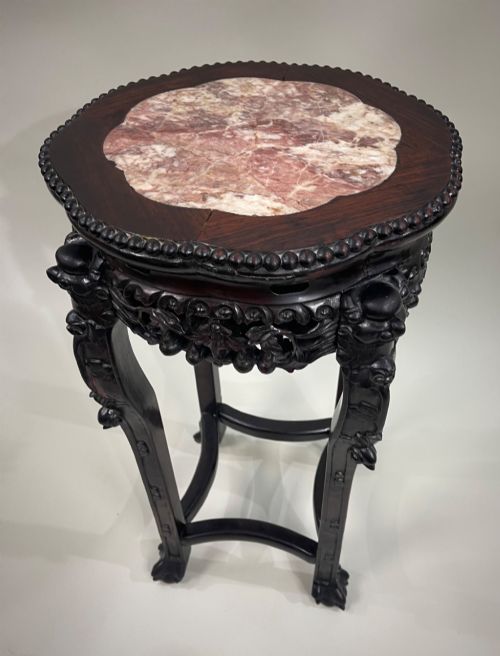
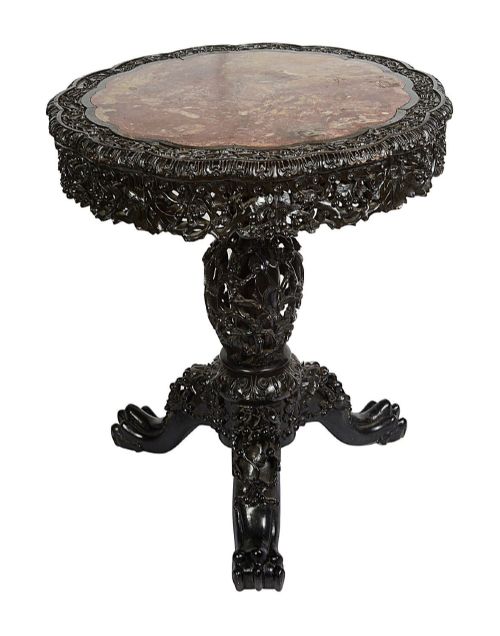
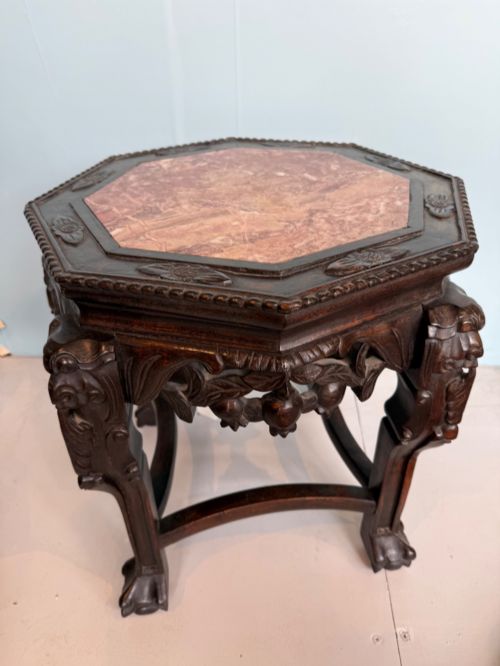
Makers utilised dense exotic timbers to build frames that combined functional stability with deeply carved decorative motifs. These surfaces frequently incorporate inset marble panels or mother-of-pearl inlay to break up the dark expanse of the wood.
How They Were Made
Joinery relied on complex interlocking timber joints that held the structure rigid without requiring modern metal fasteners, allowing the dense wood to expand and contract naturally. Carvers worked directly into the heavy tropical material, executing high-relief motifs of foliage and geometric patterns.
Many examples incorporate inset panels of rouge or variegated marble, which provided a cool, smooth surface resistant to moisture from plants and teapots. Workshops also applied delicate mother-of-pearl inlay directly into dark wood channels to create striking tonal contrasts.
Hongmu Table Retail Price Guide 2026
Typical asking prices for hongmu table among the pieces listed under this phrase on Sellingantiques today, from the lower quarter to the upper quarter. They describe what is for sale here now, not the wider market.
Listings feature nineteenth-century pieces spanning the Victorian period and Qing Dynasty, incorporating materials like marble, mother-of-pearl, and rosewood.
What Varies in Quality
The distinction between standard examples and superior pieces rests on the crispness of the hand-carving and the selection of the timber. Dense, heavily figured hongmu or rosewood with deep, unblemished grain patterns signals a higher standard of production.
The precision of the joinery and the integration of secondary materials, such as perfectly fitted marble inserts or securely pinned mother-of-pearl sections, determine the durability and finish of the table.
The Hongmu Table Glossary
- Hongmu
- A traditional Chinese term translating to red wood, encompassing dense, heavy tropical hardwoods prized for dark colour and durability. This material forms the primary structure of many nineteenth-century export tables.
- Altar table
- A long, narrow piece of furniture historically used for ceremonial displays or ancestral worship in traditional Chinese settings. These tables typically feature upturned flange ends and elaborate apron carvings.
- Jardiniere stand
- A tall, narrow pedestal or small table designed specifically to elevate heavy ceramic plant pots and flower vessels. They frequently feature circular tops and inset marble panels.
- Nesting tables
- A set of graduated tables designed to fit neatly beneath one another to save floor space when not in use. Nineteenth-century examples often comprise sets of three or four.
- Kang table
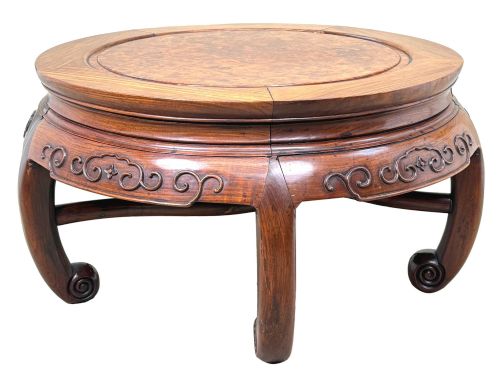
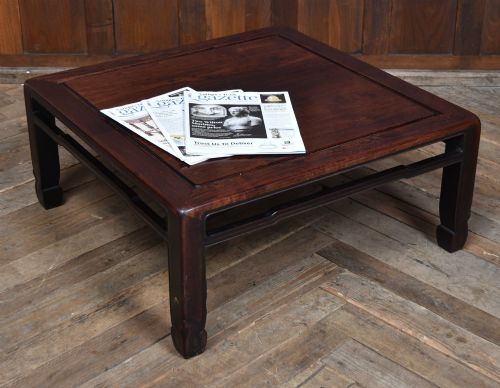
- A low table traditionally placed upon a heated brick platform or bed for dining, writing, or resting. These pieces sit close to the floor with short, robust legs.
Hongmu Table: Frequently Asked Questions
What is hongmu wood?
Hongmu is a general Chinese category for dense, heavy, and durable tropical hardwoods that naturally darken with age. It includes species such as rosewood and padouk.
Craftsmen favoured these timbers for their tight grain and natural oils, which allowed for intricate carving without splintering.
How were nesting tables used?
Nesting tables were kept stacked together until guests arrived, at which point servants or hosts distributed them around the room for tea or reading materials.
This modular design maximised floor space in traditional interiors while offering multiple surfaces when needed.
Why do some tables have marble tops?
Marble panels provided a durable, cool, and water-resistant surface that protected the surrounding wood from moisture damage caused by plant pots or hot tea vessels.
The smooth stone also created a visual contrast against the dark carved wooden frames.
How do I date a nineteenth-century piece?
Dating relies on examining the construction methods, the depth and style of the carving, and the specific timber used within the frame.
Nineteenth-century examples from the Qing Dynasty often exhibit distinct export characteristics and traditional joinery without modern adhesives.