



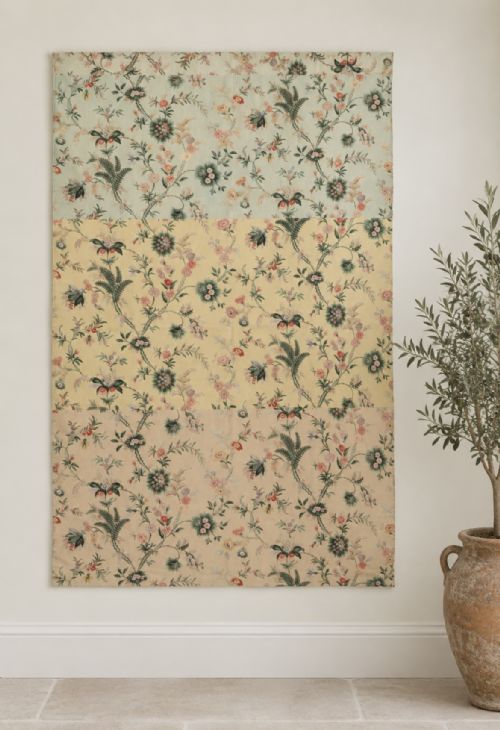


Historic Silk Textile
Historic silk textile pieces span centuries of needlework, tapestry and weaving, offering authentic fragments of early craftsmanship for display.
Historic Silk Textile
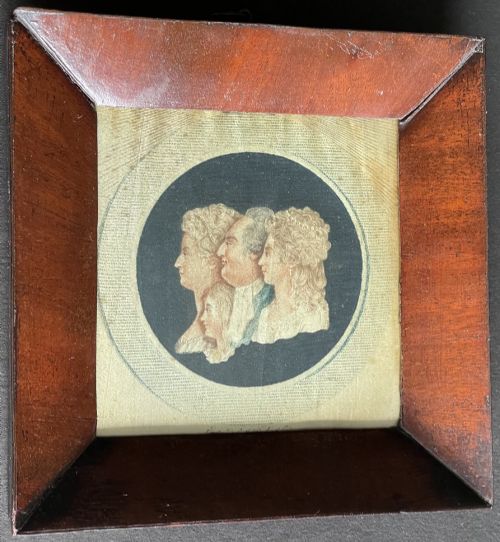
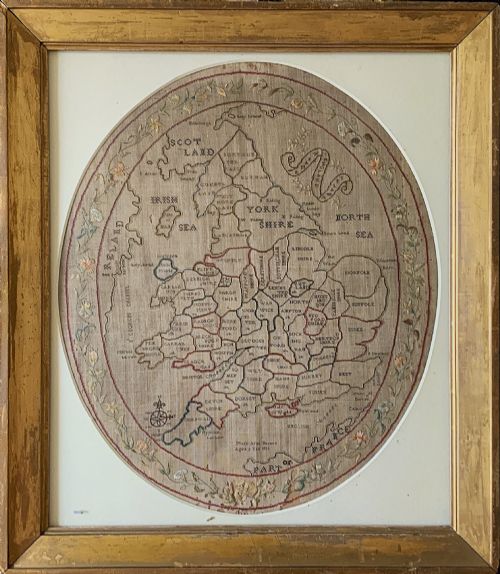
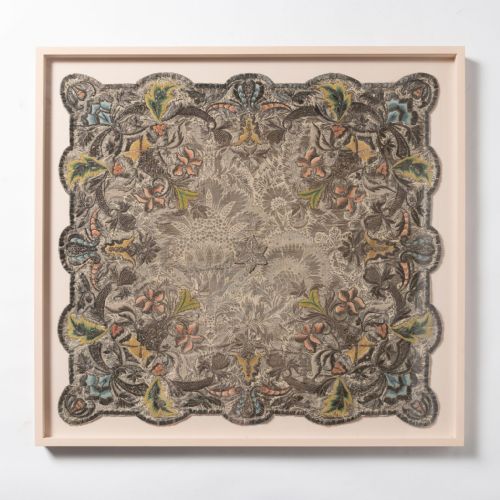
A historic silk textile brings centuries of domestic and grand interior decoration into modern spaces through surviving fragments, samplers and panels. These works range from early Flemish tapestries and Italian embroideries to Georgian map samplers and French wall hangings.
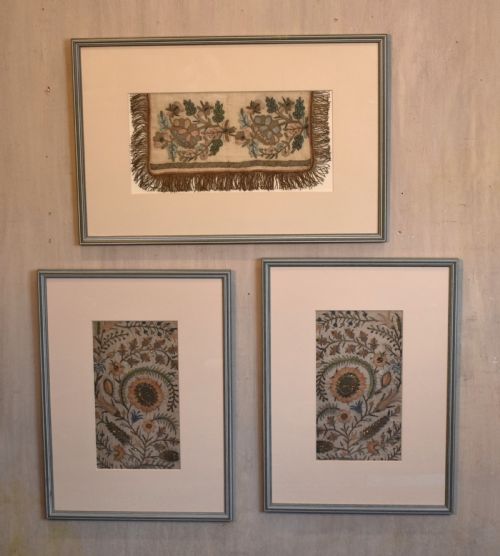
The pieces on this page are most frequently encountered as framed needlework samplers, embroidered borders and tapestry panels. Buyers seeking this category typically find examples originating from the sixteenth century onwards, worked in silk, linen and wool.
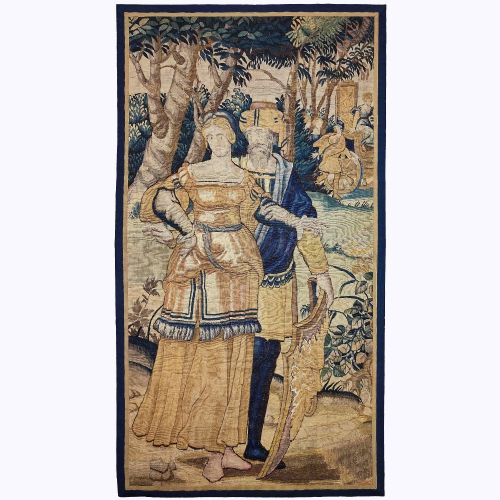
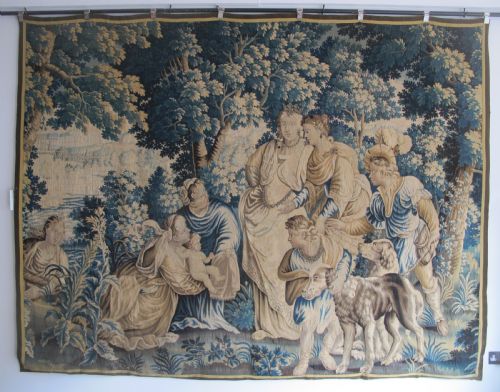
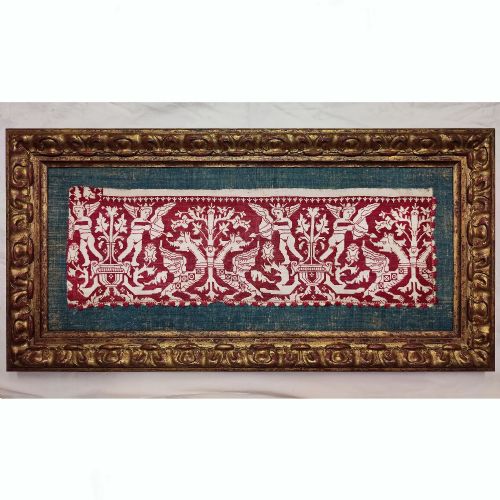
Objects include verdure tapestries, bedsheet borders from the Greek islands, and length examples of lampas and velvet. Each item represents a surviving piece of historical material culture preserved for wall display or study.
Materials and construction
Makers utilised silk threads alongside linen, wool and giltwood frames to construct these panels and wall hangings. Textile art of this scale combines hand weaving, needlepoint and embroidery techniques passed down through generations.
Weaving methods include complex loom setups such as lampas and ciselé velvet alongside freehand embroidery and tapestry weaving. Natural fibres form the core of every piece, mounted in wood or framed behind glass for protection.
Historic Silk Textile Retail Price Guide 2026
Typical asking prices for historic silk textile among the pieces listed under this phrase on Sellingantiques today, from the lower quarter to the upper quarter. They describe what is for sale here now, not the wider market.
Listings feature historic silk textile items spanning from the sixteenth century to the twentieth century, incorporating linen, wool and giltwood frames.
Assessing quality
Quality rests upon the intricacy of the stitchwork, the complexity of the design, and the survival of the original materials. Pieces executed by named young makers on school samplers often show distinct regional styles and careful lettering.
Tapestries and woven panels vary according to the density of the weave, the richness of the silk thread, and the clarity of the pictorial narrative. Early provenance and the integrity of the surviving textile fragment dictate the standing of each piece.
The Historic Silk Textile Glossary
- Sampler
- A piece of needlework produced by a maker to demonstrate proficiency in various stitches and patterns. These often include alphabets, numbers, maps and familial details.
- Tapestry
- A form of textile art woven on a vertical or horizontal loom using coloured weft threads to form pictorial scenes. Verdure tapestries specifically depict natural landscapes and foliage.
- Lampas
- A type of figured textile woven on a jacquard or drawloom where pattern wefts create designs against a ground weave. Bizarre variants show exotic and asymmetrical motifs.
- Ciséle velvet
- A velvet technique where portions of the pile are cut while other loops remain uncut to form a contrasting pattern. This creates textured depth on silk wall hangings and pilaster panels.
- Needlepoint
- Embroidery stitched through a stiff open-weave canvas foundation to cover the ground entirely. It forms durable panels suitable for cushions and wall display.
Historic Silk Textile: Frequently Asked Questions
How should I hang a fragile textile?
Mount textiles behind glass or display them away from direct sunlight to protect delicate silk threads and natural dyes. Professional framing ensures the weight of the fabric distributes evenly without pulling on old stitches.
Keep pieces in rooms with stable humidity and temperature to prevent the degradation of fibres over time.
What is a band sampler?
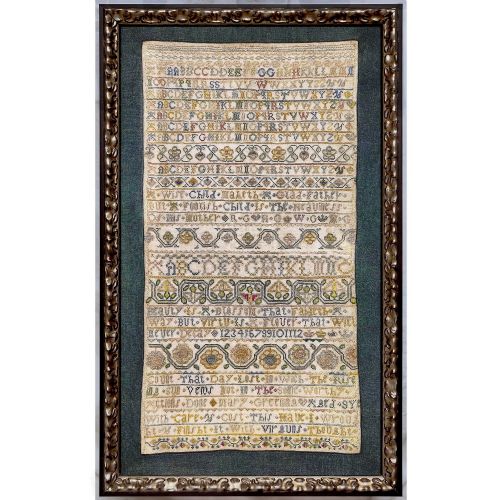
A band sampler is a long, narrow strip of linen worked with horizontal rows of diverse embroidery stitches and geometric patterns. Makers created them as reference guides for needlework techniques.
They represent some of the earlier surviving forms of domestic needlework before square format map and pictorial samplers gained popularity.
How do I identify a map sampler?
Map samplers depict geographical regions, most commonly England and Wales, embroidered by young scholars as educational exercises. They typically feature counties, towns, borders and decorative cartouches.
Dates and the maker's age or name frequently appear stitched near the margins, offering clear documentation of their origin.