




Historic Needlework Sampler
Historic needlework samplers are textile records of skill and patience, offering a tangible connection to the young makers who stitched them centuries ago.
Historic Needlework Sampler
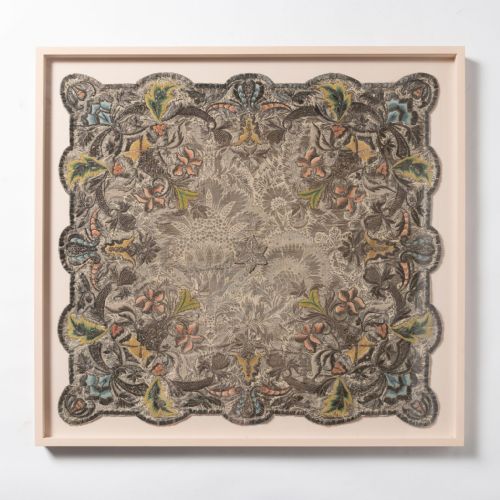
When you search for a historic needlework sampler, you encounter textile art that documents alphabets, verses, maps, and motifs executed by hand. These pieces originate primarily from the eighteenth and nineteenth centuries, spanning the Georgian and Victorian eras.
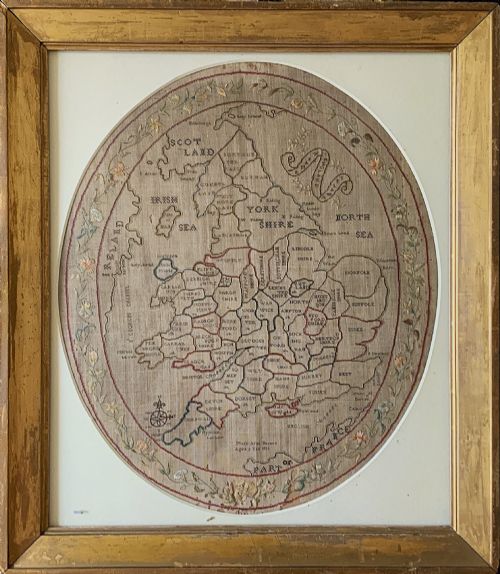
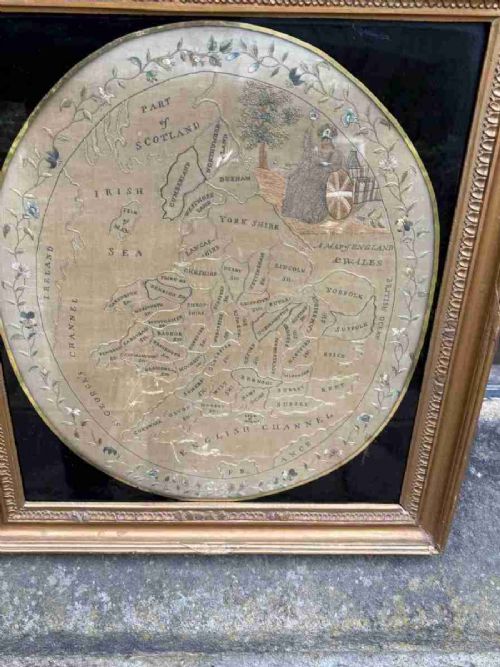
The examples available here range from schoolgirl alphabet exercises and moral texts like the Commandments to detailed geographical maps of England and Wales. Many retain their original frames, preserving the fabric and stitching for modern display.
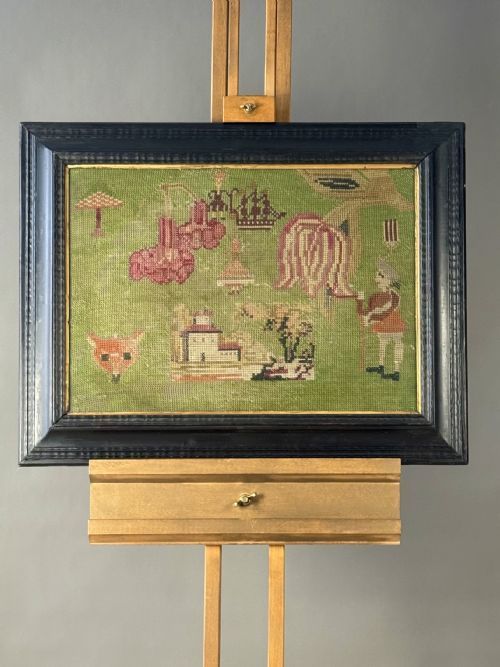
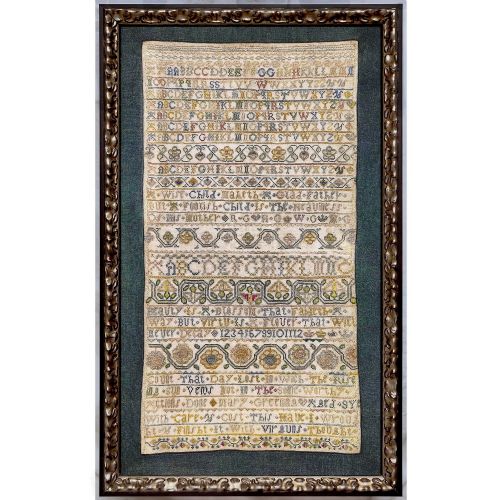
Earlier pieces from the seventeenth and eighteenth centuries often take the form of band samplers, while nineteenth-century works frequently record the name, age, and date of the maker alongside pictorial scenes and poetry.
How they were made
These works rely on a foundation of woven linen stretched and worked using silk thread, wool, and linen thread. The choice of ground fabric provides the grid necessary for counting threads and executing precise stitches.
Makers utilised a variety of needlework techniques, including cross stitch, to build up alphabets, borders, and figurative elements. The execution required considerable discipline, particularly when mapping counties or stitching complex religious verses.
A nineteenth-century Scottish sampler openly records a stitch error, preserving a young maker's momentary lapse in counting.
What varies in quality
Quality in these textiles rests upon the fineness of the linen ground, the regularity of the stitches, and the complexity of the design. A well-executed map or pictorial composition demonstrates superior command of proportion and needle technique.
Condition plays a significant role, as exposure to light alters the original tones of silk and wool threads. Pieces that retain vibrant colouration and stable linen foundations stand apart from those with extensive fibre loss or staining.
Mary Banion·Mary Greening·Ann Hodson·Margaret Ann Blackow·Maggie Muir·Sarah Baker·Ann B Gilies·Martha Hall·Jane Pattinson·Eleanor Grady·Mary Pinfold
The Historic Needlework Sampler Glossary
- Band sampler
- An early form of sampler featuring horizontal rows of diverse patterns and stitches, used by embroiderers as a reference collection. These narrow bands showcase technical proficiency across various motifs before pictorial designs became standard.
- Map sampler
- A specialised geographical needlework piece popular in the Georgian period, often depicting England and Wales. Young makers stitched county boundaries and towns to demonstrate both needle skill and geographical knowledge.
- Ground fabric
- The base material, typically linen, upon which the embroidery threads are worked. Its weave density dictates the scale and detail of the final stitched design.
- Stitch error
- An unintentional deviation in the pattern or count recorded by the maker during the creation process. These human touches reveal the authentic hand of the young maker behind the work.
Historic Needlework Sampler: Frequently Asked Questions
How old are these samplers?
The pieces span from the late seventeenth century through the eighteenth and nineteenth centuries, covering the Georgian and Victorian periods.
Dates are often stitched directly into the textile by the maker, alongside their age and name.
Where should I hang a sampler?
Display these textiles on interior walls away from direct sunlight to prevent the silk and wool threads from fading.
Glass framing helps protect the delicate linen and historical fibres from dust and atmospheric moisture.
Why do some samplers include maps?
Map samplers served an educational purpose during the Georgian era, combining needlework practice with geography lessons.
Young makers stitched county outlines and place names to demonstrate academic and domestic accomplishments simultaneously.
What materials make up the backing?
The primary foundation fabric used across these historical textiles is woven linen.
Threads of silk and wool provide the contrasting colours for the alphabets, figures, and borders.