
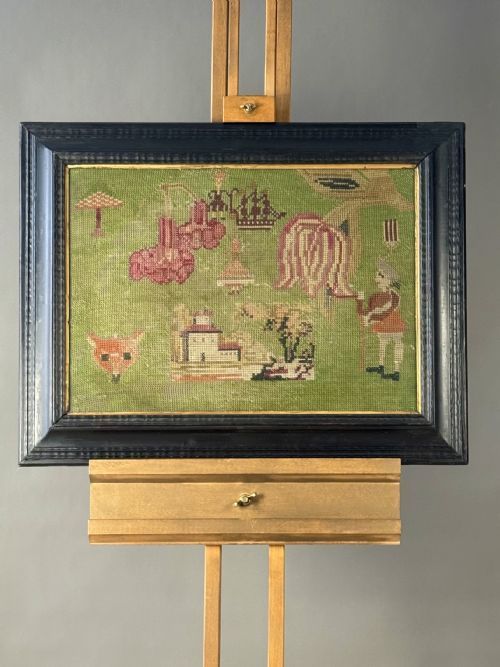


Georgian Wool Embroidery
Georgian wool embroidery brings pastoral scenes and samplers into the room, offering layered textures created with wool, silk, and canvas.
Georgian Wool Embroidery
When you search for georgian wool embroidery, you encounter textile art, framed art, wall art, and stools or footstools. These works span the 18th century, the Regency period, and the early 19th century.
You are most likely to meet 18th-century needlework pictures and panels, alongside George III embroidered pastoral farming pictures and oval woolwork pictures of girls in gardens. Framed examples often retain verre églomisé glass or giltwood frames.
The objects include samplers and felt and wool work pictures, occasionally featuring silk work alongside the wool. Mahogany stools with original needlepoint also appear within this group.
How they were made
Maker's work relied on wool, silk, and linen canvas as the primary foundation for stitches, combining varied threads to build pictorial depth. Gold leaf and glass frequently contributed to the surrounding frames.
Wood and giltwood provided structural support for wall art and framed pieces, while mahogany formed the base for practical seating such as stools. Verre églomisé techniques added gilded and painted glass borders to specific woolwork pictures.
Listings feature periods spanning the 18th century, George III, the Regency era, and the early 19th century.
What varies in quality
Quality rests upon the execution of the needlework and the fidelity of the pictorial subject, distinguishing finely detailed pastoral farming or figural scenes from simpler compositions. The preservation of the original wool, silk, and linen determines the integrity of the textile surface.
Framing contributes substantially to the overall standard, where period giltwood or verre églomisé glass heightens the presentation of a needlework picture. Original upholstery and woodwork on items like mahogany stools retain greater historical coherence than altered pieces.
The Georgian Wool Embroidery Glossary
- Verre églomisé
- A process of applying gold or silver leaf to glass before engraving a design onto it. This technique frequently appears on frames surrounding Regency woolwork pictures.
- Needlework
- The craft of decorative sewing and stitching upon a textile base. It defines the primary medium of these framed pictures and panels.
- Sampler
- A piece of educative or decorative needlework demonstrating various stitches and motifs. These examples date to the 18th century.
- Giltwood
- Wood that has been coated with gold leaf or gold paint. It forms the decorative surface on period frames enclosing textile art.
- Woolwork
- Embroidery executed predominantly with wool yarn. It creates textured depictions of gardens, figures, and pastoral scenes.
Georgian Wool Embroidery: Frequently Asked Questions
What is georgian wool embroidery?
It encompasses textile and wall art created primarily during the 18th and early 19th centuries using wool and related threads. These pieces often depict pastoral scenes, figures in gardens, or detailed samplers.
Makers worked on canvas foundations, frequently housing the finished embroidery within period frames featuring glass or giltwood. The category also extends to original needlepoint applied to mahogany stools.
How were these embroideries used?
Historic households displayed these works as framed wall art to demonstrate needle skills and aesthetic taste. They brought colour and narrative subjects into parlours and drawing rooms.
Certain pieces functioned as functional furnishings, such as needlepoint applied directly to the seats of mahogany stools. Their primary purpose remained both decorative and domestic.
How do I live with antique textiles?
Protect framed wool embroidery from direct sunlight to prevent the fading of wool and silk threads. Stable indoor humidity preserves the underlying linen canvas and wooden frames.
Position wall art away from direct heat sources to avoid drying out giltwood and verre églomisé elements. Gentle, indirect lighting showcases the varied textures without harming the materials.
How do I tell periods apart?
Eighteenth-century examples often lean towards formal samplers and classical pastoral compositions with detailed needlework. Regency and early 19th-century pieces introduce specific formats such as oval woolwork pictures framed under verre églomisé glass.
Stylistic shifts reflect broader design movements, moving from 18th-century baroque influences toward Regency and later revival aesthetics. Material combinations like felt and wool work also signal the shift toward the 1800s.