




Historic Gun
Historic gun gatherings hold true weight, uniting seasoned collectors and military historians through authentic firearms, cannon models, and antique arms.
Historic Gun
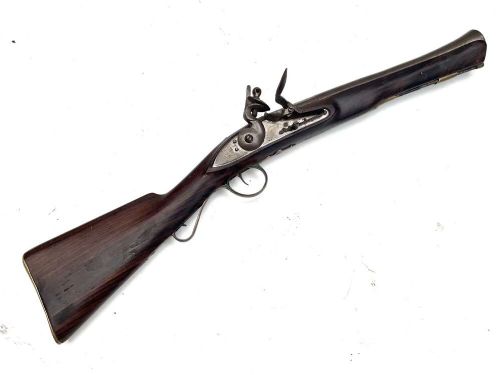
When you search for a historic gun, you encounter tangible pieces of military heritage spanning centuries of combat and engineering. These items range from full-sized flintlock muskets to scale field cannons, each representing specific technological stages in weaponry development.
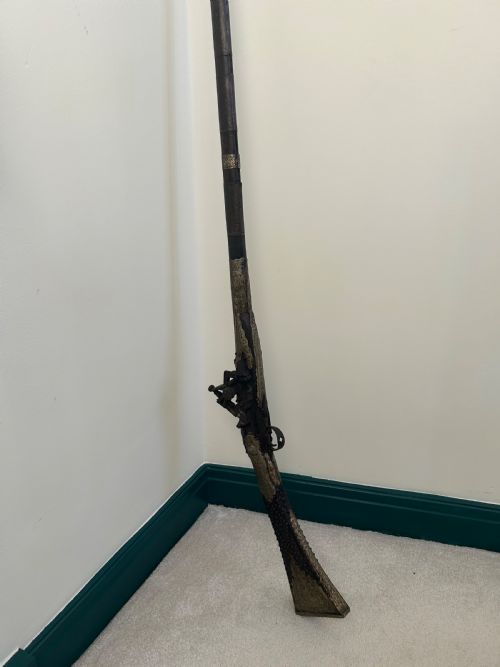
The pieces on this page lean heavily into functional and decorative military artefacts from the eighteenth and nineteenth centuries. You will find examples extending from Georgian military arms to Afghan tribal and Mughal Empire matchlocks, alongside handcrafted artillery models.
Forms vary from shoulder arms like the Jezail rifle and Brown Bess musket to sea service pistols and cast iron cannons. Such variety ensures that whether your interest lies in colonial conflict or naval warfare, the physical record remains distinct.
How they were made
Makers built these historic gun items utilising durable metals and dense timbers suited for rigorous military deployment. Barrels and mechanisms rely on forged iron, steel, and cast bronze, paired with stocks shaped from walnut and general hardwood.
Construction methods combine utilitarian metalwork with functional woodwork, often featuring hand-engraved brass bands and complex ignition systems like matchlocks and flintlocks. Model pieces also demonstrate intricate hand-built metal casting and woodworking techniques designed to replicate full-scale artillery accurately.
Historic Gun Retail Price Guide 2026
Typical asking prices for historic gun among the pieces listed under this phrase on Sellingantiques today, from the lower quarter to the upper quarter. They describe what is for sale here now, not the wider market.
Listings feature items spanning the 18th century, 19th century, Georgian, and 1930 periods.
What varies in quality
Quality in a historic gun rests upon the originality of its components and the integrity of its mechanical ignition systems. Pieces retaining their original flintlock or matchlock mechanisms without modern replacement parts stand apart from heavily altered examples.
The standard of execution in decorative elements, such as intricate brass barrel bands or hand-carved hardwood stocks, distinguishes standard military issue from exceptional workshop production. Preserved surface patinas and untouched structural condition further elevate the standing of an individual piece.
Sargant and Son Birmingham
The Historic Gun Glossary
- Flintlock
- An ignition mechanism utilising a flint struck against a steel frizzen to create sparks that ignite gunpowder. This system dominated military and civilian firearms throughout the eighteenth and early nineteenth centuries.
- Matchlock
- An early firearm action where a burning slow match is lowered into a touchhole to ignite the powder charge. It represents the earliest mechanical method of firing a shoulder arm.
- Jezail
- A type of long gun developed and used across the Middle East, Central Asia, and the Indian subcontinent. These pieces frequently feature distinct curved stocks and matchlock or flintlock actions.
- Toradar
- A traditional South Asian matchlock musket characterised by its straight stock and extensive barrel binding. They were widely utilised across Indian and Afghan territories during the eighteenth and nineteenth centuries.
- Field cannon
- A mobile artillery piece designed for maneuverability on the battlefield. These range from full-size bronze or cast iron ordnance down to period scale models.
Historic Gun: Frequently Asked Questions
What periods do these pieces span?
The available selection primarily covers items from the seventeenth, eighteenth, and nineteenth centuries. This encompasses Georgian military expansion and the Napoleonic era.
Specific dates stretch from the seventeen-hundreds through to nineteen-thirty for handmade model artillery. Each era displays distinct technological shifts in armaments.
How were matchlock muskets fired?
A matchlock requires the user to manually lower a smouldering cord, known as a slow match, directly into the priming powder. This ignites the main charge inside the barrel.
It stands as the earliest form of mechanical firearm ignition before the development of flintlock and percussion cap systems.
What materials make up these items?
Makers constructed these arms and artillery using a combination of forged metals and dense woods. Common materials include iron, steel, bronze, and brass alongside walnut and hardwood stocks.
Cast iron also appears frequently in the manufacture of heavier artillery pieces and scale model cannons.
Are scale models considered antiques?
Certain scale models and decorative artillery pieces date back to historical periods, including the seventeenth and nineteenth centuries. Hand-built model cannons reflect the exact engineering principles of full-sized ordnance.
These items were often constructed for display, testing, or training purposes by military workshops and craftsmen.