
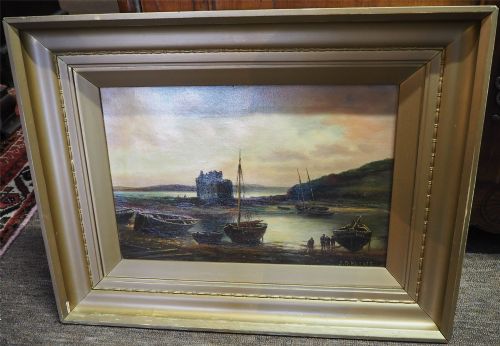
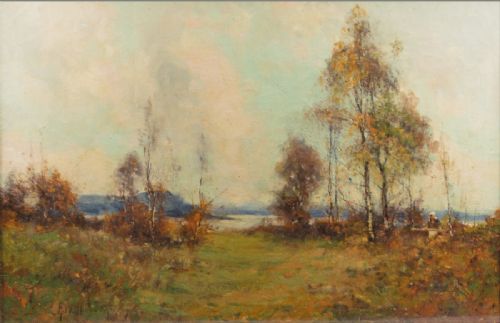
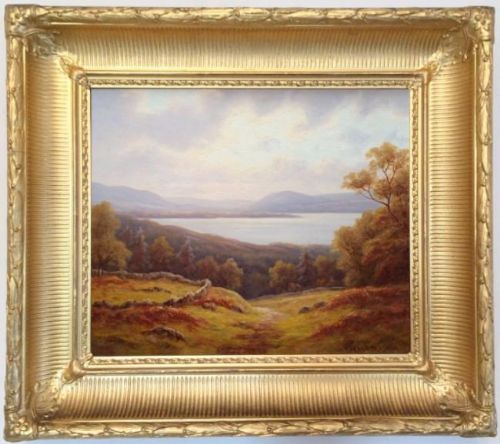


Highland Loch Landscape Artwork
These highland loch landscape artwork pieces capture remote Scottish waters and mountains, offering buyers a romantic window into nineteenth and twentieth century scenery.
Highland Loch Landscape Artwork
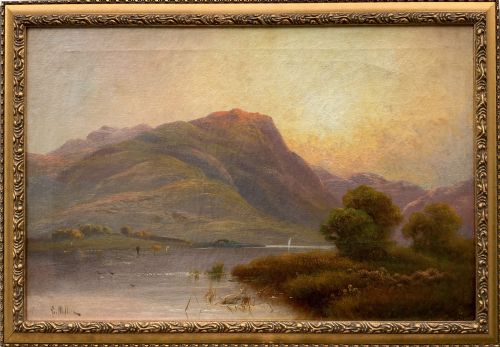
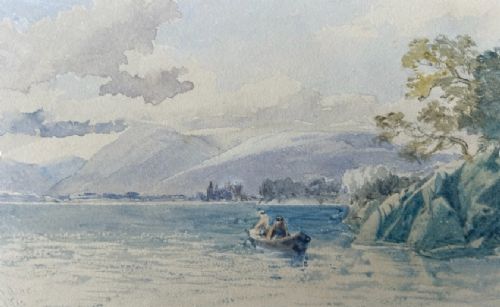
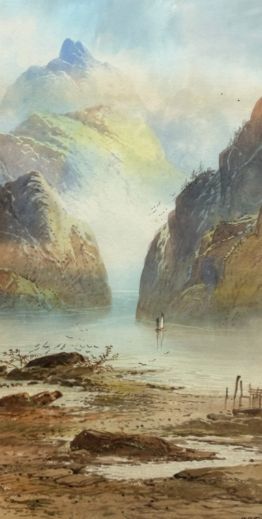
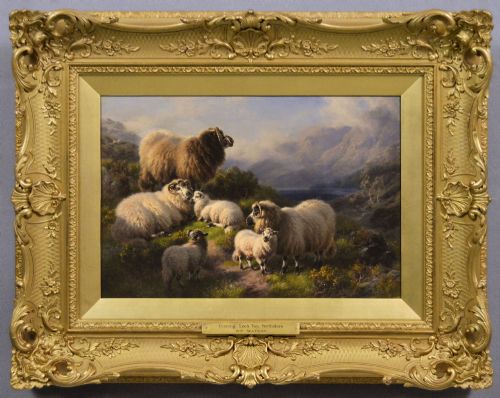
A highland loch landscape artwork presents mountain terrain, still water and highland cattle under changing Scottish skies. These works range from intimate watercolours to large oil paintings housed in ornate frames.
The pieces on this page stem predominantly from the Victorian era up to the mid twentieth century. Artists travelled north to record remote locations like Loch Lomond, Loch Tay and Loch Etive.
Buyers encounter framed watercolours on paper alongside substantial oil paintings on canvas. Traditional British and Scottish Impressionist styles dominate the selection.
How they were made
Artists applied oil paint or watercolour onto stretched canvas, wood or paper supports. Oil paint allowed rich layering for mountains and water, whilst watercolour captured transparent atmospheric mists.
Gilt and gesso frames protected the paintings, adding decorative borders that complemented the traditional subjects. Skilled makers constructed wooden stretchers and frames to support the heavy canvas.
Depicted locations feature specific Scottish landmarks such as Loch Lomond, Loch Tay, Loch Etive and Urquhart Castle.
What varies in quality
Quality rests in the handling of light, atmosphere and geographical accuracy across the canvas. Stronger compositions portray the damp air and rugged textures of the Highlands with confident brushwork.
The framing contributes significantly to the overall presence of the piece. Original gilt and gesso frames preserved in sound condition elevate the status of an antique painting.
Thomas Miles Richardson Jnr·William Henry Earp·William Watson Jnr·Alexander Wellwood Rattray·Everett Watson Mellor·Henry Robinson Hall·Henry Hillier Parker·James Bell Anderson·William Miller Frazer·Daniel Sherrin·Alfred de Breanski Snr·AJ Thornton·George Cole·George Melvin Rennie·E M Seaton
The Highland Loch Landscape Artwork Glossary
- Watercolour painting
- A work executed with water-soluble pigments on paper. This medium provides translucent washes suited to mountain mists.
- Oil on canvas
- Pigment suspended in drying oil applied to a woven fabric support. This combination permits deep tonal contrasts and rich surface texture.
- Gesso
- A plaster-like mixture applied to wooden frames before gilding. It provides a smooth base for decorative mouldings.
- Victorian
- Pertaining to the reign of Queen Victoria, spanning the nineteenth century. Works from this period often display detailed realism and romantic sentiment.
Highland Loch Landscape Artwork: Frequently Asked Questions
What periods do these paintings cover?
The works span from the Victorian period through to the mid twentieth century. Most examples date from the late nineteenth century when Scottish landscape painting gained immense popularity.
Artists drew inspiration from romantic depictions of the Highlands, producing works that remain sought after by collectors of traditional British art.
How should I care for an oil painting?
Keep paintings away from direct sunlight and dramatic changes in temperature or humidity. These precautions prevent the canvas from warping and the oil paint from cracking over time.
Dust the surface gently with a soft, dry brush and avoid applying moisture or cleaning solutions directly to the paint layer.
What is Scottish Romanticism?
Scottish Romanticism is an artistic movement focusing on the wild beauty and emotional resonance of the Scottish landscape. It emphasises dramatic weather, misty lochs and rugged mountains.
Painters sought to evoke a sense of awe through atmospheric lighting and detailed observation of remote terrain.
Are watercolours framed differently from oils?
Watercolours require glass protection and acid-free mounts to safeguard the paper from humidity and fading. Oils on canvas are typically displayed unglazed in heavy wooden frames.
Both presentation methods reflect the specific conservation needs of the different artistic mediums.