


Highland Landscape Picture
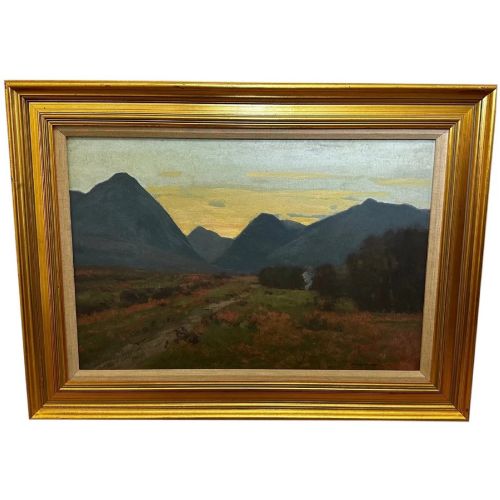
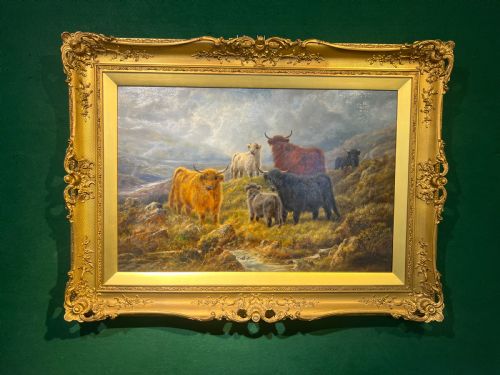
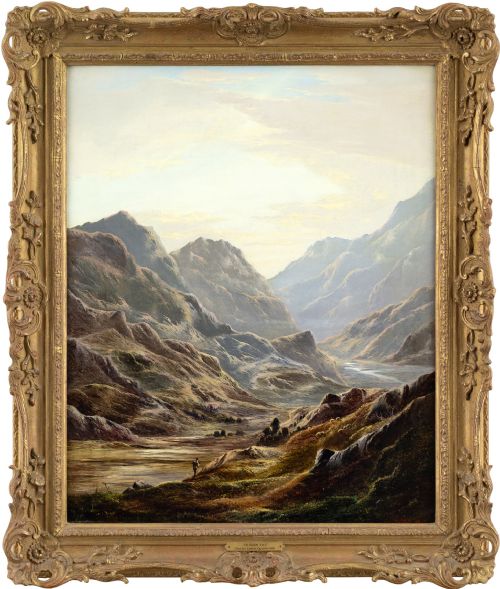
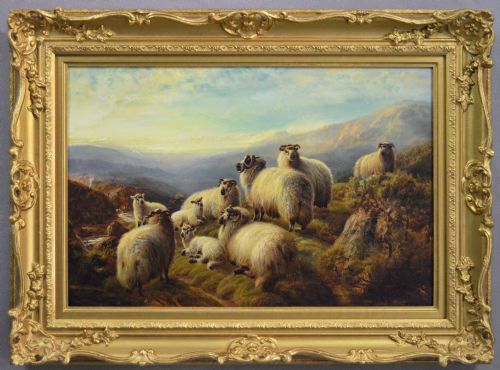
A highland landscape picture brings the rugged atmosphere of northern waters, mountains, and cattle into an interior through traditional nineteenth and twentieth-century brushwork.
Highland Landscape Picture
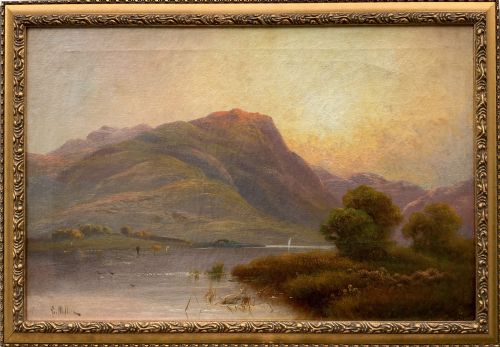
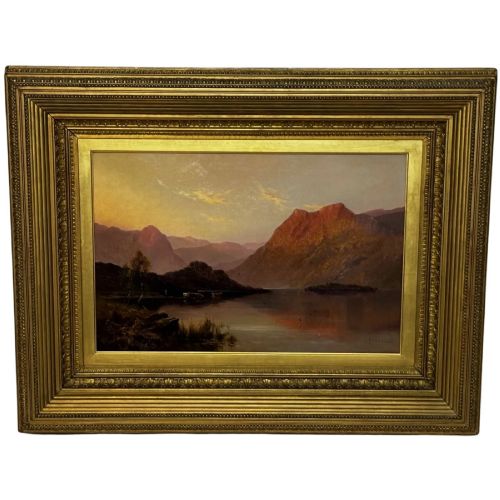
A highland landscape picture typically depicts mountainous terrain, freshwater lochs, and pastoral scenes featuring cattle, sheep, or figures near traditional stone buildings and bothies. These works emerge predominantly from the nineteenth century and the Victorian era, extending into Edwardian production and the mid-twentieth century.
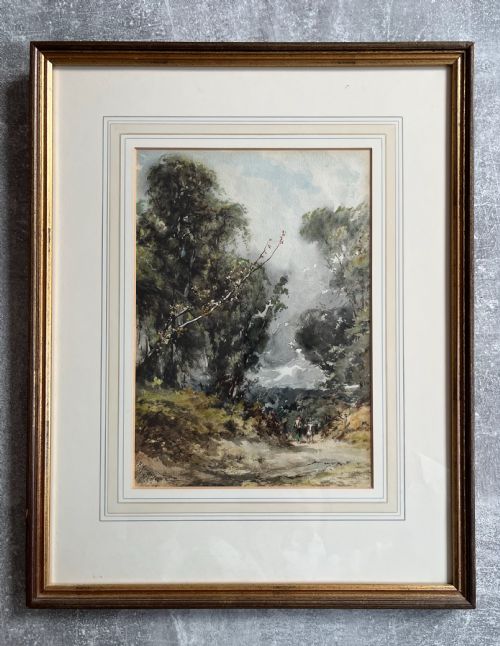
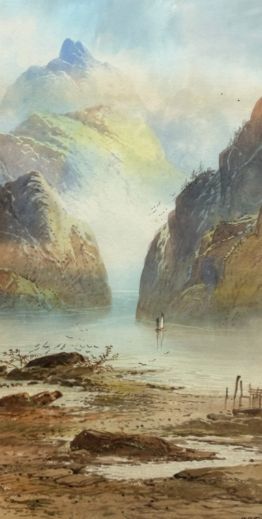
The physical formats span oil on canvas, wood panel, board, and delicate watercolours or gouache on paper, often housed within substantial giltwood frames. Collectors encounter named regional views ranging from Ben Lawers and Loch Ness to Glen Tilt, alongside pastoral depictions of highland cattle and sporting subjects.
Most examples originate from British artists working in realist and impressionistic modes, capturing specific atmospheric conditions such as morning mists, moonlight on water, and overcast moorland skies.
Materials and construction
Artists built these compositions primarily using oil paints applied to stretched canvas, primed wood panels, or sturdy board, allowing for rich impasto and layered depth. Watercolours and gouache were similarly utilised on paper supports to achieve translucent washes and fine illustrative detail.
Gilt and giltwood frames provide the historical housing for these works, employing carved and moulded wooden structures finished in gold leaf or metallic paint to complement the painted scenes.
Weather-beaten highland cattle and stray retriever dogs frequently loiter near loch shores, seemingly unbothered by relentless nineteenth-century rainstorms.
Distinctions in quality
Quality rests upon the artist's ability to render light, shadow, and atmospheric depth across the mountainous terrain, distinguishing dynamic brushwork from stiff or formulaic studio production. The precision of anatomical drawing in rendered cattle, deer, and human figures further separates superior compositions from simpler decorative views.
The preservation of the original paint surface, the absence of excessive overpainting, and the integrity of the period giltwood frame contribute substantially to the standing of an individual work.
George Fotherly Hargitt·William Henry Earp·Alfred Fontville de Breanski·George Houston·Robert Watson·Charles Leslie·Joseph Knight·William George Tennick·Henry Robinson Hall·James Bell Anderson·Sidney Yates Johnson·Stanley Orchart·John Charles Tunnard·George Turner·Frederick Richard Lee·Thomas Sidney Cooper·AJ Thornton·Gustave De Brianski·George Cole·Denys Garle·Henry Birtles·Benjamin Williams Leader·Louis Bosworth Hurt·James Russell·Alfred Graham
The Highland Landscape Picture Glossary
- Giltwood
- Wood carved and coated with gold leaf or metallic gilt. This finish defines the heavy antique frames commonly housing Victorian and Edwardian canvases.
- Impasto
- Paint applied thickly to a canvas or panel so that the brush or palette knife marks stand proud of the surface. This technique creates texture in highland scenes, particularly on water and rock.
- Gouache
- An opaque water-based medium used on paper. It offers heavier, more saturated colour than traditional watercolour.
- Bothy
- A small stone shelter found in remote highland areas. These rustic buildings frequently appear as focal points in nineteenth-century loch compositions.
- Watercolour
- A painting method where fine pigments are suspended in a water-soluble binder on paper. Works in this medium rely on the white of the paper for their luminosity.
Highland Landscape Picture: Frequently Asked Questions
How do I date a highland landscape picture?
Dating relies on stylistic clues, framing techniques, and recorded biographical dates of the artist. Victorian examples often feature heavy gilt frames and romanticised cattle compositions, while twentieth-century pieces adopt looser impressionistic brushwork.
Signatures, stretcher construction, and old exhibition labels on the reverse provide further chronological evidence to narrow the date of creation.
Where were these paintings displayed originally?
These works hung primarily in British domestic drawing rooms, parlours, and country houses during the nineteenth and early twentieth centuries. Owners favoured them for bringing the grandeur of remote Scottish scenery into urban homes.
Today, collectors place them in studies, hallways, and living spaces where traditional lighting enhances the warm tones of the oil paint and gilt frames.
What is the difference between oil and watercolour versions?
Oil paintings use thick pigments on canvas or wood panels, yielding deep textures, rich shadow work, and durable surfaces that typically require heavy giltwood framing. Watercolours utilise paper supports under glass, delivering a lighter, more luminous quality.
Watercolours and gouache works are generally smaller in scale than large gallery oils, making them suited to different interior spaces.
How should I care for an antique painted canvas?
Antique canvases require stable indoor humidity and protection from direct sunlight to prevent paint cracking and fading. Dusting should be done gently with a soft, dry brush without applying pressure to the canvas surface.
Frames deserve equal care, avoiding liquid cleaning agents that can damage historical gilt surfaces.