
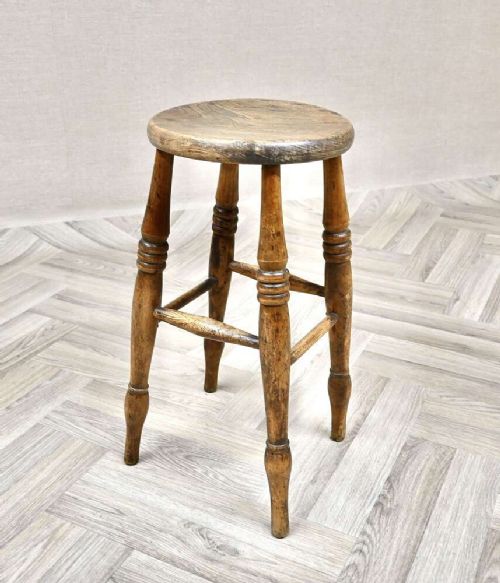
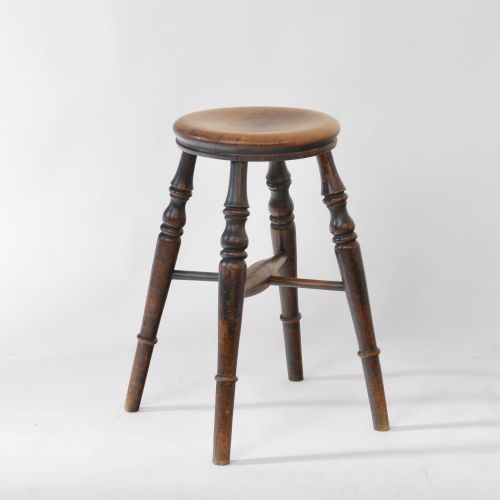
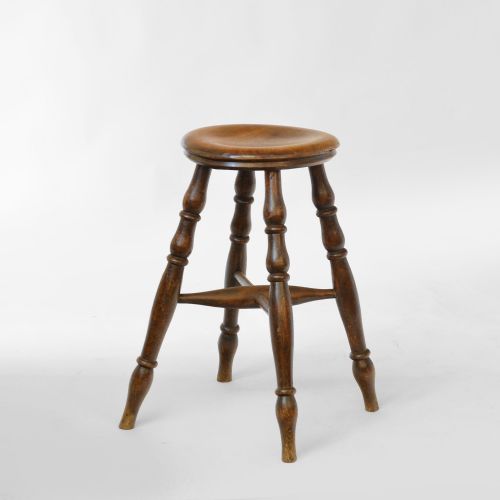
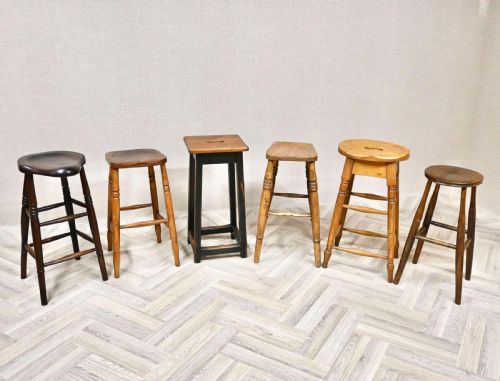
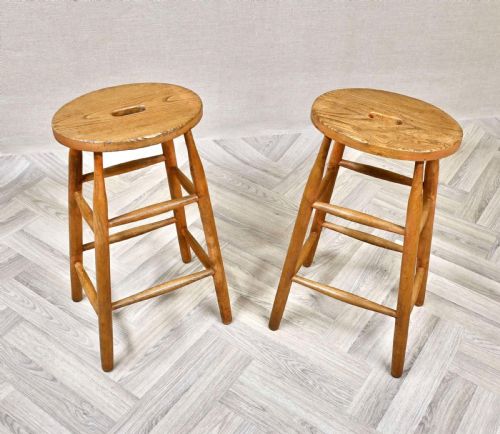
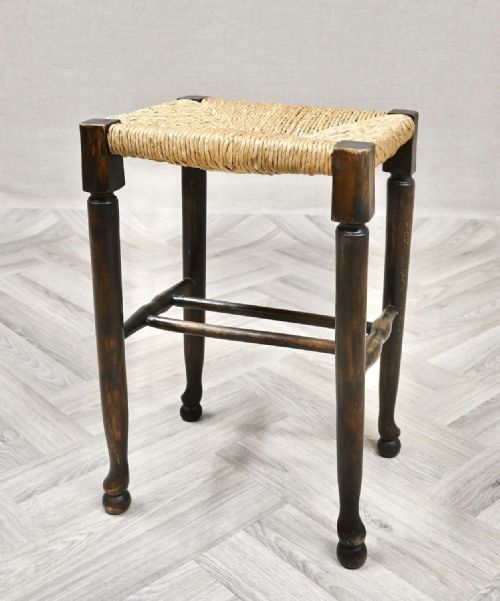
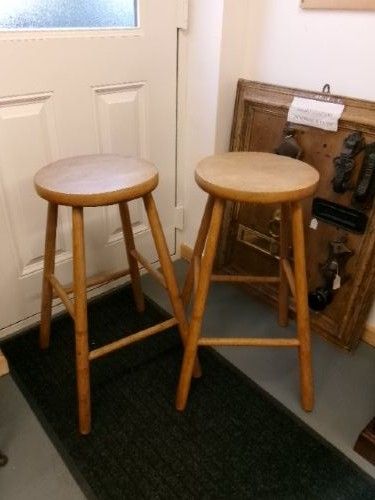
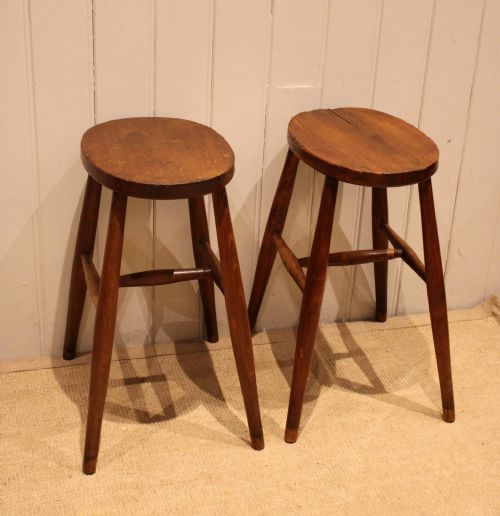
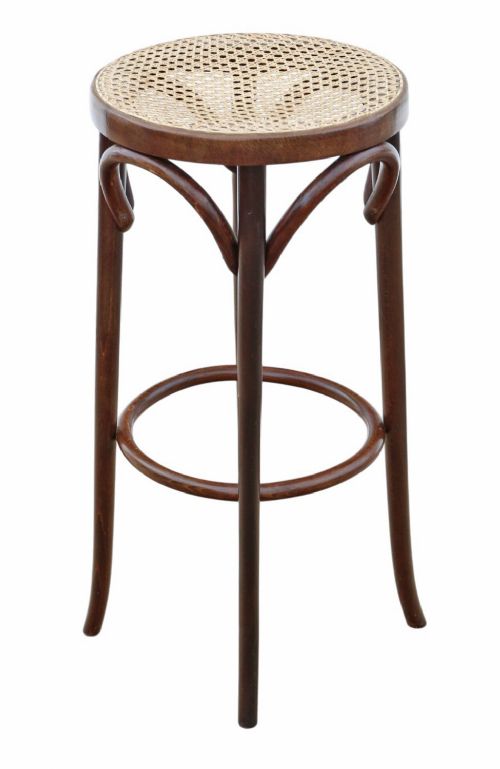

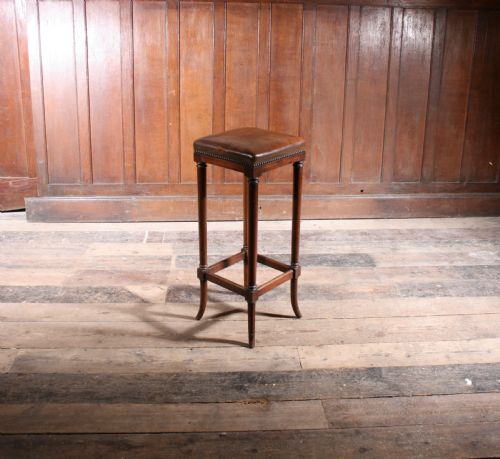


High Wooden Counter Stools
High wooden counter stools bring utilitarian character to modern spaces, offering elevated seating shaped by decades of tavern, workshop and kitchen use.
High Wooden Counter Stools
High wooden counter stools encompass tall seating forms designed for functional environments, ranging from clerk's chairs and pub seats to laboratory and kitchen variants. When exploring high wooden counter stools, one frequently encounters nineteenth-century vernacular examples alongside early twentieth-century designs from the nineteen-twenties and nineteen-thirties.
Primary construction relies on traditional timbers such as elm, beech, and mahogany, often paired with saddle seats or turned stretchers. These pieces bridge the gap between industrial utility and domestic interior placement.
Materials and construction methods
Construction relies heavily on durable hardwoods like beech, elm, sycamore, and oak, selected for their resilience under heavy commercial or domestic use. Turnery is frequently employed for legs and spindles, creating stable frameworks capable of supporting elevated seated loads.
Many examples incorporate solid timber seats, sometimes shaped with a dished or saddled surface to improve comfort without upholstery. Where cushioning appears, leather provides a hard-wearing surface that ages alongside the wooden frame.
Listings span from nineteenth-century vernacular pieces through to nineteen-forties designs, utilising beech, elm, pine, and mahogany.
Assessing quality in tall seating
Quality in these high seats rests on the integrity of the timber joints, the weight of the timber used, and the retention of original surface patination. Superior examples display thoughtful turnery and balanced proportions rather than purely utilitarian haste.
The degree of wear on footrests and seat tops often distinguishes pieces subjected to intensive tavern or workshop service from those kept in domestic settings. Original timber coloration and untouched surface finishes elevate an example above later stripped or heavily restored alternatives.
The High Wooden Counter Stools Glossary
- Turnery
- Wood shaped on a lathe to create cylindrical, tapered, or decorative elements such as legs and stretchers. This process provides both structural support and visual definition.
- Rush seat
- A seating surface woven from dried marsh grasses, offering a textured and pliable platform. It appears on various traditional country chairs and stools.
- Stretcher
- A horizontal wooden brace connecting the legs of a stool to ensure lateral stability. These components often double as footrests on elevated seating.
- Bentwood
- Wood steamed and bent into curved shapes, commonly utilised in early twentieth-century seating production. This technique allows for lightweight yet resilient frames.
- Patina
- The surface sheen and colour acquired by timber through age, handling, and wax application over decades. It serves as an indicator of an untouched history.
High Wooden Counter Stools: Frequently Asked Questions
Are these stools suitable for modern kitchen islands?
Most of these tall seats align well with standard contemporary kitchen islands and breakfast bars, provided the height matches the counter clearance.
Buyers should measure the distance from the floor to the underside of the counter before selecting nineteenth or twentieth-century variants.
How do I care for antique wooden stools?
Maintenance requires minimal intervention, primarily involving periodic application of quality furniture wax to nourish the dry timber.
Keeping the pieces away from direct heat sources prevents the wood from splitting and protects the historic surface finish.
Can I mix different wood tones together?
Mixing various timbers such as beech, elm, and mahogany creates an eclectic interior scheme rooted in vernacular tradition.
Matching heights matters more than uniformity of wood species when gathering a collection of disparate stools.
What is the difference between a bar stool and a clerk's stool?
Clerk's stools typically originated in offices and counting houses, often featuring specific height adjustments or simpler turned frames for high desks.
Bar and tavern stools generally focused on robust hospitality use, frequently incorporating circular foot rings for patron comfort.